
Three months after switching finance on, an aesthetic clinic owner looks at the figures and still cannot answer the only question that matters. Twenty-two clients have used it. Turnover is up. But the lender’s fee has come off every single transaction, and there is no obvious way to tell which of those twenty-two booked because finance was there and which would have booked anyway and simply chose to pay in instalments.
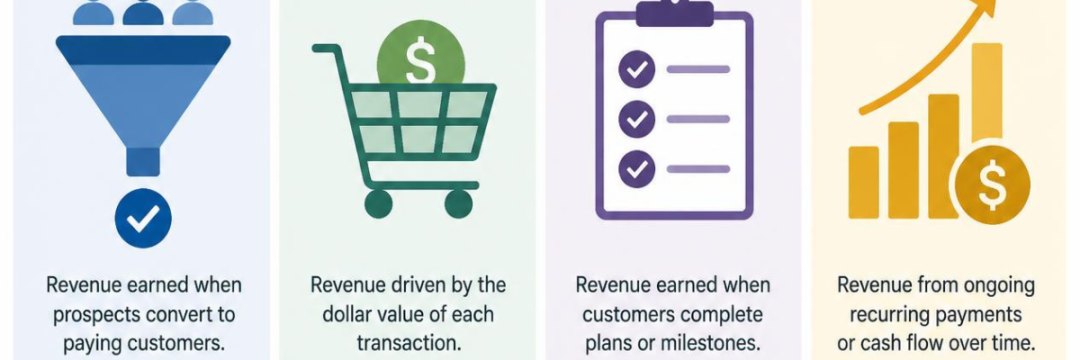
That is the right question, and most sector content skips it entirely. Offering instalments does not automatically add revenue. It adds revenue through four specific mechanisms, each with a different size of effect, and it costs money on every transaction whether those mechanisms fire or not. Understanding which is which is the difference between a feature that pays for itself several times over and one that quietly shaves margin off bookings that were already secured.

Incremental revenue versus reformatted revenue
The distinction that governs everything else is whether a financed booking is net-new or cannibalised. A net-new booking is one that would not have happened at all without instalments. A cannibalised booking is one that would have gone ahead regardless, on a card, at no fee.
Retail data suggests the balance sits heavily on the useful side. Stripe’s testing across more than 150,000 checkout sessions found that over two-thirds of instalment volume came from sales that would not otherwise have completed, with eligible sessions showing up to a 14% revenue increase. That is e-commerce data rather than clinic data, so treat it as directional rather than transferable. The mechanism it demonstrates, though, is the same one operating in a consultation room.
Academic work points the same way with more precision. Research covering 275,000 customers, summarised in How “Buy Now, Pay Later” Is Changing Consumer Spending, found instalment availability raised both purchase likelihood and basket size by roughly 10%, with the strongest effects among people who historically spent least. For a clinic, that maps onto a familiar client: the one who books a single area when the assessment called for three.
So the honest framing for anyone trying to increase clinic revenue through finance is that the gain is real but conditional. It depends on where in the price list it is offered and how it is introduced.
The four mechanisms, ranked by size of effect
One — conversion at the point of hesitation
The largest single effect is on plans that stall. A £900 treatment plan assessed as one payment competes against a boiler service and a summer holiday. The same plan assessed at a monthly figure competes against discretionary spending, which is a comparison it wins far more often.
This is why the effect concentrates at the top of the price list rather than spreading evenly across it. Faces platform data shows practitioners registered for finance recorded a 28% rise in bookings for their highest-priced treatments and around a 29% increase in sales overall. A clinic whose average transaction is £120 will see very little; a clinic selling multi-session skin or body programmes will see a great deal.
Two — average transaction value and the framing effect
The second mechanism is behavioural, and it carries an obligation with it. Splitting a price into instalments lowers how expensive something feels. Someone shown “£75 a month” anchors on £75, not on £900, and that gap between the felt price and the real price is precisely why the product converts.
It is also why the regulator moved. Deferred payment credit came under FCA regulation on 15 July 2026, bringing lenders under the Consumer Duty and requiring proportionate affordability and creditworthiness checks on every use, at every purchase value — an approach the FCA has framed as reducing frictionless impulse borrowing and making sure customers understand the credit they are taking on. The duty that follows for a practitioner offering clinic payment plans is straightforward. Presenting instalments as a way to fund a clinically appropriate plan is legitimate. Using the monthly figure to talk someone into a larger plan than they came for is not, and it sits badly against the advertising rules covered further down.
Three — plan completion rather than single sessions
The third mechanism is the one most clinics underestimate, and it is the one where commercial and clinical interests genuinely align. A client who cannot fund a three-session course often books one session, gets a partial result, and does not rebook. A client who can spread the cost commits to the full course, completes it, and gets the outcome the plan was designed to produce.
Staged plans finished properly outperform one-off compromise treatments. The revenue effect here is not a single larger transaction; it is a completed course plus a client who is more likely to return because the result met expectations.
Four — cash flow velocity
The fourth is structural. In-house instalment arrangements, where the clinic takes a deposit and collects the balance itself, put the practitioner in the position of an unpaid credit controller. Money arrives late, some never arrives, and admin hours disappear into chasing it. That is a different proposition from third-party patient financing solutions, where the lender pays the treatment value in full and carries the repayment relationship and the default risk.
For a sole trader ordering toxin and dermal filler ahead of a busy fortnight, that timing difference determines whether stock can be ordered at all. Faces users can run the same principle on the supply side through the aesthetic pharmacy facility, taking stock and settling within 14 days. Clinics that currently manage the gap with staged deposits may also want to read 7 reasons why you should take deposits, which covers the same cash flow problem from the other direction.
The cost side, and the break-even calculation nobody runs
Instalment finance is not free to the clinic. Across the wider market, merchant fees typically fall somewhere between 1.5% and 7% of transaction value, against roughly 1% to 3% for card payments through a standard card machine. Rates vary by lender, sector and volume, so the only figure that matters is the current one in your own agreement. Practitioners on Faces should check the live rate in Finance Hub before pricing packages rather than working from a figure quoted in an article or remembered from sign-up.
The calculation itself is straightforward, and running it once settles the question permanently.
Take a £900 treatment plan with £220 of consumable and product cost. Contribution before any payment fee is £680. At a 5% lender fee, that transaction costs £45. So every financed booking that would have happened anyway costs the clinic £45 in margin.
Now set that against the gain. One genuinely incremental booking at that price contributes £680. Divide £680 by £45 and you get roughly 15. In other words, if more than about one in every fifteen financed bookings is net-new, the facility pays for itself. Every additional incremental booking beyond that is profit.
Set that threshold against the retail evidence, where roughly two-thirds of instalment volume was incremental, and the margin of safety is wide. The calculation still needs doing with your own numbers, because a clinic with thin consumable margins on low-value treatments has a very different break-even from one selling four-figure programmes. Practitioners rebuilding their pricing from the ground up will find the groundwork in structuring your aesthetics clinic treatment pricing.
Who actually uses instalments, and why it changes how you offer them
FCA research one in five UK adults, around 10.9 million people, used unregulated instalment credit at least once in the twelve months to May 2024, up from 8.8 million in 2022. Use was highest among 25 to 34 year olds, at 30%. Lending across the category grew from roughly £0.06 billion in 2017 to over £13 billion in 2024.
The same research carries a figure that should shape practice rather than marketing: 30% of users were adults with low financial resilience. That is not an argument against offering patient payment options. It is an argument for offering them through a lender that runs proper affordability assessment, and for treating a declined application as the end of the finance conversation rather than the start of a workaround.
The broader pattern is well documented in healthcare settings. The Impact of Buy Now Pay Later on Healthcare and Why More Patients Are Choosing Buy Now, Pay Later for Healthcare both track the same shift: people who routinely spread the cost of everything else now expect the option for elective care. Clients are not asking whether instalments exist. They are asking whether your clinic offers them.
What changed on 15 July 2026
The regulatory position moved three weeks ago and a good deal of sector commentary has not caught up.
The FCA began regulating Deferred Payment Credit, the interest-free form of instalment lending repayable in twelve or fewer instalments within twelve months, on 15 July 2026. The rules are set out in the regulator’s guidance for firms and in full in policy statement PS26/1. Lenders now need authorisation or temporary permission, must run creditworthiness and affordability assessments, must give pre-contract information, and clients gain access to the Financial Ombudsman Service.
Two points matter for practitioners specifically.
First, the new regime targets the interest-free product. Interest-bearing agreements offered by an authorised lender were already regulated consumer credit and remain so. If your finance partner charges interest and holds FCA authorisation, the July change altered the market around you rather than the product itself. Anyone uncertain which category their lender sits in can check the firm reference number directly on the FCA Financial Services Register.
Second, the clinic’s own position is unchanged and frequently misunderstood. Introducing a client to credit is a regulated activity. Most clinics offering finance for aesthetic clinics do so as an Introducer Appointed Representative under the lender’s permissions rather than holding their own authorisation. Carrying out credit broking with neither is a criminal offence, and the categories are set out in the FCA’s consumer credit brokers guidance. This is not a technicality to leave unresolved. Practitioners who want the sector-specific detail will find it in unregulated buy now pay later is not what you think it is.
Advertising it without breaching two separate rulebooks
This is where clinics most often go wrong, because two regulators apply at once.
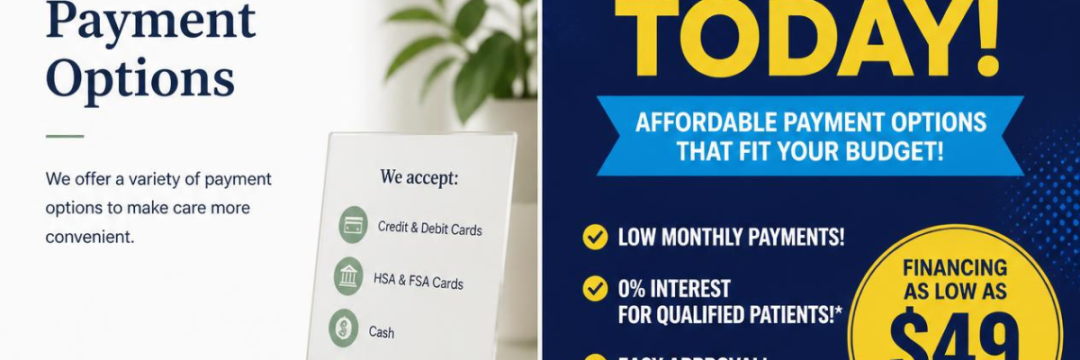
The first is financial promotion rules. A post saying multiple payment methods are available at booking is generally outside the trigger. A graphic reading “from £24 a month” or “0% finance” is a financial promotion and must carry the representative APR and the required risk wording. Introducer Appointed Representatives are typically permitted to promote in non-real time only, meaning social posts, website banners, email and in-clinic posters, and only using wording that follows the lender’s advertising guidelines. Where an approved social post is supplied, use that wording rather than writing your own.
The second is the CAP Code. Advertising for cosmetic interventions must not trivialise the procedure or apply undue pressure, as the ASA sets out in its guidance on social responsibility in cosmetic interventions. Time-limited promotions in this sector have repeatedly been ruled against. Attaching a countdown to a finance offer combines a pressure tactic with a credit product, which is the single riskiest thing a clinic can post. The practical rule: promote availability, never urgency.
Introducing it in the room
Three habits separate clinics that see the conversion effect from clinics that see only the fee.
Present it early and neutrally. Instalment availability belongs in the same breath as the price, during the treatment plan discussion. Introduced there, it reads as standard practice. Produced after a client hesitates, it reads as a rescue attempt and lands as pressure.
Attach it to something the client already has open. The conversion advantage of buy now pay later for clinics comes from removing steps, not from the lending terms. Where the application sits inside a consent form already being completed, or inside the online booking system the client is already using, the drop-off between interest and application collapses. Where it lives in a separate system, clients fall through the gap. The three routes available on Faces are set out in where your clients actually find beauty and aesthetics finance on Faces.
Let a decline be a decline. Where affordability is the barrier, a client can reasonably reapply with a larger deposit or a smaller order value. That converts a dead end into a smaller booking. What it must not become is a search for a route around an assessment that has done exactly what it exists to do.
The four numbers to track from month one
Most clinics cannot evaluate finance because they never established a baseline. Four figures, recorded monthly, settle the question within a quarter.
Financed share of transactions, and financed share of revenue. The gap between the two tells you whether finance is doing its work at the top of your price list, where it should be, or spreading thinly across small treatments where it costs more than it returns.
Average transaction value, financed versus unfinanced. If the financed figure is not meaningfully higher, the facility is reformatting existing bookings rather than creating new ones.
Consultation-to-booking conversion, before and after. This is the closest proxy available for the incremental effect, and the number that feeds directly into the break-even calculation above.
Plan completion rate for financed courses against self-funded ones. This is the mechanism nobody measures and the one most likely to be quietly carrying the return.
The wider commercial framing for these metrics is covered well in Buy Now Pay Later for Business: a Guide to Growth, 5 ways Buy Now, Pay Later can boost your business and How To Use The ‘Buy Now Pay Later’ Strategy For Your Business, all of which apply the same logic outside healthcare.
Beyond the treatment room
The same rails extend to training. Course fees running to four figures are a genuine bottleneck for capable candidates, and academies listed on Faces can offer instalments on aesthetic training courses in the same way clinics offer them on aesthetic treatments. For an academy, it fills cohorts. For a practitioner, it is the difference between qualifying this quarter and postponing for a year.
Where to start
The FCA’s July regulation marks the point at which instalment lending stopped being a retail novelty and became a protected, mainstream way for UK consumers to pay. Clinics with a compliant route already embedded in their booking journey carry on unchanged. Clinics without one will spend the next twelve months being asked why not.
Register for Faces Finance from your dashboard: open Finance Hub, click Register, and upload your current insurance, training certificate and photo ID. Approval typically takes 24 to 48 business hours and there is no set-up cost or monthly fee. Before you price your next package, run the break-even calculation above using the live rate shown in Finance Hub. If more than one financed booking in fifteen is genuinely new, the maths has already answered the question.
FAQs
Does the clinic carry the credit risk if a client stops paying?
No. Under a third-party arrangement the lender pays the treatment value to the clinic and takes on the repayment relationship and the default risk. That transfer of risk is a large part of what the merchant fee buys.
Can a clinic post “0% finance available” or “from £25 a month” on Instagram?
Not without meeting financial promotion requirements. Any promotion including a price, a monthly figure or a repayment term must carry the representative APR and prescribed risk wording. Where your lender supplies approved wording, use it as written. Adding a countdown or time limit to a finance offer also risks breaching CAP rules on pressure in cosmetic interventions advertising.
Does applying affect the client’s credit score?
An application assessed by soft search does not leave a hard footprint on the client’s file. Missed repayments on a live agreement are a separate matter and can affect future borrowing, which is why affordability assessment exists and why the outcome should be respected.
Can the lender’s fee be passed on to the client as a surcharge?
Usually not. Most merchant agreements prohibit charging finance customers more than cash customers, and differential pricing by payment method has consumer credit implications. Check the agreement before building it into your pricing.
What happens if the client changes their mind after approval?
Approval and drawdown are separate events. The agreement’s terms typically begin when treatment is completed and the confirmation code is entered, not at the point of approval, which leaves room to amend a plan beforehand. Confirm the exact sequence with your lender, because it varies.