
A consultation runs well. The treatment plan is agreed, the client is engaged, and then the price lands — £750 across two sessions. She pauses, says she’ll have a think, and books nothing. The practitioner knows finance is available through the platform, but isn’t certain where to send her, whether it can be texted, or how long the money takes to arrive afterwards.
That gap between “finance exists” and “here is exactly where you tap” is where most lost bookings sit. There are three separate routes a client can take to apply for finance on Faces, and they suit different situations. Knowing which one to reach for turns a hesitation into a confirmed appointment.

What sits behind the finance option
Faces finance is powered by Payl8r, the platform’s lending partner since 2018. Payl8r trades as Social Money Limited and is authorised and regulated by the Financial Conduct Authority under firm reference number 675283, which practitioners can verify themselves on the FCA Financial Services Register.
Payl8r specialises in beauty and aesthetics finance rather than general retail, which matters more than it might sound. A lender that understands the sector prices risk around treatment values, appointment cancellations and the fact that most clinics are sole traders. Payl8r’s own positioning covers finance for beauty treatments across injectables, body work, hair and spa services.
The practical shape of the product:
- Loan values from £50 to £2,000
- Terms from 3, 6, 9 and 12 months
- Interest typically ranging from 1.5% per month, with the first three months interest-free
- A soft credit search only, which does not affect the client’s credit score
Route one: through the consent form
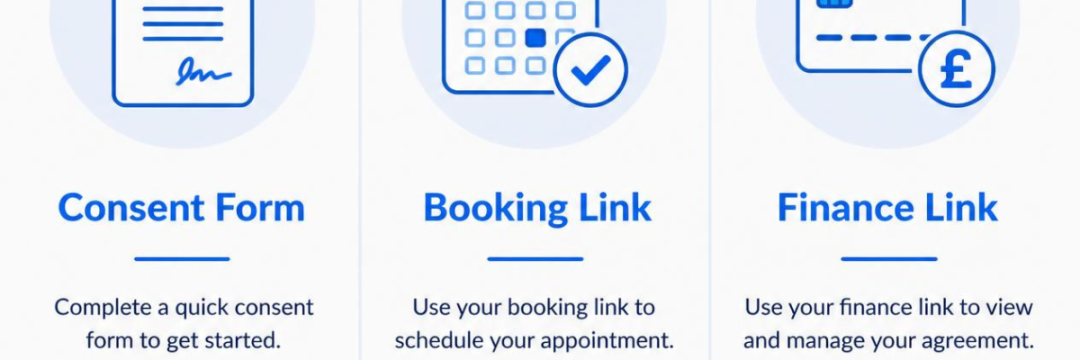
The most common path is the one already built into everyday practice. When a consent form is forwarded to a client through Faces, the finance option appears inside that form at checkout. The client reads the treatment information, gives consent, and applies in the same sitting.
Using a consent form for finance works because it removes a step the client would otherwise have to be prompted through separately. There is no second link to send, no “I’ll email you the details” that never gets opened. A Faces finance consent form carries the treatment name and price already attached, so the loan amount is pre-populated rather than typed in by a client who may guess wrong.
This is also the cleanest option from a record-keeping perspective. Payment finance consent and clinical consent sit against the same client record, dated and timestamped, which matters if a dispute arises months later about what was agreed. Practitioners who want a broader view of how digital consent reduces this kind of exposure can read why practitioners are moving away from paper consent.
One limitation to plan around: customer finance forms can currently only be sent to a client’s email address, not by text message. Collecting an accurate email at the enquiry stage, not on the day, prevents a lot of avoidable friction.

Route two: through the booking link and clinic search
The second route catches clients before a consent form has ever been sent. When a clinic shares its calendar publicly, a booking link for finance effectively exists by default — the client selects a treatment, adds it to the basket, and proceeds to the finance application at checkout.
The same applies to clients who find a clinic through the Faces clinic search rather than through the practitioner’s own channels. New enquiries who have never been through a consultation can select and finance a treatment in one sequence.
This route is where buy now pay later finance does its heaviest lifting for conversion. A client browsing at 11pm who sees a £900 total will often close the tab. The same client seeing a manageable monthly figure at the point of selection behaves differently. Payl8r’s own case study with Faces reports around 30% of end users opting for split payment, with over £2 million in approved orders in the early stage of the partnership.
Route three: a direct finance link
The third route is the one most practitioners underuse. A finance link for customers can be forwarded straight from the Faces app, with no consent form and no booking attached.
This is the right tool for a specific set of situations. A client who has already had the consultation and gone away to think. A returning client booking by phone. A course of treatments being priced up before a date is fixed. In each case, sending an online finance application on its own keeps the conversation moving without forcing a booking commitment first.
Sending a client off to apply finance online in their own time also removes the social pressure of applying in front of the practitioner, which is a real barrier for some people and a common reason applications get deferred and then forgotten.
The finance application process, start to finish
The finance application process runs in a predictable sequence, and knowing the order helps practitioners answer questions confidently rather than guessing.
The client completes the application. Decisions are usually immediate, though applications that trigger affordability checks may go to a manual underwriting team, and the client is kept updated by text or email. At stage four the client enters bank and card details and agrees to the soft credit search. A UK bank account capable of accepting Direct Debits and online banking access are both required.
Once approved, the practitioner receives an email confirmation. On the day of treatment, the client confirms the transaction from their own email and a four-digit code is generated. That code goes into the Faces app, and the funds land in the practitioner’s bank account the next business day.
The sequencing matters. The loan’s terms and conditions begin when the treatment has been completed and the payment code has been entered — not at the point of approval. If the client’s treatment plan changes before that code is initiated, the treatments and price can still be amended on Faces, provided the new total does not exceed the original.
Client eligibility and what to do with a decline
Client eligibility rests on meeting minimum credit criteria and, where required, affordability checks. Applicants who meet both are accepted.
Declines usually have mundane causes. Incorrect details entered on the form is the single most frequent one, followed by a debit card not registered to the address given, multiple accounts in default, adverse history on payday loan accounts, and failing affordability. Every declined client receives an email and text with an overarching reason.
Where affordability is the issue, the client can reapply with a higher deposit or a lower order value to bring monthly repayments down. That is a genuinely useful thing for a practitioner to know at the counter, because it converts a dead end into a smaller booking rather than no booking.
Where practitioners stand with the FCA
Credit is a regulated product, and introducing clients to it is a regulated activity. Clinics offering patient finance in the UK typically do so as an Introducer Appointed Representative of the lender, operating under the lender’s FCA authorisation rather than holding their own. Carrying out credit broking without either authorisation or appointed representative status is a criminal offence, so this is not a detail to leave unchecked. The FCA sets out the categories on its consumer credit brokers guidance.
There is a second point worth clearing up, because it has caused confusion in recent weeks. The FCA began regulating Deferred Payment Credit on 15 July 2026, bringing previously unregulated interest-free instalment products under its supervision, as set out on the FCA’s BNPL guidance for firms. Faces Buy Now Pay Later for client treatments charges interest and has been offered by an FCA-authorised lender throughout, so it was already inside the regulated perimeter. The change affects the wider market, not the fundamentals of how this product works.
What practitioners do need to get right is their own advertising. Any promotion that includes a price, a monthly figure or a repayment term becomes a financial promotion and must carry the representative APR and required risk wording. Vague social posts saying “multiple payment methods at checkout” avoid the trigger; a graphic reading “from £24 a month” does not.
Beyond treatments: training academies
The same finance rails extend past client treatments. Registered training academies on Faces can offer the facility to students paying course fees, which addresses one of the sector’s persistent bottlenecks — a capable candidate who wants the qualification and cannot find £1,500 in one go. Academies listed on Faces training courses can apply the same routes to enrolment.
Choosing the right route
A short rule of thumb covers most cases. Client already in consultation, treatment agreed: send the consent form. Client browsing or booking cold: the booking link and clinic search handle it. Client gone away to think, or booking by phone: send the direct finance link.
Practitioners who want the commercial case for offering it at all, rather than the mechanics, will find it in the benefits of Faces Finance for aesthetic practitioners.
Get set up
To Offer Finance in Clinic across all three routes, register through the Faces dashboard under Essentials and complete the finance registration. Practitioners already registered can start sending applications the same day — either attached to a consent form, built into a shared booking link, or as a standalone link from the app. Full setup details and current rates are on the Faces Finance page.
FAQs
Can the finance application be sent by text message?
Not currently. Applications can only be sent to a client’s email address. Capturing a working email at the enquiry stage rather than on treatment day avoids delays.
How quickly does the practitioner get paid?
Once the client confirms the transaction from their email and the resulting four-digit code is entered into the Faces app, funds arrive in the practitioner’s bank account the next business day.
Does applying affect the client’s credit score?
No. Payl8r performs a soft credit check and an affordability assessment. This does not affect the client’s credit file.
Is Faces finance buy now payl8r the same as the pharmacy Buy Now Pay Later feature?
They are separate products. Client treatment finance covers £50–£2,000 over 3, 6, 9 and 12 months. The pharmacy facility lets practitioners spread the cost of stock orders, interest-free, repayable within 14 days, with up to three applications live at once.
What happens if a client wants a second treatment before clearing the first loan?
Further finance is not offered automatically. Where the existing agreement has at least two successful repayments, is up to date and has no arrears, a new application can be submitted for the second treatment.