






 Shop
- All categories
- Skin boosters
- Philart
Croma PolyPhil Eye – 1 × 2ml (PhilArt Eye)
Croma PolyPhil Eye – 1 × 2ml (PhilArt Eye)
In stock
In stock
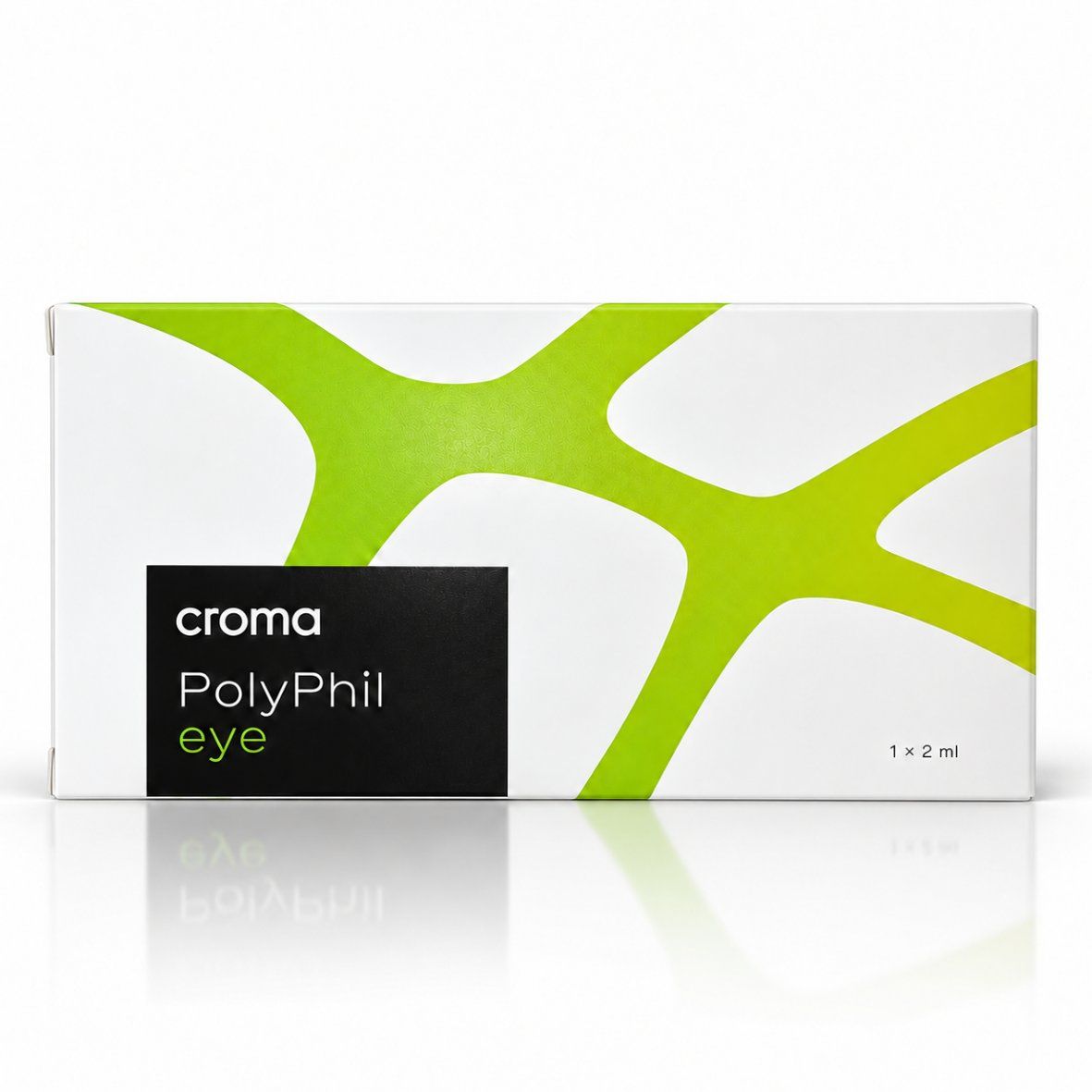
Croma PolyPhil Eye is a professional injectable polynucleotide treatment specifically developed for the delicate periocular area.
Each 2ml pre-filled syringe contains PN-HPT® polynucleotides at a total concentration of 15mg per 2ml, equivalent to 7.5mg/ml. PolyPhil Eye is designed to support skin quality around the eyes by improving hydration, suppleness, elasticity and the appearance of fine superficial lines, while helping tired-looking eyes appear fresher and more revitalised. It is part of Croma’s PolyPhil range and was previously marketed as PhilArt Eye.
Key Benefits
Croma PolyPhil Eye is a polynucleotide treatment tailored to the delicate eye area:
- Professional injectable polynucleotide treatment
- PN-HPT® polynucleotides at 15mg/2ml (7.5mg/ml)
- Concentration tailored to the delicate periocular region
- Supports hydration and suppleness around the eyes
- Helps improve the appearance of fine lines and crow’s feet
- Supports the appearance of elasticity and firmness
- Helps tired-looking eyes appear fresher and revitalised
- Focuses on skin quality rather than structural volume
- Supplied with 2 × 30G × 13mm needles
- Supplied as a 1 × 2ml pre-filled syringe
- Professional-use product for trained practitioners only
Product Details
Key specifications for Croma PolyPhil Eye:
- Product: Croma PolyPhil Eye
- Former name: PhilArt Eye
- Brand: Croma-Pharma
- Product type: Injectable polynucleotide skin treatment
- Active component: PN-HPT® polynucleotides
- Polynucleotide concentration: 15mg/2ml
- Equivalent concentration: 7.5mg/ml
- Syringe size: 2ml
- Pack size: 1 × 2ml pre-filled syringe
- Needles supplied: 2 × 30G × 13mm
- Primary treatment area: Eye contour / periocular area
- Injection depth: Intradermal
- CE marked: CE 0373
- Professional use: Yes
Always refer to the current Croma PolyPhil Eye Instructions for Use and professional training material before administration, and check the packaging, batch number and expiry date on the product supplied.
What Is Croma PolyPhil Eye?
Croma PolyPhil Eye (formerly PhilArt Eye) is a polynucleotide-based injectable treatment developed specifically for the thinner, more delicate skin around the eyes. Polynucleotides are long-chain biological molecules used in regenerative aesthetic treatments to support skin quality and tissue condition, and Croma describes PolyPhil Eye as intended to improve skin quality through moisturisation and improved turgidity, tonicity and suppleness. The lower PN concentration is specifically tailored to the delicate periocular region.
PN-HPT® Polynucleotides
PolyPhil Eye contains PN-HPT® polynucleotides at 15mg per 2ml syringe — PN-HPT® referring to Croma’s highly purified polynucleotide technology. Polynucleotides are used within aesthetic medicine to support an environment associated with skin hydration, fibroblast activity, collagen production, elasticity, firmness, tissue quality and overall skin revitalisation. The treatment is intended to improve the condition and appearance of the skin rather than create structural volume.
Designed for the Eye Area
PolyPhil Eye has been specifically developed for use around the eyes. Suggested treatment areas include the eye contour, lower periocular area, upper eyelid area where clinically appropriate, fine superficial lines, crow’s feet and delicate facial areas. Treatment around the eyes requires detailed anatomical knowledge and appropriate professional training, and the product should only be administered by healthcare professionals competent in periocular injection techniques.
Tired-Looking Eyes, Fine Lines and Hydration
One of the main purposes of PolyPhil Eye is to help improve the appearance of tired-looking eyes, where changes can result from skin ageing, loss of hydration, reduced elasticity, fine lines, skin laxity, environmental exposure and changes in tissue quality. The periocular area is particularly prone to fine lines because the skin is thinner than in many other facial areas, so PolyPhil Eye may help improve the appearance of fine superficial wrinkles, crow’s feet, crepey texture, early signs of periocular ageing and reduced firmness — progressively improving skin quality rather than providing an immediate volumising effect. Polynucleotides can also support the skin’s ability to retain moisture, which may help periocular skin appear smoother, more supple, more refreshed, less crepey and more luminous; hydration is particularly important around the eyes because this area has relatively thin skin and shows dehydration more readily.
Skin Elasticity and Firmness — Not a Dermal Filler
Croma describes PolyPhil treatments as supporting collagen and elastin production, which may help improve the appearance of skin laxity, reduced elasticity, loss of firmness and age-related texture changes; outcomes vary between individuals and depend on baseline skin condition, age, lifestyle and treatment protocol. PolyPhil Eye should not be confused with a conventional hyaluronic acid dermal filler — it is a polynucleotide-based skin-quality treatment rather than a volumising or contouring product, with its primary purpose being to improve skin condition, hydration, elasticity, texture and tissue quality, not to provide structural projection or facial reshaping.
Injection Depth, Technique and Treatment Protocol
Croma specifies PolyPhil Eye for intradermal administration, with the appropriate technique following current manufacturer instructions and practitioner training. Croma lists techniques including microdroplet, linear and fan techniques, selected according to the patient’s anatomy, skin condition and individual treatment plan. Croma’s professional material describes a typical course of several sessions at intervals, with the exact schedule determined by the practitioner according to skin condition, patient age, treatment goals, clinical response, previous treatments and manufacturer recommendations. Croma also positions the PolyPhil range within a Skin Enhancement Technique approach, where PolyPhil Eye may be used in planned programmes to improve skin condition before or alongside other procedures such as laser and energy-based treatments, peels, microneedling, filler treatments or surgical procedures — combination planning only by practitioners with appropriate training.
Professional Periocular Treatment
The periocular area contains delicate anatomical structures and requires advanced anatomical knowledge. Practitioners should understand orbital and vascular anatomy, skin thickness, appropriate injection depth, injection technique, product placement, management of swelling, recognition of vascular and visual complications, and emergency escalation pathways. Purchase or possession of PolyPhil Eye does not establish competence to perform periocular injectable treatments.
Before Treatment and Aseptic Technique
Before administering, confirm patient identity, complete an appropriate consultation, review medical history and allergies, assess previous aesthetic treatments, examine the periocular area and skin quality, confirm treatment goals, discuss expected results and potential adverse effects, obtain appropriate consent, check the syringe, packaging and expiry date, confirm the product is intact and ensure appropriate emergency procedures are available. Maintain appropriate aseptic technique throughout — hand hygiene, appropriate preparation of the treatment area, sterile equipment, avoiding touching sterile components, maintaining product sterility, disposing of needles immediately into an approved sharps container and following local infection-control procedures.
Expected Response and Potential Adverse Events
Temporary reactions can occur, including redness, swelling, tenderness, bruising, small injection-site papules, mild itching and temporary sensitivity; periocular swelling may be more noticeable because of the delicate tissues around the eyes, so patients should be counselled about expected downtime and aftercare. As with any injectable aesthetic procedure, complications can occur, which may include persistent swelling, inflammation, infection, hypersensitivity, nodules, prolonged tenderness, vascular compromise, visual complications and other injection-related adverse events. Any persistent, severe or unusual reaction should be assessed promptly by an appropriately qualified healthcare professional.
Important Visual Warning
Injectable procedures around the eye area carry particular anatomical risk. Any sudden visual disturbance following treatment should be treated as a medical emergency. Warning symptoms may include blurred vision, reduced vision, loss of vision, double vision, eye pain, ptosis, abnormal eye movement or neurological symptoms. Emergency medical and specialist ophthalmic assessment should be arranged without delay, and treatment with local measures must never delay urgent escalation where visual compromise is suspected.
Contraindications, Single Use, Aftercare and Storage
Treatment should only proceed following appropriate patient assessment. Reasons to avoid or postpone may include active infection, inflamed skin, open wounds, known hypersensitivity to product components, relevant autoimmune or inflammatory conditions where treatment is inappropriate, recent procedures affecting the treatment area, pregnancy or breastfeeding where treatment is not advised, and other contraindications listed in the Instructions for Use — always consult the current Croma IFU for the complete information.
The 2ml pre-filled syringe is for single-patient use: do not reuse the syringe or supplied needles, share it between patients, retain opened product for another patient or attempt to resterilise it; discard any unused product per the manufacturer’s instructions and local clinical waste procedures. Aftercare advice may include avoiding unnecessary touching, rubbing or massaging of the treated area unless instructed, avoiding excessive heat and strenuous exercise for an appropriate period, avoiding additional injectable procedures until swelling has settled, using appropriate skincare and sun protection, and contacting the practitioner if persistent or unexpected symptoms develop — with clear advice, given the eye area, on symptoms requiring urgent assessment. Store according to the manufacturer’s packaging and IFU — in original packaging, within the specified temperature range, protected from inappropriate heat, freezing (where applicable) and direct sunlight, and secure from children and unauthorised access. Do not use after the expiry date or if the sterile packaging or syringe is damaged.
Professional Use Only
Croma PolyPhil Eye 1 × 2ml is intended for use by appropriately trained healthcare professionals. Practitioners remain responsible for ensuring the patient is suitable, the periocular anatomy has been appropriately assessed, the treatment plan is clinically appropriate, correct injection depth and technique are used, aseptic practice is maintained, potential complications can be recognised, appropriate emergency pathways are available and suitable follow-up and aftercare are provided.
Quantity
 1

Insurance for Croma PolyPhil Eye – 1 × 2ml (PhilArt Eye)
Compare insurance quotes from trusted partners.
Get your quote
Meet your seller

MediSync
 5.0 (81)
167 products
248 sold
 We’re an MHRA licensed broker.
All-in-one platform for aesthetic clinics. Manage bookings and digital consent easily. Reduce paperwork and save time. Secure client data and records. Built for modern practitioners.


Get in touch