
A patient is in the chair at a busy aesthetic clinic, booked for 1ml of dermal filler to the lips. Everything is prepped. While the numbing cream is on, she mentions that her top lip has felt a bit tingly since yesterday, and asks whether that matters. She is not complaining. She thinks she is making conversation.
That tingle is the decision point of the whole appointment, and the practitioner has perhaps ninety seconds to make the call before the patient has emotionally committed to leaving with fuller lips. Getting it right is straightforward once the reasoning is clear. Explaining it to a patient who has taken a half day off work is the harder part.
Cold sore symptoms that change the plan
The prodrome comes first. Twelve to twenty-four hours before anything is visible, the patient feels tingling, burning, itching or a localised ache at the site where the lesion will appear. Most people with recurrent herpes labialis recognise it immediately, because it always arrives in the same place.
What the patient describes at this stage matters more than a visible lesion does, because prodrome is the point at which the decision is still cheap. Viral shedding is already under way. Nothing is visible yet, so nothing looks wrong, and the temptation to proceed is at its highest.
Herpes simplex type 1 is extremely common in the adult population, and a large proportion of carriers have never had a symptomatic outbreak. That means the absence of a cold sore history is weak reassurance rather than a clear negative, and it is one reason reactivation after lip filler occasionally surprises practitioners who screened carefully.
The screening question worth asking properly
“Do you get cold sores?” produces poor answers. Patients who had them as a teenager and not since will often say no.
Better wording asks for two things separately. Whether they have ever had a cold sore, and whether they have ever had one come up after dental work, lip treatment or anything else that broke the skin around the mouth. The second question identifies the group that CMAC specifically flags for prophylaxis, and it belongs on the medical history rather than in conversation, so the answer is recorded. Capturing it on a digital medical form completed before the appointment also means it is read before the numbing cream goes on rather than after.
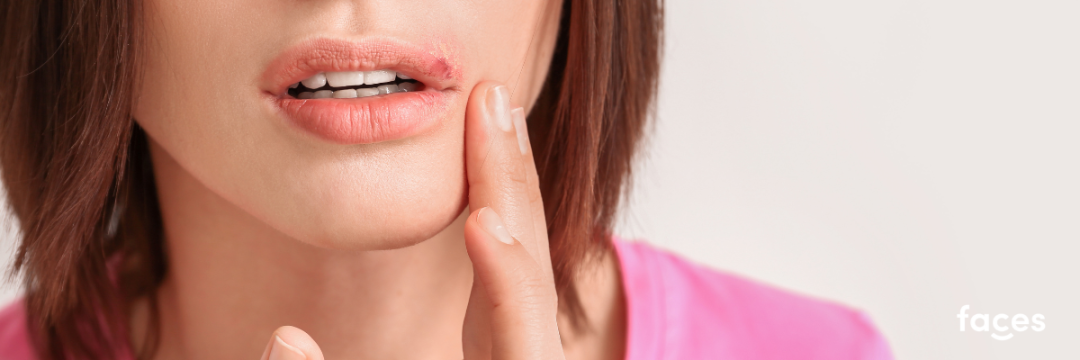
Why a cold sore on lip means deferring that day
An active lesion is a contraindication to injecting that area, and the reasoning is mechanical as well as infective. Needle passes through or adjacent to a lesion can carry virus along the tracks into deeper tissue, seeding sites that would not otherwise have been involved. The outbreak that follows is frequently more extensive than the patient’s usual pattern.
There is a second problem that shows up two weeks later. A patient who develops a herpetic outbreak days after filler will often present it as a filler complication, and distinguishing reactivation from early infection or an inflammatory nodule is considerably harder once both are in play. Deferring keeps the picture clean.
Defer until the lesion has fully crusted, separated and re-epithelialised. That is usually seven to ten days from onset, sometimes longer. A scab is not healed skin.
Making the deferral survive the conversation
Patients rarely argue with the clinical reasoning. They argue with the diary. Someone who has booked around childcare and has an event in ten days will push, and a practitioner without a rebooking answer ready tends to soften.
The answer is to move the appointment before the patient leaves the room, not to promise to sort it out later. Where the deposit transfers to the new slot rather than being lost, the conversation stops being about money within about four seconds. Practices running deposits through a system that handles this cleanly find the deferral conversation gets shorter.
Record the deferral and the reason. A note showing that treatment was declined on clinical grounds is worth having if the patient goes elsewhere that week and has a poor outcome.
Cold sore treatment and antiviral prophylaxis before lip filler
Two different clinical questions sit under the same heading, and conflating them is the most common error.
The first is treating an active outbreak. The CMAC guideline on herpes simplex and cosmetic interventions sets out Aciclovir 200mg orally five times daily for immunocompetent patients with moderate symptoms, and Aciclovir 400mg orally five times daily for immunocompromised patients or those with poor absorption. Courses run for five days, and the Aciclovir 200mg tablets summary of product characteristics carries the licensed dosing and the renal impairment adjustments.
The second is prophylaxis for a patient with a known reactivation history who is about to be treated again. CMAC advocates anti-HSV prophylaxis for patients who have previously had a herpetic outbreak following an aesthetic procedure, where the procedure breaches skin integrity. Dermal filler injection to the lips and nasolabial folds is named explicitly, alongside medical needling, chemical peels, dermabrasion and microdermabrasion.
Regimens and where the guidance diverges
There is no consensus regimen, and practitioners should know that rather than assume there is.
CMAC notes that no randomised controlled trials establish the optimum time to start episodic prophylaxis, and proposes starting no earlier than two days before treatment and no later than the day of treatment, continuing for five days or until post-procedure skin has healed. For patients who have previously failed Aciclovir prophylaxis with good adherence, or who are high risk including immunosuppression, it sets out Valaciclovir 500mg once daily starting two days before and continuing for seven days.
The ACE Group guidance on Aciclovir prescribing for lip treatments takes a different first-line position, using Aciclovir 400mg twice daily for five days, increasing to three times daily in high-risk or immunocompromised patients, with Valaciclovir as second line.
Both are defensible. What matters is that a practice picks one, applies it consistently, and records which was used.
Two limits are worth stating to patients. Oral antivirals do not prevent progression of latent infection, so prophylaxis reduces the chance of an outbreak rather than removing it. And if a patient reactivates despite prophylaxis, the protocol switches to treating active infection.
The prescribing route
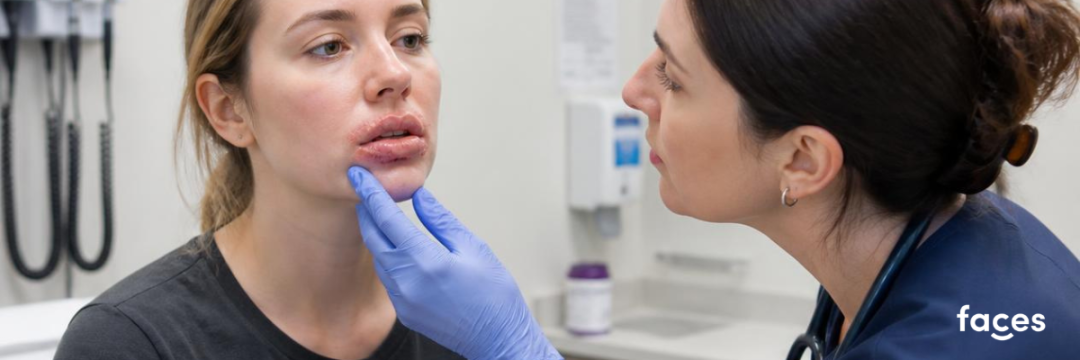
Aciclovir and Valaciclovir are prescription-only medicines. A practitioner who is not an independent prescriber needs a prescriber who has assessed the patient face to face, in the same way as for any injectable prescription-only medicine. Remote prescribing does not satisfy this.
That assessment is easier to arrange at the consultation stage, when the reactivation history is first identified, than in the two days before a treatment date. Practices working with a prescriber through the Faces prescriber network tend to build it into the consultation appointment rather than treating it as a separate errand.
Where cold sore cream fits, and where it does not
Aciclovir cream is available without prescription and has a modest effect on lesion duration when it is started during the prodrome. Started once vesicles have formed, the benefit is marginal.
Its relevance to a filler appointment is limited, and this is where patients get misled. Topical Aciclovir does not achieve meaningful systemic levels, so it is not a substitute for oral prophylaxis before a procedure that breaches the skin. A patient who has been applying cream for two days has not been treated in any sense that makes injecting safe.
There is a practical point too. Cream applied to the perioral area shortly before treatment interferes with skin preparation and asepsis. Patients attending for lip treatment should be told not to apply anything to the area on the day.
What patients believe about cold sore patches
Hydrocolloid patches work as a physical barrier. They reduce touching and picking, limit transfer to the hands and other sites, and cover the lesion cosmetically, which is why patients like them.
They do not treat the infection and do not shorten viral shedding. A covered lesion is still an active lesion, and a patch does not make the perioral area suitable for injection. Some patients will arrive wearing one, having assumed it counts as having dealt with the problem, and will be genuinely surprised to be turned away.
Where patches are useful is in the healing window, for patients returning to work or events while the lesion crusts.
Telling reactivation from a filler complication
Herpetic reactivation after lip filler typically appears within the first seventy-two hours, follows the patient’s usual distribution, is preceded by prodromal tingling, and progresses through vesicles to crusting on a recognisable timeline. It is usually unilateral and sits at the vermilion border rather than in the body of the lip.
Early bacterial infection, by contrast, tends to present with expanding erythema, warmth, tenderness and sometimes systemic symptoms, without vesicles. Inflammatory nodules generally appear later and are firm rather than vesicular.
If the presentation is unclear, or if there is pain out of proportion, dusky discolouration or delayed capillary refill, the differential moves away from both and towards vascular compromise. That is an emergency assessment rather than a wait-and-see.
Whatever is suspected, the working diagnosis, reasoning and advice given should go into the record on the day. Photographs at each review are worth more than a written description. Practices that have moved this into structured digital records rather than paper find it easier to evidence, for reasons covered in ditching paper for smarter consent in aesthetic practice.
Sort the prescribing route before the appointment, not after
Any patient whose medical history shows a cold sore following previous lip treatment needs the antiviral decision made at consultation, while there is time to arrange it properly. Add the reactivation question to your digital medical history forms, and arrange face-to-face assessment through a prescriber for aesthetic practitioners at the same appointment so the prophylaxis is in place two days before treatment rather than being chased the night before.
FAQs
What is a cold sore?
A cold sore is a recurrent infection of the lip and perioral skin caused by herpes simplex virus, most often type 1. After the first infection the virus stays dormant in the trigeminal ganglion and reactivates periodically, triggered by things including illness, stress, sun exposure and trauma to the area. Injection into the lip counts as trauma.
What does a cold sore look like?
It begins as localised redness and swelling, develops into a cluster of small fluid-filled vesicles usually at the vermilion border, then ruptures, weeps and crusts over. The distribution tends to be the same each time for an individual patient, which is useful when distinguishing it from other post-treatment presentations.
How long does a cold sore last?
Most episodes resolve within seven to ten days from prodrome to fully healed skin. Antiviral treatment started during the prodrome may shorten this modestly, but injecting is not appropriate until the skin has fully re-epithelialised, not simply scabbed.
How to get rid of a cold sore fast?
Starting oral antivirals at the earliest symptom gives the best result, which means during the tingling stage rather than once blisters appear. Patients with frequent recurrences should be assessed by a prescriber rather than relying on over-the-counter products, and anyone with an outbreak that is unusually severe, slow to heal or spreading beyond the usual site needs review.