
Two clients have the same consultation for a three-session skin booster course. The first hears the full price and asks for a week to think. The second asks, before any price has been given, whether she can pay monthly. The plan, the protocol and the cost are identical. What differs is the number each client uses to judge the plan, and that number shapes the decision more than most practitioners realise.
Monthly payment is now an ordinary part of UK aesthetics, and since July 2026 its most common form has been regulated by the FCA. The commercial case has been made elsewhere. This article looks at the consumer psychology underneath it: why a divided price feels different, where that helps clients complete treatment properly, where it distorts their judgement, and what that means for how a clinic talks about payment.

Why monthly figures can change how customers view treatments
The clearest account of this effect comes from John Gourville’s research on what he called the pennies-a-day strategy, published in the Journal of Consumer Research. Gourville found that describing a cost as a series of small, ongoing amounts made people more willing to accept it, even when the actual payment remained a single sum.
His explanation has two steps. First, the way a price is framed decides what the buyer compares it with. A small recurring figure brings to mind other small recurring costs: a phone contract, a gym membership, a streaming subscription. A single large figure brings to mind other large, occasional purchases: a holiday, a new sofa, a car repair. Second, the buyer judges the price against whatever came to mind. Against a holiday, a treatment course can look extravagant. Against a phone contract, the same course can look modest.
That is what perceived affordability means in practice. It is a judgement about whether a cost fits, and it depends heavily on the comparison the client happens to make. The treatment has not changed between the two framings. Only the reference point has.
With finance the effect is stronger than in Gourville’s experiments, because the payments really are split. The client is not just imagining the price in smaller pieces. Her bank statement will show smaller pieces.
Mental accounting and the pain of paying
Richard Thaler’s work on mental accounting explains the next layer. People do not treat money as one pot. They sort it into mental categories, such as monthly bills, savings or treats, and judge each purchase against the budget of the category it lands in. An instalment tends to be filed alongside regular outgoings. A lump sum tends to be weighed against savings. The same treatment can pass one test and fail the other.
Drazen Prelec and George Loewenstein added an important detail in The Red and the Black. Paying causes discomfort, and people soften it by mentally linking each payment to the benefit it buys. Their studies found people are fairly content paying ahead for something they will enjoy later, and much less content paying for something they have already finished enjoying.
Why this matters for treatments that wear off
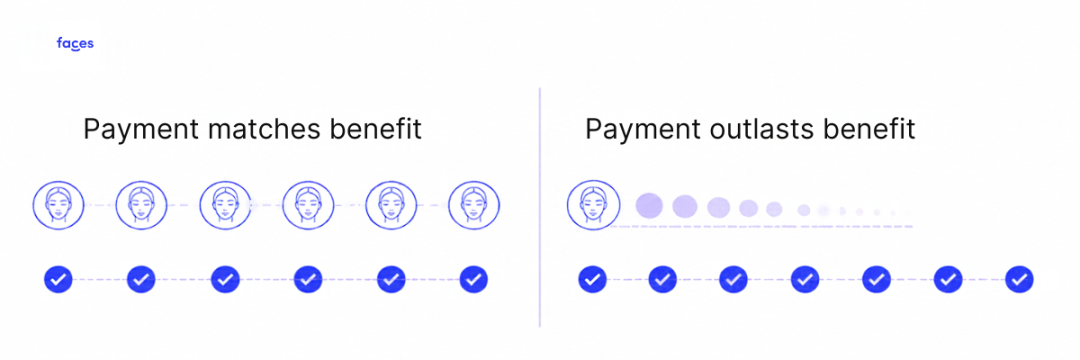
That second finding has a direct clinical consequence. Results from anti-wrinkle injections typically last around three to four months. Interest-free Deferred Payment Credit can run for up to 12 instalments over 12 months. A client could still be paying for a treatment long after its effect has gone, and possibly while booking the next one.
This is where finance tends to shift from welcome to resented. Payments that felt light at the consultation start to feel like paying for nothing. Treatments whose results build over a course, or last beyond the payment period, keep payment and benefit more closely aligned. When a clinic decides which treatments to make finance available for, the life of the result is worth weighing alongside the price.
Price sensitivity and the first number heard
Elective treatments attract high price sensitivity, and clients anchor on the first figure they hear. If that figure is an instalment, the full price can feel like a jump when it arrives, and the conversation turns into a negotiation. If the total comes first, any later discussion of payment sits on an accurate reference point.
A monthly figure also changes what is being decided. Once it is in the room, client buying behaviour shifts from asking whether the plan is right to asking whether the instalment feels manageable. Both are reasonable questions. Only the first is clinical, and it is the one the practitioner is responsible for. Most purchasing decisions in a clinic should be settled on that question before payment is mentioned.
Affordability vs total cost
Monthly framing blurs two separate questions. One is affordability: whether the client can meet each payment without difficulty. The other is total cost: how much she will pay overall. On an interest-free DPC agreement, the total should equal the treatment price. On an interest-bearing agreement it is higher, and the difference is the cost of credit. A client comparing options by instalment size alone can pick the more expensive one without noticing. What Clients Should Check Before Signing for Finance covers where clients find those figures in the lender’s documents.
The first question now has a formal owner. Since 15 July 2026, lenders offering DPC must carry out a creditworthiness assessment under the FCA’s CONC 5.2A rules before lending. That check answers whether the client can repay. It does not answer whether the treatment is appropriate, whether the plan has grown beyond what she came in for, or whether her motivation suggests she should wait. Those remain clinical judgements, and BDD and Psychological Screening: When to Say No covers the cases where the answer is no however payment would work.
Where monthly payment genuinely helps
Some protocols only work as a course. Skin boosters and chemical peels, for example, are usually delivered as several sessions spaced weeks apart. A client paying session by session may stop after the first because the next payment feels too large, and stopping early often leaves a disappointing result and a client who believes the treatment does not work.
Here, spreading the cost of aesthetic treatments across the course supports the clinical outcome. It also improves financial accessibility for clients with steady income but limited savings, who can often manage regular payments comfortably. The FCA’s Woolard Review acknowledged this usefulness while still recommending that interest-free BNPL be brought into regulation. Used this way, cosmetic treatment payment plans help the client finish the treatment she needed from the start.
Where it distorts the decision
The same mechanism causes harm when it changes the plan. Adding a third area because the instalment barely moves is the classic case. So is the client who arrives looking for affordable aesthetic treatments, signalling that cost matters a great deal to her, and leaves with a larger plan on credit than she would have paid for outright. Under the FCA’s Consumer Duty, lenders must make sure customers understand what they are agreeing to. A clinic whose consultations routinely produce that pattern creates the outcome the Duty exists to catch, and the lender will see it in its complaints.
Keeping communications factual and compliant
The psychology explains why the rules on credit promotion look the way they do. Under CONC 3.5, any financial promotion stating an amount relating to the cost of credit, and an instalment figure counts, must include a representative example with at least equal prominence. The rule exists because a lone monthly figure is so persuasive. It applies to web pages, social posts, price lists and treatment menus, anywhere a clinic mentions aesthetic clinic finance or finance for treatments.
Most clinics act as an introducer for their lender, which limits staff to saying finance is available, explaining in general how it works and passing on the lender’s approved information. The GMC’s guidance for doctors offering cosmetic interventions adds that clinicians must not use promotional tactics that could encourage an ill-considered decision. Nurse and dental prescribers work under their own codes, but the GMC wording is a sound benchmark for everyone.
Lead with the total, every time
Give the full cost of the full plan first, including every session and any expected review. Then list the patient payment options in the same order and the same words for every client: card at each session, pay per session where the protocol allows, or finance through the lender. Talking About Finance Without Sounding Like a Pitch sets out wording that suits most clinics.
Words that frame and words that inform
Framing language uses the psychology above on purpose. “Only so much a week”, “less than a coffee a day”, “most clients pay this way” and “if you book today” all steer the client towards the small comparison set or add pressure. Informing language names the total, names the lender, says the lender makes the decision, and says the full repayment schedule will be shown before anything is signed. Monthly payments for cosmetic treatments should be described as a way of paying, never as a reason to have the treatment.
Online and in writing
The same holds on a website or social account. A service page can describe buy now pay later for aesthetic treatments factually: that it exists, who provides it and where to apply. Copy about financing cosmetic procedures should explain the mechanism, not sell the instalment. “Finance available through [lender]” is information. “From [amount] a month” is a cost-of-credit figure and brings in the full representative example requirement. Anyone writing about aesthetic treatment finance for a clinic should treat the lender’s promotional guidelines as the final word.
Putting the Psychology to Work for the Client
The research also points to what helps. Framing effects are strongest when a decision is quick and made in the moment. They weaken when the client has time and sees the total and the instalment side by side.
Clinics using Faces Finance can send the finance link through the consent form, the booking link, or a direct link after the consultation. The client then reads the lender’s own figures at home, with the total payable next to the schedule and nobody waiting in the room. That one change does more to counter monthly framing than any script.
Three further habits keep the process honest. Offer finance options for aesthetic treatments to every client in the same way, so nobody is singled out. Note in the consultation record that payment options were described in the standard way and that the client had time to decide. And review which treatments finance is offered on, using the life of the result as one test. How to Price Your Aesthetic Treatments When Offering Finance covers the pricing side, and Why Clients Choose Flexible Payment Options for Treatments gives staff background on the questions clients tend to ask.
The FCA is reviewing its consumer credit promotion rules through consultation CP26/15, so lender guidelines are likely to change again. The psychology will not. A client choosing between paying monthly and paying upfront is always comparing the price with something. The clinic’s job is to make sure that comparison starts with the real total.

Set Up Finance That Gives Clients Time
Clinics on Faces can register for Faces Finance through Finance Hub and add the finance link to their consent forms and booking link. Every client then sees the lender’s total cost and repayment schedule at home, before the appointment, and decides how to pay with the full figure in front of her.
FAQs
Why do clients prefer monthly instalments if the total is the same?
Smaller amounts get compared with other regular costs, such as a phone contract, not with large one-off purchases. They also sit more easily inside a monthly budget than a single sum taken from savings. Neither changes what the treatment costs.
Can a clinic advertise a “from £X a month” price?
Only with a full representative example given equal prominence, under CONC 3.5. Most clinics acting as introducers avoid monthly figures entirely and use the lender’s approved wording.
Is interest-free BNPL for treatments regulated in the UK?
Yes. Since 15 July 2026, third-party lenders offering interest-free Deferred Payment Credit must be FCA-authorised or hold temporary permission, assess creditworthiness and give clear information before lending. The FCA’s consumer guide to Buy Now Pay Later explains the protections, including access to the Financial Ombudsman Service.
Does offering monthly payment make clients spend more?
Research on price framing shows that dividing a price can make people more willing to accept it. Whether that leads to good or poor outcomes depends on whether the plan was fixed clinically before payment was discussed.
Should finance be mentioned to every client?
Yes, in the same words and after the full price. Offering it selectively implies a judgement about a client’s means and makes the clinic’s practice harder to evidence.