
After enough years in clinic, you stop guessing with numbing cream and start having a protocol. The practitioners who haven’t got there yet are the ones still wondering why their numbing isn’t working, or worse, assuming their patient just has a low pain threshold.
Why Numbing Cream Deserves More Than an Afterthought
Most practitioners are taught the basics and then left to figure out the rest on their own. Which product to use, how long to leave it on, whether to occlude it, what to do when it just isn’t working well enough. These are practical, day-to-day questions and the answers make a real difference in clinic.
Aesthetics numbing cream sits at the intersection of patient experience and clinical outcome. A patient who’s relaxed and comfortable is easier to treat. There’s less flinching, less tension in the tissue, and better results because you can work more methodically without rushing to minimise discomfort.
The Products Most Practitioners Reach For
There are a handful of products that come up again and again in aesthetic practice, and for good reason.
EMLA
EMLA Numbing Cream is probably the most widely used topical anaesthetic in UK aesthetics. It contains lidocaine 2.5% and prilocaine 2.5%, and it’s been around long enough that most practitioners know how it behaves. It works well under occlusion and typically needs around 45 to 60 minutes for good effect. It’s prescription-free, widely available, and predictable. For most standard treatments, it does the job.
The one thing to be aware of is that EMLA can cause vasoconstriction, which affects tissue blanching. For some treatments that’s fine; for others, particularly where you’re assessing skin tone or working around delicate vasculature, it’s worth factoring in.
LMX4
LMX4 contains 4% lidocaine in a liposomal base, which helps with penetration and often means a slightly faster onset than EMLA. Some practitioners prefer it for this reason, particularly in busier clinics where patient turnaround matters. It can be effective in as little as 30 minutes, though leaving it longer generally improves the result.
It’s a solid option for facial treatments and tends to be well tolerated. Patients with sensitive skin sometimes report less irritation with LMX4 compared to other formulations, though as always, individual responses vary.
Denela
Denela contains lidocaine 7% and tetracaine 7%, making it one of the stronger topical options available. It’s particularly useful for more involved treatments where standard numbing just isn’t sufficient, or for patients who simply have a lower pain threshold regardless of what you try.
Because of the higher concentration, onset can be faster and the depth of anaesthesia is generally greater. That said, you need to be mindful of application area and duration, particularly on larger zones, and it should always be used according to the manufacturer’s guidance.
Choosing the Right Product for the Treatment
Not every treatment needs the same approach, and this is where experience really counts.
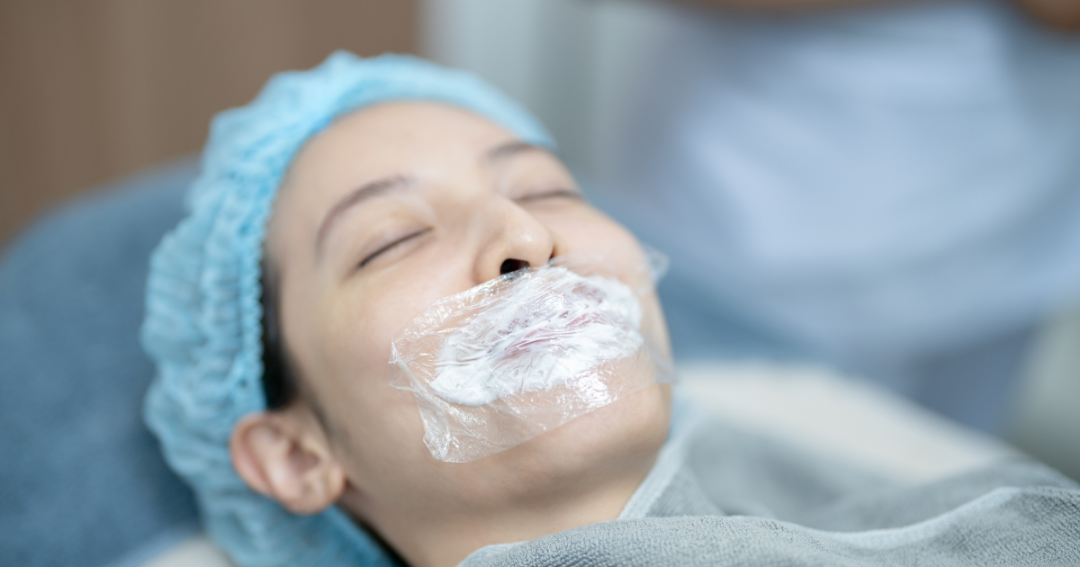
For lip filler, you want good mucosal and skin numbing. EMLA or LMX4 applied under cling film for 45 to 60 minutes generally works well. Some practitioners also use dental blocks for patients who are particularly anxious, and there’s no shame in offering that.
For skin boosters, mesotherapy, or polynucleotides, the needling is typically shallow and fast. A good numbing cream for aesthetics applied 30 to 45 minutes prior, occluded, usually takes the edge off enough for most patients to be comfortable.
For anything more involved, such as deeper filler work, tear trough treatment, or patients with genuine needle phobia, Denela is worth considering. It gives you a better working window and a more relaxed patient.
Practical Tips That Actually Help
A few things worth knowing that don’t always come up in training:
Occlusion makes a significant difference. Applying cling film or a tegaderm over the cream after application increases penetration and improves the result. If you’re not doing this routinely, try it and you’ll notice the difference.
Application thickness matters too. A thin smear isn’t enough. You want a generous layer across the treatment zone.
Timing is everything. Removing the cream too early is one of the most common reasons numbing doesn’t work as well as it should. Build the application time into your patient journey from the moment they arrive.
And if a patient tells you the cream isn’t working, believe them. Anatomy, skin thickness, anxiety levels, and individual variation all affect response. Having a backup plan, whether that’s additional topical product, a dental block, or rescheduling with a stronger option, is good clinical practice.
Cost Without Compromising Quality
Budget is a real consideration in running a clinic, and there’s nothing wrong with looking for numbing cream for injections inexpensive and reliable anesthesia options that won’t eat into your margins. EMLA and LMX4 both sit at a reasonable price point for the volume most clinics use. Denela tends to cost more but is typically reserved for cases where it’s genuinely needed, so the higher unit cost balances out.
What you’re looking for in any product is consistency. You want to know that what worked last Tuesday will work this Thursday. Stick to reputable suppliers and avoid anything that seems unusually cheap or comes without clear product information.
What Practitioners Often Get Wrong
The biggest mistake is underestimating how much numbing cream affects the overall patient experience. Patients talk. If someone leaves your clinic having had a painful treatment, they remember it. If they leave having been comfortable and well looked after, they come back and they tell people.
Investing properly in best numbing cream for aesthetics that suits your patient base and treatment menu is a small cost relative to the value of a good patient experience.
The second mistake is inconsistency. Using whatever happens to be in stock, varying your application time, not occluding. Build a protocol and stick to it.
Building It Into Your Clinic Protocol
Numbing cream for aesthetics works best when it’s part of a defined process, not an afterthought. Note which product you used and for how long in patient records. If something worked particularly well or didn’t work, you want that information next time.
Train any support staff on correct application so that numbing is started before you even enter the room. That alone saves time and improves the patient experience without any extra effort on your part.
Ready to stock up or switch to something that actually performs? Browse our full range of numbing creams including EMLA, LMX4, and Denela, all available for aesthetic practitioners.
FAQs
How long should I leave numbing cream on before an aesthetic treatment?
It depends on the product and the treatment, but as a general guide, EMLA and LMX4 benefit from 45 to 60 minutes under occlusion. Denela can work in less time due to its higher concentration. Always follow the manufacturer’s guidance and factor application time into your patient journey from arrival.
Does occlusion really make a difference with numbing cream?
Yes, significantly. Covering the cream with cling film or a tegaderm after application increases absorption and depth of penetration. Most practitioners who start occluding consistently notice a marked improvement in how well their numbing works.
Which numbing cream is best for lip filler?
EMLA and LMX4 are both commonly used for lip filler and work well when applied for long enough under occlusion. For patients with a lower pain threshold, dental blocks are worth offering alongside topical numbing for a more comfortable experience.
Can numbing cream affect my filler results?
It can have a minor effect. EMLA in particular can cause localised vasoconstriction and tissue blanching. For most treatments this isn’t clinically significant, but it’s worth being aware of, particularly when assessing skin tone or working in vascular areas.
Is Denela safe to use on all patients
Denela is a higher-concentration product and should be used according to manufacturer guidelines. It is not recommended for use on large surface areas, and care should be taken with patients who have known sensitivities to lidocaine or tetracaine. Always take a thorough medical history before use.