
Scroll through aesthetic social media for five minutes and exosomes are everywhere: luminous skin, dramatic before-and-afters, and a price tag to match. Practitioners are fielding questions about them daily, often from clients who have read that exosomes are the closest thing to a reset button for ageing skin. The problem is that the marketing has sprinted ahead of the regulation, and that gap is exactly where a trained practitioner needs to slow down. Offer the wrong version of this treatment, or describe it the wrong way, and both patient safety and professional cover are on the line.
Here is a practical look at what these particles are, how they are being used in UK skin clinics, where the legal lines sit, and how to price and position the treatment without overpromising.
What an exosome actually is
An Exosome is a tiny extracellular vesicle, roughly 30 to 150 nanometres across, released by almost every cell in the body. Think of it as a sealed courier package. Inside are proteins, lipids, growth factors and genetic material such as messenger RNA and microRNA. Cells use these vesicles to send instructions to one another, telling neighbouring cells how to repair, calm inflammation or produce more collagen.
For years these particles were dismissed as cellular waste. That view has changed, and exosomes are now understood as a genuine signalling system. In aesthetics the interest is straightforward: if you can deliver the right regenerative signals into skin that has been prompted to heal, you may amplify the result you would get from healing alone. That is the whole premise, and it is worth understanding properly before repeating any of the bigger claims a supplier might make.
How the treatment is meant to work
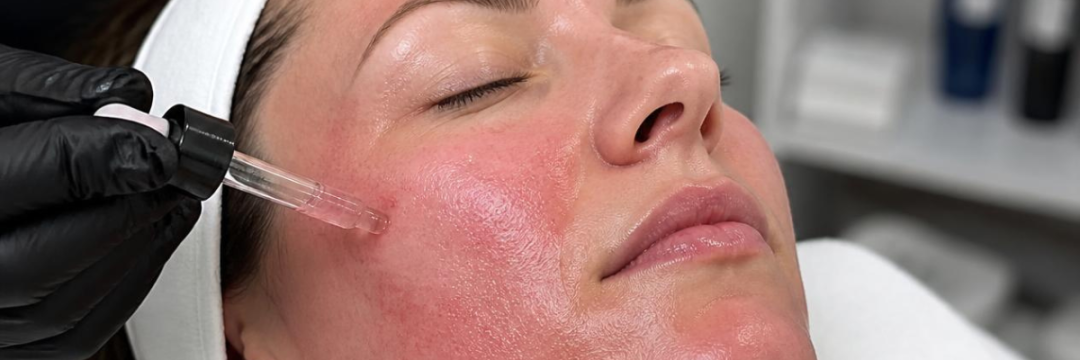
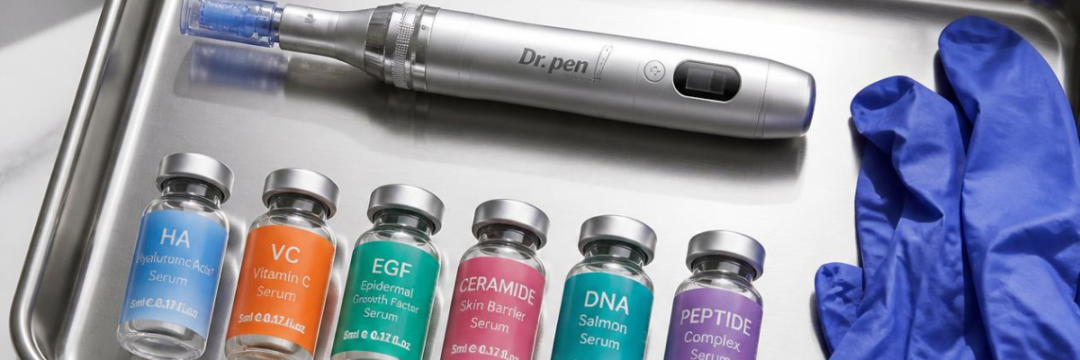
The logic behind exosome therapy rests on signalling rather than volume. Where a hyaluronic acid skin booster hydrates and a biostimulator lays down a scaffold, exosomes are positioned as messengers that instruct fibroblasts to step up collagen and elastin production and support tissue repair. In practice they are almost always paired with a controlled injury treatment, most commonly microneedling, which opens temporary micro-channels in the skin and creates a window for topical products to penetrate further than they otherwise could.
That pairing matters clinically. The needling does the mechanical work of triggering the wound-healing cascade. The exosome preparation is applied on top, and the theory is that its signalling molecules support and accelerate that same cascade. If microneedling is part of your existing menu, this piece on microneedling for skin rejuvenation is a useful refresher on the base treatment before layering anything over it.
The UK regulatory position, in plain terms
This is the part that catches practitioners out, because the way exosomes are marketed often implies more freedom than the law allows.
The MHRA considers exosomes, when injected, to be a medicinal product. No exosome-based injectable currently holds a UK marketing authorisation. That means injecting exosomes into the skin, whether intradermally, subcutaneously or intravenously, is not lawful in aesthetic practice. Patient-safety bodies have been direct about this, and Save Face’s warning on exosome injectables is worth reading in full and keeping on file.
Two rules follow from that position, and both are firm. Human-derived exosomes are not permitted for cosmetic use in the UK. And any product being sold to you for injection should be treated as a red flag, regardless of how the paperwork is dressed up.
Where the injectable-versus-topical line sits
The route that clinics use lawfully is topical application, typically applying the preparation over skin that has just been microneedled so it can travel into the open channels. This is how the treatment is delivered by reputable UK providers, and it is the version that keeps you inside current regulatory boundaries. There is genuine debate in the sector about whether applying a preparation over freshly needled skin blurs the line between topical use and administration, and that debate has not been fully settled. The safe reading for now is simple: topical over microneedling is the accepted cosmetic route, injection is not, and human-sourced material is off the table entirely.
What this does to your insurance
Cover is where good intentions come undone. A standard liability policy may not extend to exosomes at all, particularly if the product is not CE-marked for topical cosmetic use, if the supplier cannot demonstrate it meets MHRA standards, or if consent and aftercare are not properly documented. The practical step is to confirm in writing with your insurer that your specific product and protocol are covered before you treat a single client.
Sourcing, and what to check before you buy
Because human-derived material is out, the products on the UK market are derived from other sources: plant or rose stem cell exosomes, bovine colostrum, and salmon. These behave differently, and quality varies enormously between suppliers. Plant-derived vesicles, for example, lack the phospholipid membrane structure that allows fusion with human cells in the way animal-derived vesicles can, which affects how a preparation is likely to perform. That is the kind of detail a client will never ask about but a practitioner should know.
Before you Buy Exosomes UK-side, work through a short checklist. Is the product CE-marked for topical cosmetic use? Can the supplier provide batch documentation, storage and cold-chain requirements, and evidence of what is actually in the vial? Is the source clearly stated rather than vaguely described as “stem cell”? A vague answer to any of these is a reason to walk away. Sourcing consumables through a regulated route such as the Faces Pharmacy gives you traceability that protects both you and the client if a question is ever raised.
The exosome serum you apply is only as good as its provenance. A cheap vial of unknown origin applied into open micro-channels is a genuine infection and reaction risk, not a bargain.
Delivering it well in practice
A typical exosome treatment session runs alongside microneedling and takes around 45 to 60 minutes including preparation. The skin is cleansed, a topical anaesthetic is applied if needed, microneedling is performed to the appropriate depth for the concern, and the exosome preparation is worked into the treated area while the channels remain open. Most protocols recommend a course of two to three sessions spaced three to four weeks apart, with maintenance every six months.
Aftercare is where results are protected. Expect mild redness and a sunburn-like feel for 24 to 48 hours. Clients should avoid make-up for the first day, skip active ingredients such as retinoids and exfoliating acids for five to seven days, and use a broad-spectrum SPF 30 or higher daily while the barrier recovers. A written aftercare plan removes ambiguity and gives you something to point back to if a client does not follow it. The same applies to consent: this is a treatment where documenting the topical-only route, the product source and the realistic expectation of results is not optional.
Marketing without crossing the line
Exosome-based facials sell partly on novelty, and that is a trap. Describing Exosome facials as a cure, promising specific percentage improvements, or borrowing a supplier’s boldest claims will draw the attention of the advertising regulators and can mislead clients. Keep public-facing copy grounded in what topical exosomes are actually cleared to do: support skin quality and recovery as part of a needling protocol. Compliant, well-written marketing is a skill in itself, and it is where a service like Plump Marketing earns its keep by keeping claims defensible.
The evidence base, honestly assessed
The research is early and improving, not settled. An overview in the Aesthetic Surgery Journal frames exosomes as a real conceptual shift in regenerative aesthetics while stressing that isolation methods and purity still vary widely between products. A 2025 UK systematic review of bio-revitalisers reported emerging improvements in tone, texture and collagen stimulation with high satisfaction and few adverse events, while calling for standardised protocols and longer-term data. Present that picture to clients as it is. Promising results, incomplete evidence, and a treatment best understood as complementary to established options such as Profhilo and polynucleotides rather than a replacement for them.
Pricing and positioning
Exosomes sit at the premium end of skin treatments, mostly because the consumable is expensive and the treatment is marketed as advanced. As an add-on to microneedling, the Exosomes treatment UK price commonly lands between £300 and £600 per session. As a standalone or packaged course, the Exosome UK cost climbs further, with some London clinics charging from around £580 per session or roughly £1,600 for a course of three, and full course pricing elsewhere spanning £500 to nearly £2,000 depending on the area, the product and the practitioner.
Price with the full course in mind, be transparent about how many sessions a client realistically needs, and make clear what is included, needling, serum and aftercare, so a low headline figure does not become a source of complaints later. A tidy Booking System that shows the course structure up front prevents most pricing disputes before they start.
Where this leaves you
Exosomes are worth understanding, worth watching, and worth offering carefully, provided you stay topical, source CE-marked product with proper documentation, confirm your cover, and describe the treatment honestly. As the evidence matures and any licensed injectable eventually reaches the UK, the rules will move. Building your protocol on solid ground now means you will not have to unpick anything later.
Add exosomes to your menu the right way. Buy CE-marked topical exosome products in the Faces Shop, activate the matching consent and aftercare forms, and check your cover before your first booking.
FAQs
Are exosomes legal in the UK?
Topical use, typically over microneedled skin, is how they are lawfully offered. Injecting exosomes is not permitted in aesthetic practice, and human-derived exosomes are not allowed for cosmetic use.
Can exosomes be injected like a skin booster?
No. The MHRA treats injected exosomes as an unlicensed medicinal product. Any supplier or trainer telling you to inject them is steering you outside the law and your insurance.
How long do results last?
Clients are usually advised on a course of two to three sessions with maintenance around every six months. Skin-quality improvements build gradually rather than appearing overnight.
What do clients say about the treatment?
Reported Exosome UK reviews tend to be positive on glow and texture, especially when paired with needling, though satisfaction depends heavily on realistic expectations set at consultation. Manage the promise and you manage the review.
Who should not have it?
Avoid over active infection, in pregnancy or breastfeeding, and take care with a history of keloid scarring or with clients on immunosuppressive therapy. A full medical history at consultation is essential.