
A client is approved for treatment finance on her phone in under five minutes. She comes back into the treatment room and asks a reasonable question: if she clears the balance after two months, does she save anything? The aesthetic practitioner does not know, and should not guess, because the answer is in the agreement the client has just accepted without reading it. Most clients choosing finance at an aesthetic clinic focus on two things: being approved and the first instalment. The sections that decide whether the arrangement actually works for them come later in the document. Those sections cover the total she will repay, what a missed payment triggers, how early settlement works, and what happens to the agreement if the treatment plan stops. This guide explains what those sections say, why they matter, and how a clinic can make sure clients see them before signing.
Why the Agreement Matters More Than the Approval
Since 15 July 2026, the FCA has regulated interest-free Buy Now Pay Later lending as Deferred Payment Credit (DPC). Under the FCA’s final rules in PS26/1, lenders must check that a borrower can afford to repay. They must also give clear information before the agreement starts, including how much is borrowed, when each payment is due and what happens if one is missed. Borrowers who are unhappy with a lender can now take a complaint to the Financial Ombudsman Service.
So the information does reach the client. Whether she reads it is a different question. An application on a phone takes minutes, and the documents that come with it are easy to scroll past. Under the FCA’s Consumer Duty, making sure the customer understands is the lender’s responsibility. A client who signs without understanding her agreement is still a risk to the clinic, though. She is the one who comes back unhappy when a charge appears or a course is paused.
Clinics that introduce finance usually act as an introducer for the lender, and that role limits what staff can say. Staff cannot advise which product suits a client or estimate what she will pay. That boundary, and wording that stays inside it, is covered in Talking About Finance Without Sounding Like a Pitch and What It Takes to Offer Finance in Your Clinic. What a clinic can do is point clients to the right sections of the lender’s own documents and give them time to read them.
Interest-Free or Interest-Bearing: Two Different Agreements
The first thing a client should find out is which kind of agreement she is signing, because that decides almost everything else.
DPC covers interest-free agreements repaid in 12 or fewer instalments within 12 months. Agreements that run longer, or that charge for credit, have always been regulated under the Consumer Credit Act 1974 and come with fuller pre-contract information. Lenders working with aesthetic platforms may offer both kinds, and a client may be shown more than one option at the end of her application.
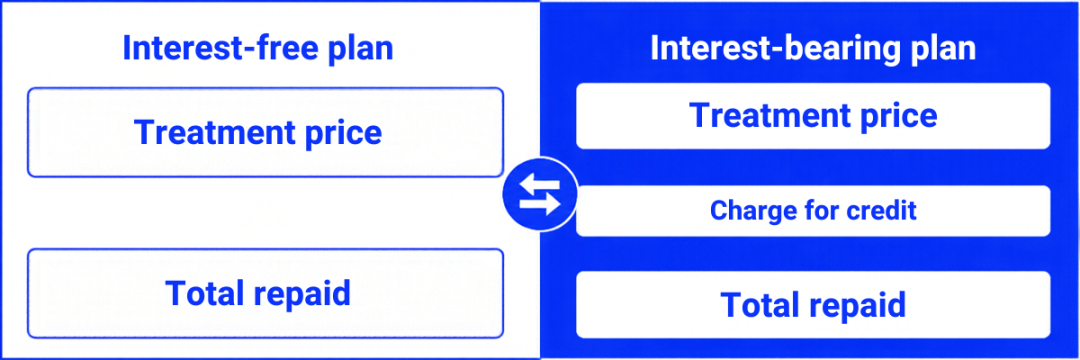
The difference matters because the borrowing costs are in different places. On an interest-free plan, the client should repay exactly the treatment price. On an interest-bearing plan, she repays the price plus a charge for credit, and that charge grows the longer the agreement runs.
The Figures to Find First
The total to repay
The most useful line in any agreement is the total amount payable. Comparing it with the treatment price gives the client an immediate answer. If the two figures match, she is spreading the cost without paying anything extra. If the total is higher, the difference is the cost of borrowing, shown in pounds rather than as a percentage. A client who checks nothing else should check this.
What APR actually measures
A plain APR explanation helps here, because the figure is quoted everywhere and often misread. The annual percentage rate combines the interest rate with any compulsory charges and expresses the result as a yearly rate. That lets agreements of different lengths and structures be compared on the same basis.
In advertising, lenders quote a representative APR. This is the rate they expect at least 51% of successful applicants to receive. An individual client may be offered a different rate once her application is assessed, so the figure in her own documents is the one that counts. On a genuinely interest-free agreement there is no APR to compare. The only check needed is that the total matches the price.
Dates, instalments and length
The repayment schedule shows when the first payment is taken, how often the rest follow, and how they are collected, usually by card or Direct Debit. The first payment date matters more than clients expect. Some plans take it when the agreement is made and others a month later, so a client who hasn’t checked may find it lands before payday.
The monthly repayment amount is the figure clients notice first, but on its own it tells them little. A longer repayment period lowers each instalment and, on an interest-bearing plan, raises the total. A client who compares two options by instalment size alone can pick the more expensive one without realising.
The Sections Clients Tend to Skip
Missed payments
Before signing, a client should find out what a missed payment triggers. The answer is in the lender terms and conditions, which usually cover three points:
- whether a charge is added
- when the lender will get in touch
- whether the missed payment is reported to credit reference agencies
FCA rules in the Consumer Credit sourcebook limit late payment fees to the reasonable costs the lender incurs, so they cannot be used as a penalty. PS26/1 also requires DPC lenders to tell borrowers when a payment has been missed and to give notice before taking certain further action.
The less visible consequence is the credit file. A missed payment recorded there can affect later applications for unrelated borrowing, including mortgages and car finance, long after the treatment itself has been forgotten.
Settling early
Clients often assume that paying early will cost them something. Under section 94 of the Consumer Credit Act, a borrower with a regulated agreement can pay off all or part of the balance at any time. Lenders can sometimes claim compensation for early settlement under section 95A. That amount is capped by law: it cannot exceed what the client would have paid in charges if she had kept to the original plan.
On an interest-free agreement, that cap means early repayment charges have nothing to apply to. On an interest-bearing agreement, settling early normally reduces the total, because the client stops paying for the months she has cut short. The client gets the exact settlement figure by asking the lender.
Withdrawing from the credit
For regulated credit agreements, section 66A of the Consumer Credit Act gives borrowers 14 days to withdraw without giving a reason. Clients often misunderstand what this does. Withdrawing ends the credit, not the treatment booking. The client must repay the amount borrowed, plus any charges built up so far, within 30 days of giving notice. Cancelling the treatment itself falls under the clinic’s own policy. The client therefore needs to read the credit agreement terms and the clinic’s cancellation policy together.
Disputes about the treatment
Section 75 applies where a regulated agreement pays for a single item or service with a cash price above £100 and up to £30,000. In that case, the lender can be jointly liable with the supplier for misrepresentation or breach of contract. In practice, this means a client unhappy with a financed treatment may complain to the lender instead of the clinic, and the lender will then look at what was agreed. Clear consent records and written treatment plans protect the clinic here as much as anywhere.
Approval Is the Lender’s Check, Not the Only One
A lender’s decision on loan affordability answers one question: based on the information given, can this applicant repay without significant difficulty? It does not tell the client whether the plan fits comfortably alongside everything else she pays for. FCA creditworthiness rules require lenders to assess this properly, and since July 2026 that applies to DPC as well. Even so, the assessment relies on what the applicant tells the lender.
Once she has signed, the borrower responsibilities are simple but easy to overlook:
- keep the payment card or account funded
- tell the lender if her contact details or card change
- open messages from the lender instead of ignoring them
On short agreements, an expired card causes more missed payments than an inability to pay.
What Happens If Circumstances Change
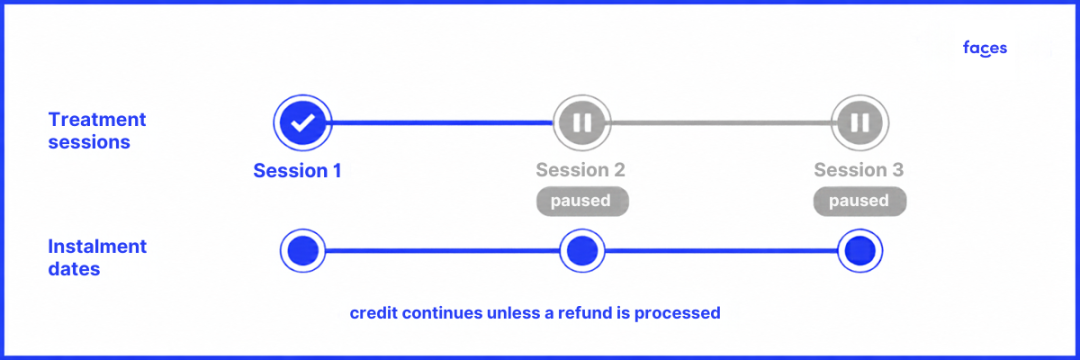
Aesthetic finance has a feature that most retail finance does not. The treatment is often delivered over weeks or months, but the credit starts on day one. A client financing a three-session course may need to stop after the first session, for example because pregnancy, a new medication or a change in her health makes further treatment clinically inappropriate. The agreement does not pause just because the treatment has.
What happens next depends on the loan contract conditions and on the clinic’s refund policy for sessions not yet delivered. If the clinic refunds unused sessions, the refund normally goes back through the lender and reduces the balance. It is not paid to the client in cash. Clinics should know exactly how this works before they finance packages. How to Price Your Aesthetic Treatments When Offering Finance covers packages and cancellations in more detail.
If the client’s financial circumstances change through job loss, illness or reduced income, the most useful thing she can do is contact the lender before a payment is missed. FCA rules require lenders to treat customers in financial difficulty with forbearance, which can include reduced or paused payments. Lenders must also point those customers to free debt advice such as MoneyHelper. A lender can only help if it knows there is a problem.
Making the Reading Easier
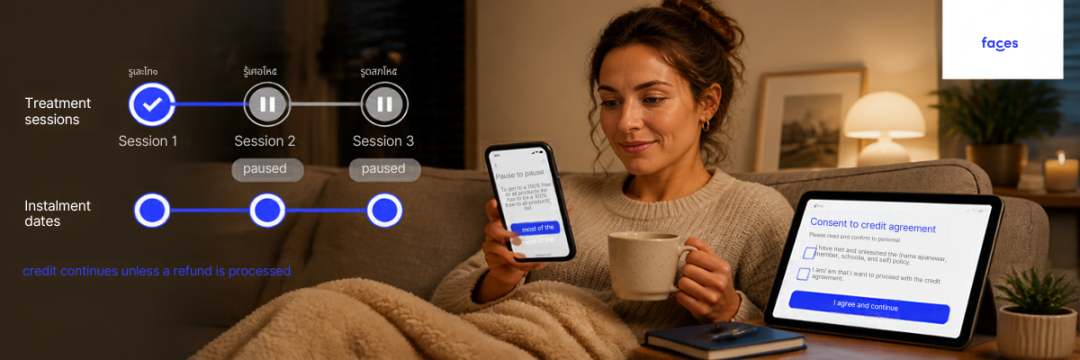
The biggest improvement most clinics can make is timing. A client who applies in the treatment room, with the practitioner waiting, reads as little as possible. A client who gets the finance link the evening before, through the consent form or booking link, can read the documents at her own pace.
A short pointer, given to every client in the same words, helps without becoming advice. For example: “Before you sign, check the total you’ll repay, the payment dates, what happens if a payment is missed and how to settle early. All four are in the lender’s documents.” That sentence recommends nothing and quotes no figures. It only tells the client where to look.
When clients ask about their finance agreement details, staff should refer them to the lender and not answer from memory. A remembered figure is often out of date, and a wrong figure given at the desk becomes the clinic’s problem. The same applies to the loan repayment terms of a plan the client has not yet applied for, because the clinic cannot know what the lender will offer her. Clinics should not describe fees or charges themselves and should leave that to the lender’s own documents. 5 Common Myths About Offering Finance in Aesthetic Clinics and Why Clients Choose Flexible Payment Options for Treatments give staff useful background for these conversations.
Note in the consultation record that payment options were explained in the standard way and that the client received the lender’s information before treatment. One line is enough.
Where This Is Heading
The DPC regime is three months old, and the FCA is still refining the wider rules. Consultation CP26/15 proposes changes to how consumer credit can be promoted, and lenders are likely to update their documents and promotional guidance as a result. Clinics should check the lender’s current guidance at least once a year and every time it is reissued. The practical change to make now is simpler: move the finance link earlier in the booking process, so every client has the agreement in front of her before she is in the chair.
Give Clients the Documents Before the Appointment
Clinics on Faces can register for Faces Finance through Finance Hub. Once registered, they can add the finance link to their consent forms and booking link, so the lender’s application and documents reach clients at home before the consultation. It takes one setup, and every financed client then gets time to read the terms before she signs.
FAQs
Can a client pay off treatment finance early?
Yes. With a regulated credit agreement, a borrower can pay off all or part of the balance at any time by asking the lender for a settlement figure. On an interest-free plan, there is nothing extra to pay for doing so.
Does Buy Now Pay Later affect a credit score?
It can. Lenders may search the client’s credit file when she applies, and may report missed payments to credit reference agencies, where other lenders will see them later. The lender’s documents explain which checks it runs.
What happens if a client misses a finance payment?
The lender will contact her, may add a charge limited to its reasonable costs, and may record the missed payment on her credit file. Contacting the lender early, ideally before the payment date, gives her the most options.
Can a client cancel finance after treatment has started?
For regulated agreements there is normally a 14-day right to withdraw from the credit, but the amount borrowed still has to be repaid. Cancelling the remaining treatment sessions is handled separately under the clinic’s own policy.
Who should a client complain to about treatment finance?
The lender first. If the lender’s response does not resolve the problem, the client can refer her complaint to the Financial Ombudsman Service, which has covered Buy Now Pay Later agreements since July 2026.