
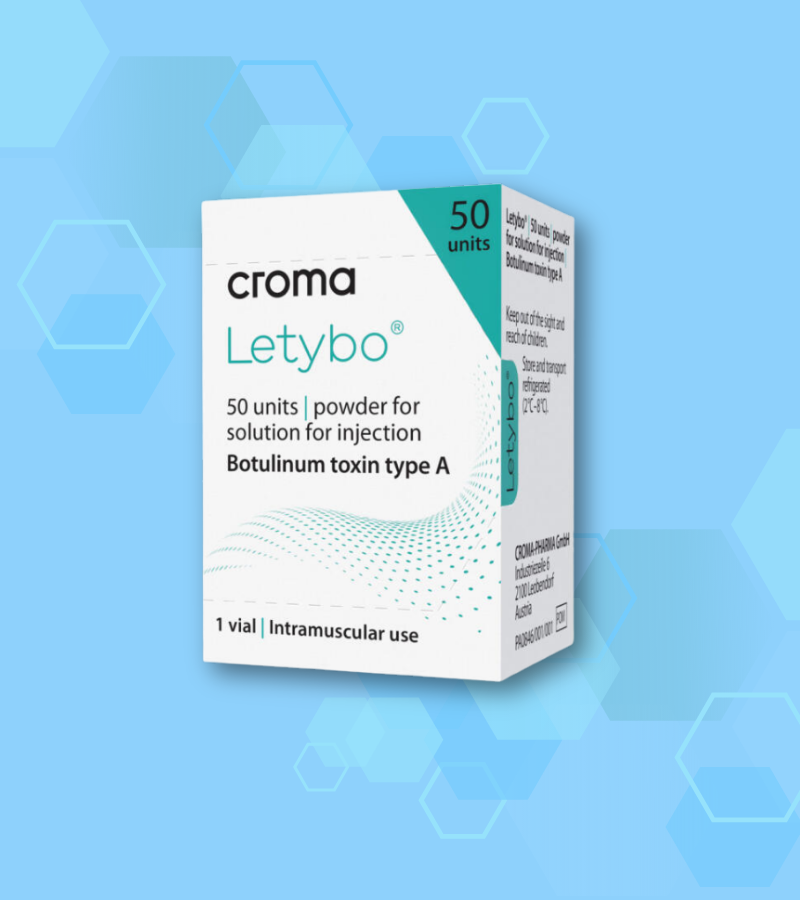
The prescription says three areas. The vial in the fridge is licensed for one. Letybo 50 units Botulinum Toxin Type A is straightforward to handle and its pivotal data holds up, but its UK marketing authorisation covers the glabellar complex and nothing beyond it, while most aesthetic clinic appointments are sold as upper-face packages. What happens to the other two areas is a prescribing decision, and it belongs at the point the prescription is written rather than at the point the needle is loaded.
Letybo 50 units Botulinum Toxin Type A: What the Letybo uk Licence Covers
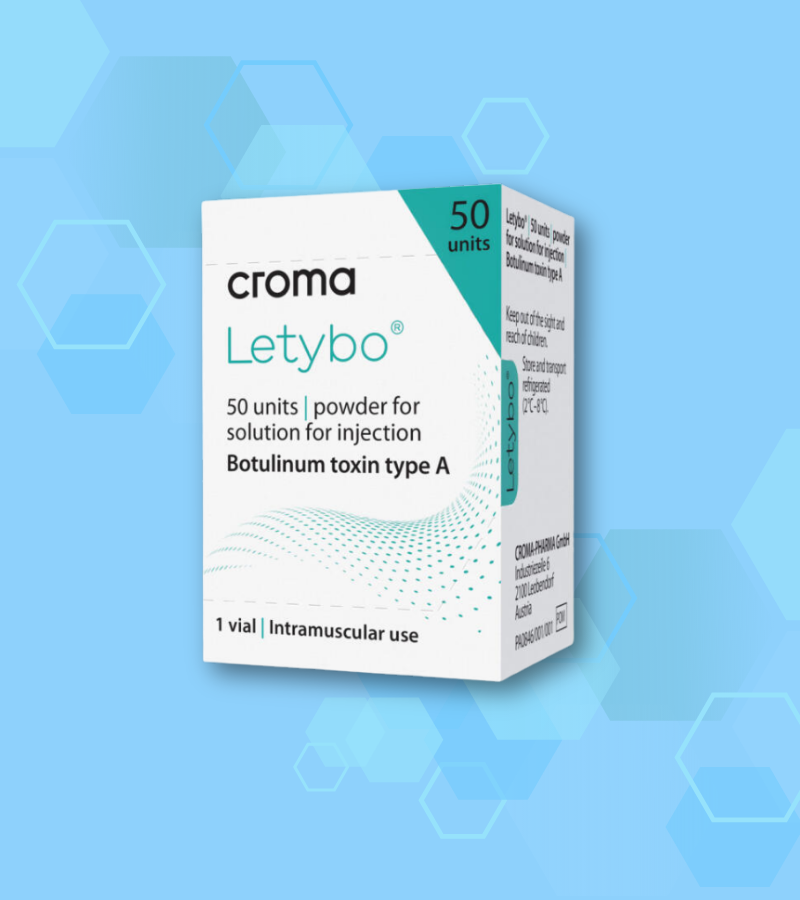
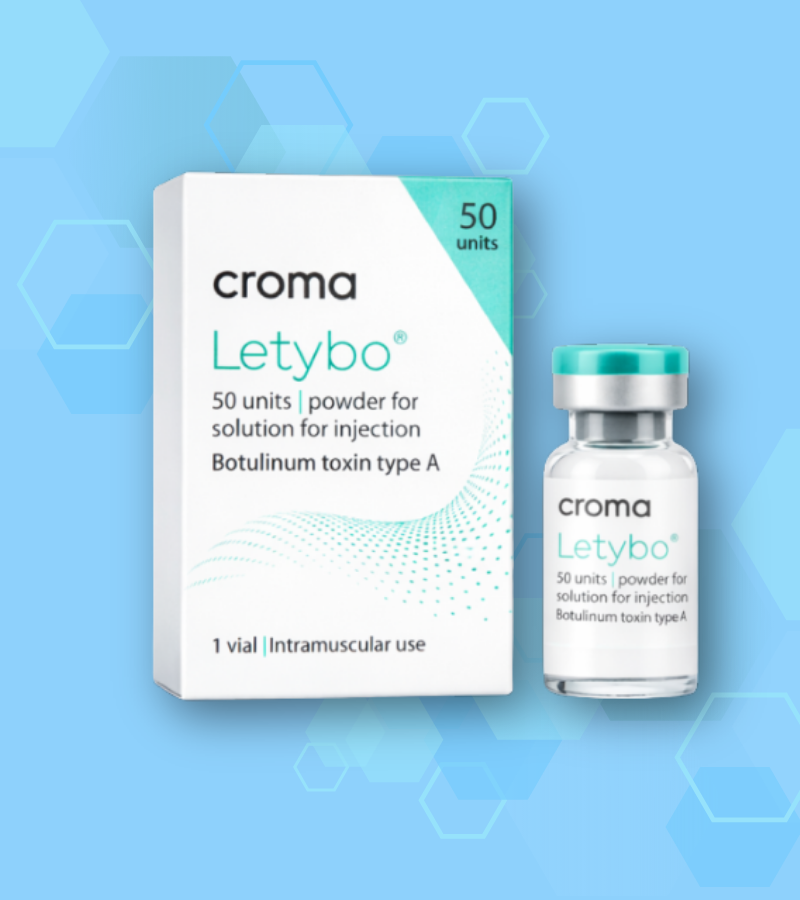
The product holds a UK marketing authorisation under PL 29863/0002, held by Croma-Pharma GmbH, first authorised in March 2022. The Letybo 50 units Summary of Product Characteristics sets the indication as temporary improvement in the appearance of moderate to severe vertical lines between the eyebrows at maximum frown, in adults under 75 years old, where the severity of the lines has an important psychological impact.
Three constraints sit inside that sentence and each one has consequences.
Glabellar complex only. Frontalis, orbicularis oculi, masseter, platysma and every other area are outside the licence for this product. Off-licence use is permitted in UK practice where a prescriber takes responsibility for it, but it needs to be a documented prescribing decision rather than an assumption. If a clinic routinely treats the upper face as one unit, the guidance on treating platysma bands with botulinum toxin is a useful reference point for how off-licence areas should be reasoned through.
Adults under 75. There are no clinical data above that age. Response rates were also lower in the 65 and over group in the pivotal studies, at 39.0% against 53.6% in patients under 65 on the composite endpoint.
Psychological impact. This wording appears in the licences of several UK cosmetic toxins and it is a real clinical threshold, not decoration. It belongs in the consultation notes.
One further limit is easy to miss. Efficacy and safety of repeat injections beyond twelve months has not been evaluated. That does not prohibit longer use, but it does mean the evidence base thins out past a year of treatment cycles.
The Letybo Botox Search Problem in Consultations
Patients arrive using “Botox” as a category noun. It is a single Allergan brand, not a class, and the confusion causes two practical problems in clinic.
The first is unit anxiety. A patient who had 20 units elsewhere and is offered 20 units here assumes a like-for-like swap. Unit potency is assay-specific and not transferable between products, so the number on the record card means something different depending on which vial produced it.
The second is expectation. A patient who believes every toxin is the same product with a different sticker will attribute any difference in onset, spread or duration to the injector rather than to the product. Naming the actual product in the consultation and on the consent form is worth doing for both reasons, and batch number recording is a requirement in the SmPC for traceability of biological medicines anyway.
Letybo 50 units Botulinum Toxin Type A: Where Letybo vs Botox Actually Differs
The honest position is that no head-to-head trial exists. The three pivotal studies, BLESS I, BLESS II and BLESS III, compared the product against placebo across 955 treated patients and 317 on placebo. Composite responder rates at week four, requiring a two-point improvement on the facial wrinkle scale agreed by both investigator and patient, came out at 46.5%, 48.8% and 64.7% across the three studies against 0% to 1.9% for placebo. Investigator-assessed rates ran considerably higher at 65.8%, 75.0% and 78.6%.
Those are strong placebo-controlled numbers. They are not a comparison with another toxin, and any claim of equivalence or superiority against a named competitor is not supported by the licence documentation.
What can be compared is the practical detail. The licensed dose here is a fixed total of 20 units in five injections of 4 units each, two into each corrugator supercilii and one into the procerus. That is a prescribed pattern rather than a suggested range, which differs from how some practitioners dose their usual product. No neutralising antibodies were detected in any patient across the three pivotal studies.
Reconstituting Letybo 50 units Botulinum Toxin Type A
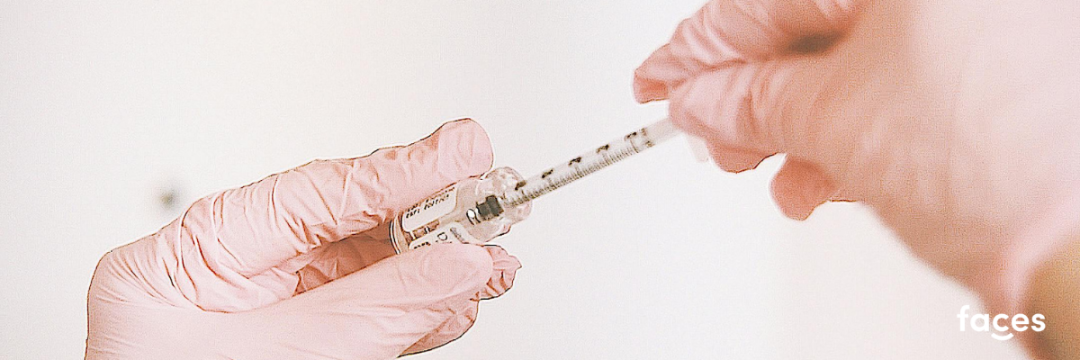
The diluent is 0.9% sodium chloride and the volume is specified as 1.25 mL for the 50 unit vial, giving 4 units per 0.1 mL. Inject the saline gently against the vial wall. Foaming or vigorous agitation denatures the protein. If the vacuum does not draw the diluent in, the vial should be discarded rather than reconstituted by hand.
Draw up 0.5 mL for the treatment. Use a 1 mL insulin or tuberculin syringe graduated in 0.01 mL increments with a 30 to 31 gauge needle, and replace the reconstitution needle before injecting.
Storage is 2°C to 8°C for the unopened vial, with a three year shelf life. Reconstituted solution has demonstrated in-use stability for 24 hours at 2°C to 8°C and anything held longer must be discarded. Critically, a reconstituted vial is for one injection session for one patient. It cannot be split across a list.
Practitioners who would rather avoid the reconstitution step entirely have alternatives, and the comparison with a ready-to-use liquid toxin like Relfydess is worth understanding before committing to one workflow.
Injection points and reducing ptosis risk
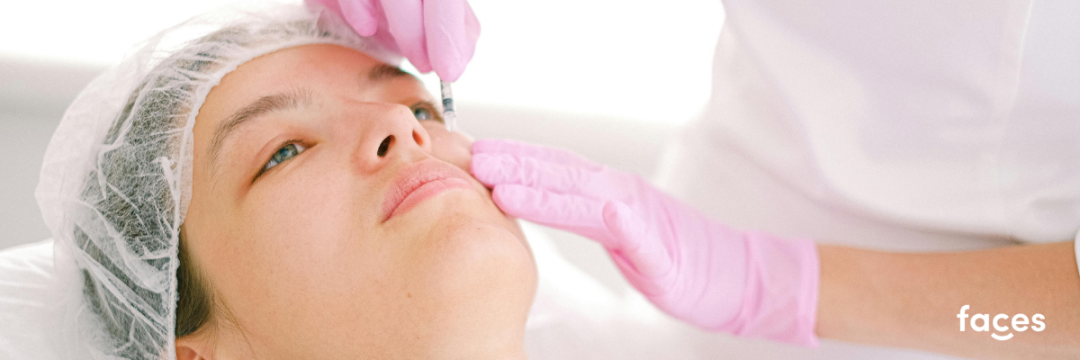
The SmPC is unusually specific about this. The first corrugator injection sits directly above the medial margin of the eyebrow. The second sits roughly 1 cm above the supraorbital ridge where the midline of the eyebrow meets it. The procerus injection sits just above the midline of the nasal bridge between the medial ends of the eyebrows. Injections at the medial corrugator ends and along the eyebrow midlines should be at least 1 cm clear of the supraorbital ridge.
Place a thumb or index finger firmly below the orbital rim before injecting and orient the needle superiorly and medially. The purpose of all of it is to keep product away from levator palpebrae superioris. Eyelid ptosis and Mephisto sign both appear in the adverse reaction table as uncommon events, and both are largely placement problems.
What Drives the Letybo price Per Treatment
The arithmetic that matters is not the price of the vial. It is the cost per completed treatment, and for this product that calculation is unusual.
The vial holds 50 units. The licensed glabellar dose is 20 units. Reconstituted product cannot be carried over to another patient. Used strictly on-licence for one patient, 30 units of a 50 unit vial go to waste, which means the effective cost per treatment is the full vial price rather than 40% of it.
Clinics resolve this in one of three ways. They book glabellar patients in pairs, which the single-patient rule does not permit for one reconstituted vial and therefore requires two vials anyway. They treat additional areas off-licence in the same session under a prescriber’s decision, which uses the remaining units but shifts the regulatory position. Or they accept the wastage and price accordingly. The third is the cleanest and clinics should price it in rather than discover it in the monthly stock reconciliation.
Vial cost itself moves with distributor pricing and pack size, so current figures are best taken from the live Letybo 50 units Botulinum Toxin Type A price listings rather than from any figure quoted in an article.
Where to buy Letybo online: Sourcing Through a Regulated Supply Chain
This is the section that matters most in 2026. On 15 July, the MHRA published updated warnings on the risk of iatrogenic botulism across all botulinum toxin type A products, following confirmed cases in England. UKHSA recorded 41 clinically confirmed cases between early June and early August 2025 across five regions, and most of those affected had received products not licensed for UK use.
The MHRA’s Criminal Enforcement Unit has seized more than 4,700 vials of unlicensed botulinum toxin since May 2023, working with Border Force. Almost all originated in South Korea, under brand names including Botulax, reNTox, Innotox and Toxpia, none of which hold UK authorisation.
That last detail creates a point of confusion worth being clear about. Letybo is manufactured in South Korea and holds a UK marketing authorisation through Croma. Several of the products the MHRA is seizing are also South Korean and hold nothing. Country of manufacture is not the risk marker. The marketing authorisation is, and so is the supply chain the vial travelled through to reach the fridge.
Practically, that means a practitioner should be able to evidence three things for any vial in stock: a UK PL number, a valid private prescription from a registered UK prescriber against a named patient, and a purchase route through a GPhC-registered pharmacy. Anyone who chooses to buy Letybo through a marketplace should be able to see which pharmacy is dispensing and which prescriber is connected to the order before the transaction completes. The wider implications of the MHRA position are covered in more detail in the Faces briefing on MHRA’s botulism warning and what to change in clinic.
Symptoms of distant spread can appear within days or as late as four weeks after treatment, and include difficulty swallowing, slurred speech, breathing difficulty, facial muscle weakness, drooping eyelids and blurred or double vision. Patients need to be told the four-week window exists, not just the first-week one. Suspected reactions go through the Yellow Card reporting process for aesthetic practitioners, and where a practitioner needs clinical input on managing a reaction rather than simply recording it, the Faces Complications Consultant provides that access.
What Letybo reviews From Practitioners Do and Don’t Tell You
Peer feedback on toxins tends to cluster around three things: onset, spread and how the vial handles. Two of those are useful and one is not.
Handling feedback is reliable. Reconstitution behaviour, whether the vacuum pulls cleanly, how the solution looks, whether stopper coring is a problem, are all directly observable and consistent between users.
Onset feedback is partially useful. The SmPC puts clinical signs at two to three days with peak effect within four weeks, while the pooled study data showed improvement beginning within a week and maximal effect during the second week. Duration of effect is put at 12 to 16 weeks. Individual reports outside those ranges usually reflect dose, dilution or placement rather than product behaviour.
Spread and duration comparisons against other brands are the least reliable, because almost nobody is comparing like with like. Different units, different dilutions, different injection depths and no controls. Treat those as anecdote and go back to the SmPC for anything that will end up on a consent form.
Check Pack Size & Pharmacy Before You Order
Before ordering, check the pack size and the dispensing pharmacy on the listing, because vial wastage on a 20 unit licensed dose changes the cost per treatment more than the headline vial price does. Stock, pack options and current pricing appear once you sign in and connect to a prescriber against the Letybo 50 units Botulinum Toxin Type A listings.
FAQs
What is Letybo?
Letybo is a botulinum toxin type A product holding a UK marketing authorisation for the temporary improvement of moderate to severe glabellar lines in adults under 75. It works by cleaving SNAP-25 at presynaptic cholinergic nerve terminals, blocking acetylcholine release and producing temporary flaccid paralysis of the injected muscle.
How long does Letybo take to work?
Clinical signs appear within two to three days of injection. Pivotal study data showed measurable improvement within the first week and maximum effect during the second week, with peak effect described in the product information as within four weeks.
How many units are used for glabellar lines?
The licensed dose is a total of 20 units, given as five injections of 4 units each, with two into each corrugator supercilii and one into the procerus.
How is Letybo reconstituted?
With 1.25 mL of 0.9% sodium chloride solution for injection into the 50 unit vial, producing 4 units per 0.1 mL. The saline should be injected gently to avoid foaming, and the vial discarded if the vacuum fails to draw it in.
Can Letybo be used for the forehead or crow’s feet?
Not within its UK licence, which covers the glabellar complex only. Use in other areas is off-licence and requires a documented prescribing decision and consent that reflects the off-licence status.
Explore Letybo from Verified Pharmacies in the UK
Private Pharma
Letybo 50IU (Single Vial)
.
Ask Pharmacy
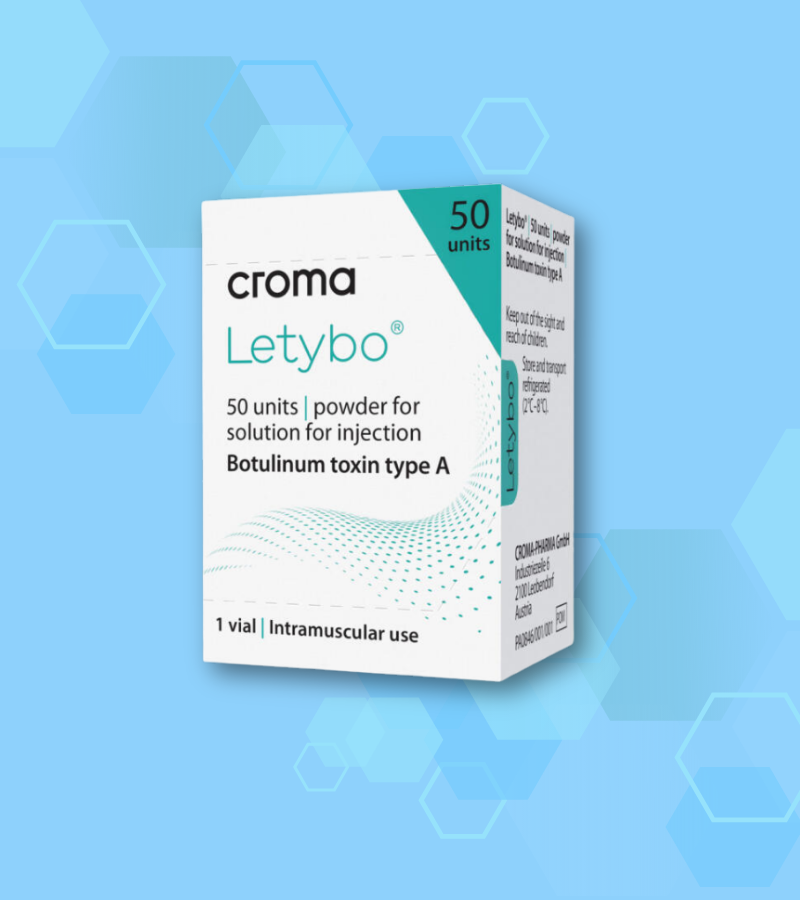
Letybo 50 Units
Pharmalyfe
Letybo 50 Units Toxin
Wimpole Pharmacy
Letybo 50IU vial