
An aesthetic practitioner is mid-treatment with dermal filler for nasolabial fold correction when the skin around the injection point blanches, then mottles. Or a client having toxin/anti-wrinkle injections for the first time develops facial swelling and tightness in the throat within minutes of treatment. In both scenarios, the outcome depends less on injecting skill and more on what is sitting in the treatment room cupboard, and whether anyone present knows how to use it properly.
An aesthetic practitioner emergency kit is not a box ticked once at induction and forgotten. It is a working clinical resource that needs the right contents, correct storage, and a practitioner competent to use every item in it. This is what a properly stocked kit looks like, why each item earns its place, and what UK guidance says practitioners should, and should not, include.
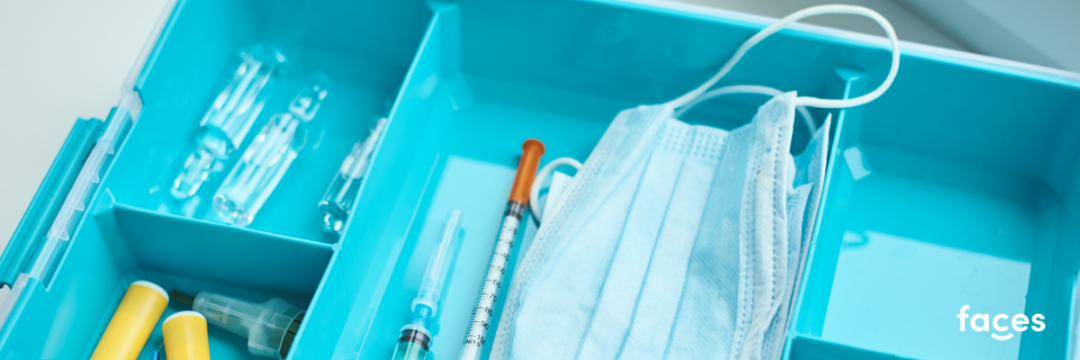
What Belongs in an Aesthetic Practitioner Emergency Kit
Guidance from the Aesthetic Complications Expert (ACE) Group World frames the emergency kit around the complications most likely to arise from non-surgical injectable treatments: anaphylaxis, vascular occlusion, visual loss, and less urgent but still time-sensitive issues such as chemical peel burns or sharps injuries. The kit exists to bridge the gap between something going wrong and either resolution or the arrival of emergency services.
Every clinic should risk-assess its own kit against the treatments it actually performs. A clinic offering only botulinum toxin has a different risk profile to one performing high-volume dermal filler work, and a clinic running chemical peels needs items, such as sodium bicarbonate for neutralising a burn, that a toxin-only practice does not. The starting point is always the same question: what could go wrong here, and what would this practitioner need in the first five minutes to stop it getting worse?
Having the kit is only half the requirement. The practitioner also has to be competent to use every item correctly, under pressure, without hesitating to look up a dose. That competency needs refreshing. Complications in aesthetic practice are rare enough that skills fade between real incidents, which is why annual basic life support and anaphylaxis training is treated as a baseline rather than a nice-to-have.
Adrenaline 1:1000 Ampoules and Why an Aesthetics Emergency Kit With Epipen Falls Short
Adrenaline is the single non-negotiable item in any injectables emergency kit. As an alpha-receptor agonist, it reverses the peripheral vasodilation and reduces the tissue oedema that drive anaphylactic shock. Its beta-receptor activity dilates the bronchial airways and suppresses the release of histamine and leukotrienes from mast cells, which is why it works so quickly on both breathing and swelling.
Here is where UK guidance diverges from what many practitioners assume. An aesthetics emergency kit with epipen contents sounds like the safe, obvious choice, but the Resuscitation Council UK’s own guidance for healthcare providers sets out that healthcare workers should have the competency to draw up and administer adrenaline from ampoules themselves, rather than relying solely on a device built for lay use. Branded auto-injector pens such as EpiPen and Jext are preloaded with 300mcg, below the 500mcg dose recommended for adults over 12, and their needle length of 15 to 16mm risks a subcutaneous rather than intramuscular injection, which slows absorption. Auto-injectors also carry a shorter shelf life of around six months, adding to replacement cost. Worth noting: the Resuscitation Council UK has publicly clarified that this 500mcg figure and the needle-length guidance are aimed at healthcare professionals treating anaphylaxis in a clinical setting, not a recommendation on how patients should use their own prescribed auto-injectors.
The practical recommendation is 1:1000 adrenaline ampoules, drawn up and administered by a practitioner trained to do so, with a minimum of two ampoules in the kit to cover repeat doses at five-minute intervals while waiting for the ambulance. Clinics in rural areas with longer response times should stock more.
Under Regulation 238 of the Human Medicine Regulations 2012, adrenaline can be administered without a prescription in a genuine emergency. This is the legal basis that allows any trained person present, prescriber or not, to give it when anaphylaxis is confirmed.
Hyaluronidase 1500 IU: Building a Hyaluronidase Emergency Kit for an Aesthetic Clinic
Hyaluronidase is licensed in the UK for enhancing the permeation of subcutaneous injections and local anaesthetics, but its role in aesthetic practice is almost entirely off-label: dissolving hyaluronic acid filler. As an enzyme, it depolymerises hyaluronic acid by breaking down the disaccharide bonds within the filler, allowing the body to reabsorb it far faster than it would naturally.
Recognising When Hyaluronidase Is Needed
A hyaluronidase emergency kit aesthetic clinic stock exists for a narrow but urgent set of scenarios: vascular occlusion (where filler compresses or enters a blood vessel, cutting off circulation), impending visual loss from embolism, significant overcorrection, and marked Tyndall effect where a bluish discolouration sits visibly under thin skin. Vascular occlusion in particular presents with disproportionate pain, blanching, mottled or dusky skin colour, and a cold sensation at the site: signs that should prompt immediate dissolving rather than a wait-and-see approach.
The current standard is Hyalase, a 1500 IU powder for reconstitution, with four ampoules recommended in the kit to allow for the higher volumes sometimes needed in a significant occlusion. Reconstitution and dosing protocols should sit alongside the kit as a quick-reference sheet, since dilution ratios and the number of injection points vary by the size and location of the affected area. Hyaluronidase should not be used on patients with a known bee-sting allergy without caution, given the enzyme’s derivation, and practitioners should be aware that it will dissolve any HA filler present, not just the amount causing the problem.
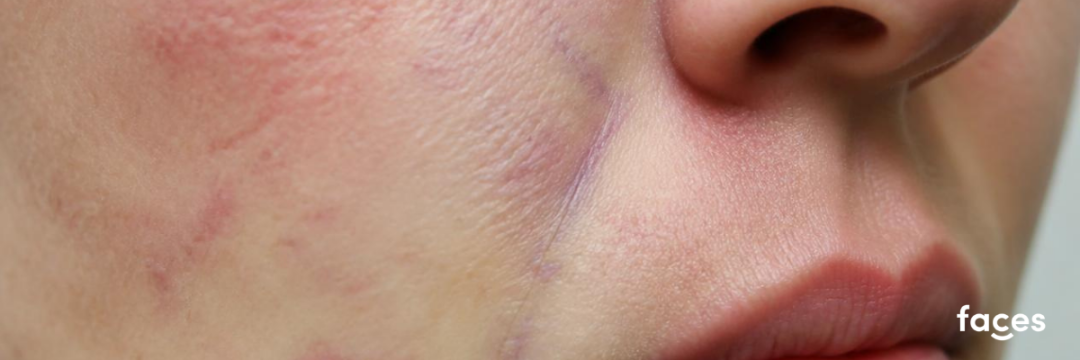
The Full Aesthetic Emergency Kit List: Supporting Medicines and Consumables
Beyond adrenaline and hyaluronidase, an aesthetic emergency kit list should also include:
- Aspirin 300mg stat dose, then 75mg daily until a vascular occlusion resolves, to limit platelet aggregation and further clot formation
- Timolol eye drops, one to two drops in the affected eye, to reduce intraocular pressure in cases of suspected visual loss following filler
- A non-sedating antihistamine such as loratadine or cetirizine 10mg for histamine-mediated reactions like itching or localised swelling
- Sodium bicarbonate powder for neutralising chemical peel burns
- Saline eye wash for sharps or splash injuries
- Bacteriostatic saline or water for injection, Luer-Lok syringes in 1ml, 5ml and 10ml sizes, and a range of needle gauges for drawing up and administering emergency medicines
- A strong paper bag for re-breathing in cases of visual loss, and hot and cold gel packs
Two exclusions are worth flagging because they are commonly assumed to belong in the kit and no longer do. Chlorphenamine and hydrocortisone are now restricted to practitioners experienced in their administration and are not recommended first-line for aesthetics-only practitioners, who should call an ambulance instead. Glyceryl trinitrate (GTN) paste has also been dropped from current guidance for vascular occlusion, since inducing vasodilation can push embolised filler further into surrounding vessels rather than resolving the blockage.
Storage, Checks and Legal Duties for an Emergency Kit Aesthetics Clinics Rely On
An emergency kit aesthetics clinic keeps on a shelf is only useful if it is checked as routinely as stock in a treatment fridge. Because the kit is used infrequently, expiry dates and damage are easy to miss. A monthly check, logged on a simple record chart, catches expired ampoules or missing items before they matter.
Non-prescribing practitioners need a written protocol agreed with their prescriber covering exactly who supplies, prescribes and administers each item in the kit. Both parties remain accountable to their own professional bodies regardless of who physically gives the medicine. Anyone working without a prescriber in place should look into how to find a prescriber near you before offering treatments that carry a meaningful complication risk.
Used ampoules, needles and syringes need proper clinical waste disposal rather than a standard bin, which is where a compliant sharps waste collection service fits into the wider setup. It is also worth making sure treatment consent paperwork reflects the real risk of the procedure being offered. A properly worded digital consent form should already flag the relevant complication risks to the client before treatment starts, not after something has gone wrong.
Where a complication is linked to a specific product, batch, or device, it should be reported through the MHRA’s Yellow Card scheme as well as to the manufacturer. Under-reporting across the sector is one of the reasons patterns in poor-quality products or techniques go unnoticed for longer than they should.
Who Needs an Emergency Kit for Aesthetics and How Often to Train
Any practitioner performing injectable treatments needs an emergency kit for aesthetics, whether working from a fixed clinic or mobile. Mobile practitioners carry the same duty of care as clinic-based ones, with the added complication of not having immediate access to a second pair of trained hands, which makes knowing the kit contents and dosing without hesitation even more important.
Annual basic life support and anaphylaxis refreshers, alongside CPD on managing filler complications, keep skills current between the rare occasions they are actually needed. For practitioners who want a second opinion in the moment rather than relying purely on training recall, having a route to real-time expert advice matters. The Complications Consultant service offers 24/7 telephone, email and video support from a medical professional, so a practitioner facing a suspected vascular occlusion or an unfamiliar reaction at 9pm on a Saturday has somewhere to turn beyond a search engine.
Don’t Let an Out-of-Date Kit Be Your Safety Net
A kit that is missing an ampoule, out of date, or sitting alongside a practitioner who has not refreshed their anaphylaxis training in over a year is not a safety net. It is a false sense of one. Stock a complete, pharmacy-grade aesthetic clinic emergency kit through Faces, and pair it with 24/7 access to the Complications Consultant helpline for £9 a month, so there is a trained medical professional on the phone the moment a complication doesn’t go by the book.
FAQs
What are 10 items in an emergency kit?
A minimum aesthetic emergency kit includes adrenaline 1:1000 ampoules, hyaluronidase 1500 IU, aspirin, timolol eye drops, a non-sedating antihistamine, saline for injection, syringes and needles in varying gauges, saline eye wash, sodium bicarbonate, and a strong paper bag for re-breathing. This covers the core complications of anaphylaxis, vascular occlusion, visual loss and allergic reactions.
What are 20 items in an emergency kit?
A fuller kit adds to the above: a second adrenaline ampoule for repeat dosing, additional hyaluronidase ampoules, Luer-Lok syringes in 1ml, 5ml and 10ml sizes, a spread of needle gauges (21G, 27G, 30G), a connector for reconstitution, hot and cold gel packs, quick-reference treatment algorithms, a resuscitation poster, oxygen with mask and tubing, a pulse oximeter and a blood pressure machine, where the clinic’s risk assessment supports carrying them.
Is an aesthetic emergency kit a legal requirement in the UK?
There is no single piece of legislation naming exact contents, but professional bodies and insurers generally expect practitioners performing injectables to hold one, and failing to do so would be difficult to defend if a complication occurred without the means to manage it.
How often should an aesthetic emergency kit be checked?
Monthly, at minimum, with every check logged against a record showing expiry dates, stock levels and any damage. Kits used rarely are the ones most likely to have quietly expired items.
Explore Emergency Kits from Verified Pharmacies in the UK
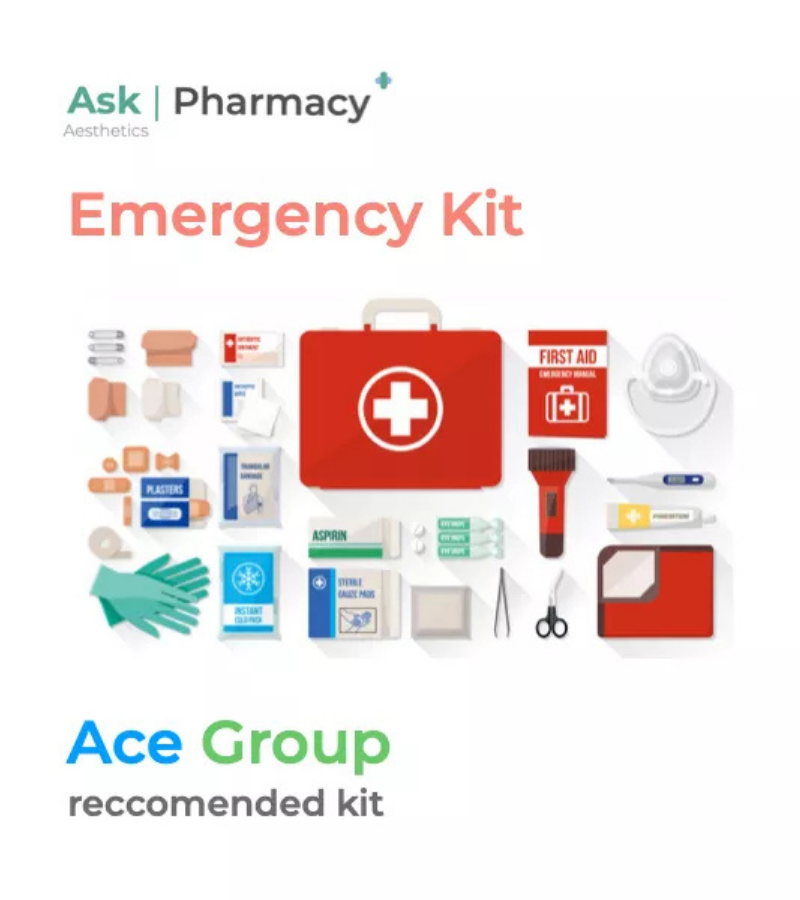
Ask Pharmacy
Emergency Kit Advanced
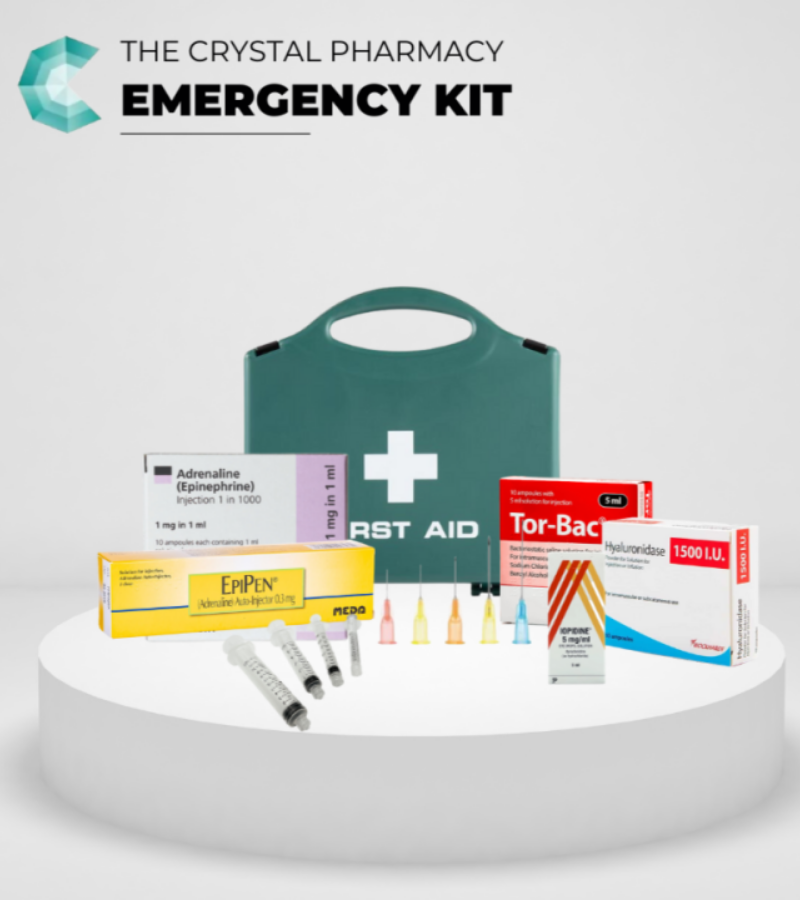
Crystal Pharmacy Emergency Kit
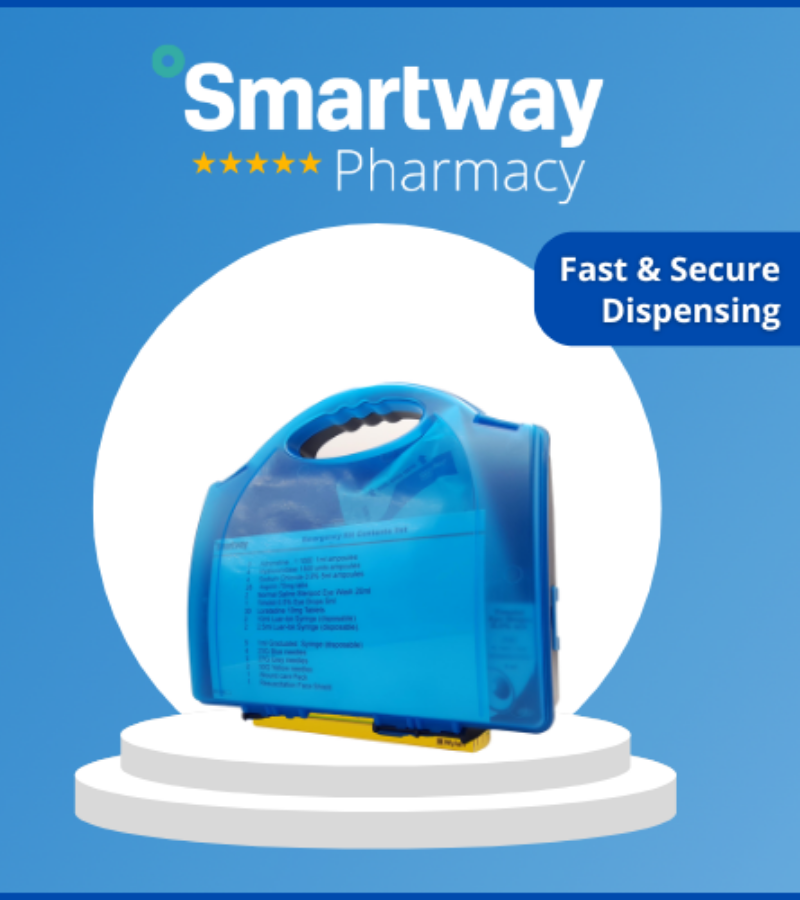
Smartway Pharmacy Emergency Dissolving Kit
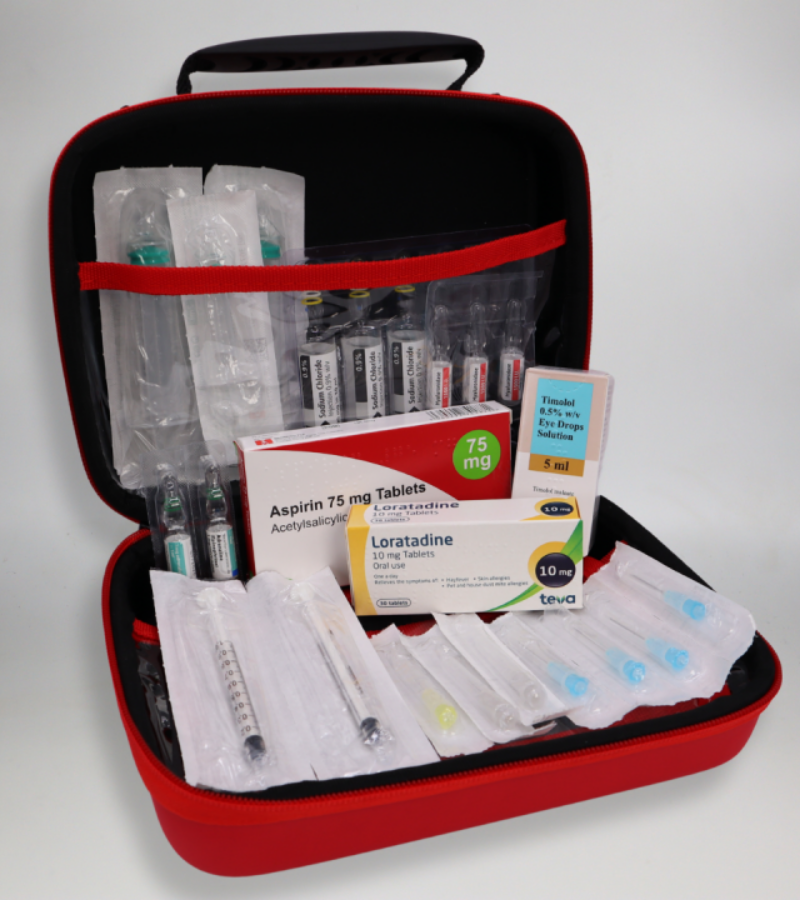
Aesthipharma
Emergency Kit