
One property explains almost every choice between these two Dermal fillers: how firm the gel is. A firm filler pushes tissue up and holds it there. A softer filler bends and moves with the face. Match that firmness to the tissue in front of you and the result looks right. Get it wrong and you see the familiar problems: a stiff, unnatural lip, or a cheek that swallowed three syringes and still looks flat. The two products in this range sit at different points on that firmness scale, and that is the whole basis for choosing between them.
Why one number does most of the work
Lumifil has become a fixture on UK trays because the range covers most everyday indications without a clinic holding a dozen separate products. The trap is reaching for whichever syringe is open rather than the one the tissue needs. Both Kiss and Max are monophasic, cross-linked hyaluronic acid gels with a similar HA concentration, around 20 mg/ml, premixed with 0.3% lidocaine. So the choice is never about how much hyaluronic acid is present. It is about firmness, cohesivity and spread, and where each of those behaviours belongs in the face.
The mechanism is shared with every HA filler. Cross-linked hyaluronic acid occupies space, binds water and gives immediate volume that the body metabolises over months. What differs is rheology. Picture the face in layers: deep structure over bone, mid-dermal volume, and superficial mobile tissue. Each layer asks something different of a gel, and the rest of this guide works through those layers rather than through the products in isolation.
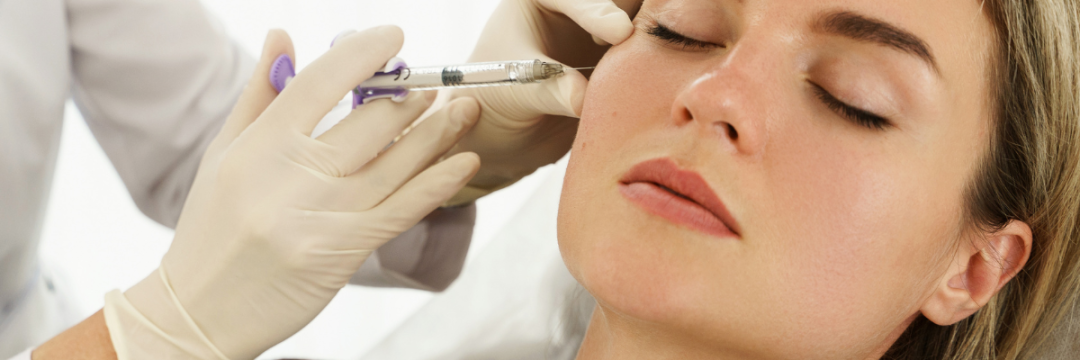
Deep structure, where firmness does the lifting
Start at the bottom. Cheeks, chin, jawline angle and the nasal dorsum all need projection from a deep plane, on or near bone. This is where a firm gel earns its place, because the firmness does the work that volume would otherwise have to.
Lumifil Max is the firm, high-G′ end of the range, the thickest and longest-lasting product on offer. Placed supraperiosteally over the zygoma, it gives projection from a smaller volume than a softer filler would need. The same logic carries to chin projection, the posterior jawline and non-surgical rhinoplasty. Reach for a soft gel here and you chase the result with more product, more cost and a vaguer outcome.
Technique follows the depth. Max is delivered through a larger-gauge needle than the rest of the range, with 25G common in the packaging, since a firmer gel needs a wider bore to extrude with control. A bolus on bone suits projection; slow retrograde linear deposits suit the jawline. Cannula work is widely preferred across the mid-face and jawline to reduce vascular risk over larger areas. Longevity in these low-movement zones sits at the longer end, commonly twelve months or more.
The recurring mistake is placing this dense gel too superficially, where it shows as ridges or palpable nodularity. Max also needs deliberate moulding straight after placement, because it does not self-smooth the way a softer gel does. Underfill on the first pass and review rather than overcorrecting a firm product that is hard to massage out.
Deep structural placement over bone is advanced work, sitting close to major vessels and demanding confident control of a firm gel. For practitioners wanting to extend into mid-face, jawline or chin contouring, Faces can connect you with training providers, where you can enquire about upskilling before adding these areas to your menu.
Mid-face volume and the overlap zone
Move up a layer and the picture is less binary. Nasolabial folds, marionette lines and softer cheek contouring can take either gel, and this is where judgement matters most. The question to ask is whether you are rebuilding underlying support or softening a line. Support points to Max. Softening points to the other end of the range.
Lumifil Kiss is the softer, more elastic product, carrying enough viscosity to hold shape but enough flexibility to sit in tissue that moves. In the overlap zone it handles nasolabial folds, marionettes and chin refinement where the goal is shape rather than heavy structural lift. A moderately firm, cohesive gel integrates smoothly in mobile tissue and resists the lumpiness a stiffer product can show there. Many full-face plans use both gels precisely for this reason: Max laid down deep as a scaffold, Kiss layered more superficially for refinement and contour. They were built for different planes, so they complement rather than compete.
For the technique side of this layered work, the practitioner guide to dermal filler injection methods on the Faces blog runs through threading, fanning, cross-hatching and bolus work in more detail.
Lips and superficial tissue, where movement rules
At the top layer, in the lips and fine perioral skin, flexibility beats firmness every time. A lip needs a gel that defines and adds volume without stiffening each time the patient smiles or speaks, which is exactly what a moderate-G′, high-viscoelasticity gel delivers.
As a Lumifil lip filler, Kiss builds the body of the lip, defines the vermilion border, corrects mild asymmetry and softens perioral lines placed precisely at the border. It runs through a finer needle, with 27G common in the packaging, using linear threading or serial puncture along the border and small aliquots or fanning for body. The lip itself is treated in the submucosal to superficial plane, with border work kept shallow and exact. Onset is immediate, and lip results commonly settle for around nine to twelve months, sitting at the shorter end because mobile tissue metabolises filler faster.
The frequent error here is overfilling the lip body in one session because the gel feels forgiving on the day. Swelling masks the true volume for several days, and a lip that looked balanced on the chair reads heavy at review. Place conservatively and offer a top-up at two to four weeks. The opposite error is taking Kiss deep for structural lift it was never designed to provide, where it underperforms and tempts over-injection.
Matching gel to plane, at a glance
The decision collapses to one habit: think in tissue depth and movement, not in the name of the area. Deep and structural over bone is Max. Mid-dermal volume and the overlap folds depend on whether you are supporting or softening. Superficial, mobile lip and perioral work is Kiss. Once that mapping becomes reflex, the two stop competing for the same cases and start covering the face between them.

The safety thread that runs through every layer
The cautions are common to all HA fillers and apply equally to both gels. Avoid in active infection or inflammation at the site, in known hypersensitivity to HA or lidocaine, and take care in patients with a history of autoimmune or granulomatous conditions. Pregnancy and breastfeeding are generally treated as a reason to defer.
The serious risk at every depth is intravascular injection. The facial and angular arteries in the nasolabial region, the labial arteries in the lips, and the dorsal and lateral nasal vessels all carry occlusion risk, and nasal work sits closest to the anastomoses that can lead to visual loss. Aspiration is debated and is not a guarantee, so slow injection, low extrusion pressure, retrograde deposits, moving-needle technique and cannulae in higher-risk zones matter more than any single check.
Every clinic should hold hyaluronidase and a clear vascular occlusion protocol. That carries regulatory weight: hyaluronidase is a prescription-only medicine, so a non-prescribing injector needs a reliable prescriber arrangement to access it without delay, a concern flagged directly in the government’s licensing consultation response on non-surgical cosmetic procedures. The wider picture on adverse events is covered in the Faces overview of dermal filler complications and risks.
Indemnity belongs in the same conversation, because placing filler and managing a complication both have to sit inside your cover. Faces partners with insurance providers who can arrange indemnity for practitioners offering dermal filler, so confirming that your policy covers the specific products and areas you treat is one less thing to resolve in a hurry. Check that emergency hyaluronidase administration is included before you stock either product.
Aftercare is standard across both. No makeup over the site for the first day, and no strenuous exercise, heat, saunas or alcohol for 24 to 48 hours, with pressure and massage avoided unless directed. Mild swelling, tenderness and occasional bruising are expected and settle within days. Warn lip patients that day-one swelling overstates the final volume. A written aftercare sheet cuts avoidable callbacks and supports informed consent; a ready-made lip filler aftercare form and a dermal filler consent form are both available through Faces.
Cost and product confidence
Once the clinical fit is clear, cost tends to be why this range gets stocked at all. Lumifil price for practitioners is genuinely budget, with single 1ml syringes on the Lumifil fillers range typically around £16 to £27 and bulk bundles bringing the effective cost down to roughly £8.50 to £17 a syringe. Prices move with offers, stock and bundle size, so check the live listing for the current figure before ordering. Either way it places the range well below the premium brands, so a clinic can hold both Kiss and Max without the per-syringe outlay of a single premium line. The full Lumifil dermal filler range, sold as Lumifil uk stock, extends below these two to Lite for fine lines and skin-quality work, each variant tuned to a different plane.
Cost should not be read alone. Lumifil reviews from practitioners tend to focus on handling, predictable extrusion and value, and the manufacturer, a UK-based company producing a line of cross-linked hyaluronic acid gels, states the products have been benchmarked in clinical trials against leading brands. Treat that as a manufacturer claim rather than independent proof, and read Lumifil filler reviews the way you would any supplier-adjacent feedback: useful on handling and service, weaker as clinical evidence. The thing that should never flex is provenance.
Search terms vary, so a quick note: practitioners often type Lumi fill, Lumifill filler or other variants when sourcing, and those land on the same product. The only thing that variation changes is how easily a careless search reaches an unverified seller. A known pharmacy channel sidesteps that, whether you are stocking the everyday Lumifil filler or the firmer end of the range.
Where to take this next
The fastest way to stop second-guessing at the tray is to stop thinking in product names. Read the depth and movement of the tissue first, then pick the firmness that matches it: superficial and mobile is Kiss, deep and structural is Max, and the overlap is a question of supporting versus softening. Stock both, source them genuine, and confirm your hyaluronidase access and prescriber cover before the next list, so the only decision left in the room is which plane you are working in.
Ready to stock up? Order genuine Lumifil Kiss, Max and Lite through the Faces pharmacy, and get next-day delivery on orders placed before the daily cut-off, so both product are on the shelf before your next patient sits down.
FAQs
What actually decides whether to use Kiss or Max?
Tissue depth and movement, read through gel firmness. Max is the high-G′ product for deep structural lift over bone. Kiss is the softer, more flexible gel for lips, superficial work and the lighter end of the overlap zone. The HA concentration is similar in both, so firmness, not concentration, is the deciding factor.
Is Lumifil Kiss only for lips?
No. Lips are its strongest use, but its moderate firmness and cohesivity also suit nasolabial folds, marionette lines, chin refinement and softer cheek contouring. Treat it as the versatile mid-range gel of the line rather than a single-area product.
Can both be used in the same patient?
Yes, and full-face plans frequently do. Max goes deep for structural support, Kiss layers more superficially for contour and refinement. Because they were designed for different planes, layering produces a cleaner result than forcing one gel to do everything.
How long do the results last?
Both fall broadly in a nine to fifteen month window. Lips treated with Kiss tend toward the shorter end because the tissue is mobile, while deep Max placement in cheeks, chin or jawline tends to last longer. Metabolism, area and technique all shift the figure.
Which is right for cheeks and jawline?
Max in nearly all cases. Those areas need projection from a deep plane, where a firm gel lifts efficiently from a smaller volume. Kiss can soften a superficial cheek contour but is the wrong tool for genuine structural lift.