
A patient returns at their two-week review with more movement in the glabella than anyone expected. The unit count was the same as always. The only thing that changed was the brand: the practitioner reached for Bocouture instead of their usual toxin and assumed the units would behave identically. They don’t, quite. That single assumption is behind a large share of the “it didn’t work as well” complaints around this product, and almost none of them are the product’s fault.
Used on its own terms, incobotulinumtoxinA is a precise, predictable toxin. The reasoning below is built around the Summary of Product Characteristics and the way the formulation actually behaves in the upper face.
What Bocouture actually is
Bocouture is the aesthetic brand of incobotulinumtoxinA, manufactured by Merz Aesthetics. Its therapeutic twin is Xeomin. The mechanism is the same as every type A toxin: it cleaves SNAP-25, blocking acetylcholine release at the neuromuscular junction, so the treated muscle can’t contract until new nerve terminals sprout. That is why effect is temporary and why dosing maps onto muscle bulk and activity rather than skin.
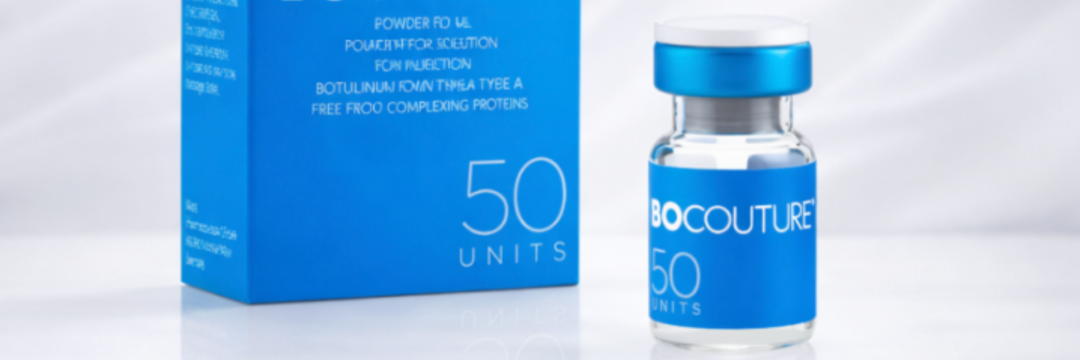
What sets this one apart sits one layer up from the active molecule. Most type A toxins arrive bound to accessory complexing proteins (haemagglutinins and a non-toxic non-haemagglutinin protein) that play no part in the clinical effect. Bocouture is formulated without them, leaving a roughly 150 kDa “naked” neurotoxin. The detail is set out in full in the product’s Summary of Product Characteristics.
Why the protein-free formulation matters in practice
Two things follow from stripping out the complexing proteins. The first is a theoretical reduction in immunogenicity. Foreign protein load is one driver of neutralising antibody formation, which is implicated in secondary non-response, where a patient who used to respond stops doing so. Removing that protein burden gives a sound rationale for trying incobotulinumtoxinA in a long-term patient who has plateaued, though the evidence here is reasoned rather than settled.
The second is genuinely practical. Bocouture is stable below 25°C for up to three years before reconstitution, so it doesn’t need refrigeration in storage. For anyone running outreach days or working across two or three sites, that removes a cold-chain headache other toxins don’t.
Bocouture vs Botox, without the marketing
The honest position on Bocouture vs Botox is that they are more alike than different. Both are botulinum toxin type A, both block acetylcholine the same way, both treat the same dynamic lines. The clinical endpoint is identical.
The one difference that changes your behaviour at the chairside is unit potency. The SPC is explicit that Bocouture units are not interchangeable with those of other toxin preparations. Comparative clinical studies have shown incobotulinumtoxinA and onabotulinumtoxinA performing at roughly a 1:1 ratio, which is why many practitioners switch across at similar numbers, but that is a research finding, not an official conversion. Treat it as a starting reference and verify against your own results, especially in the periorbital region where a small over-dose shows quickly.
Reconstitution and why dilution is a clinical decision
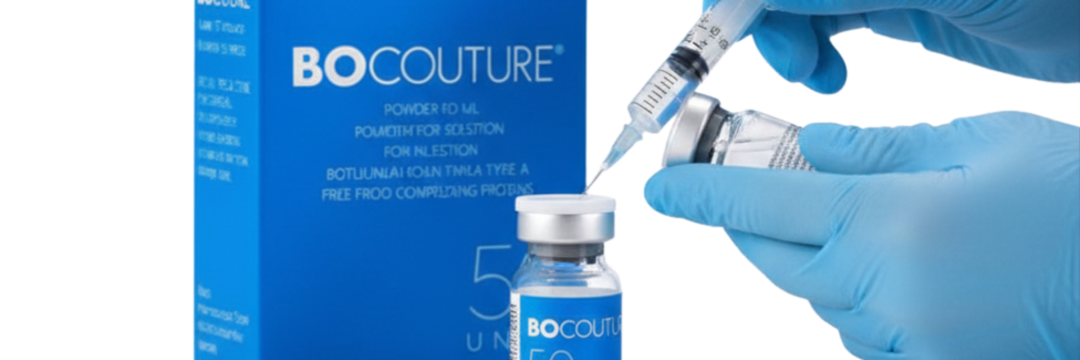
Reconstitute with 0.9% sodium chloride only. Draw the saline through a 20–27G short-bevel needle, insert through the stopper at an angle that lets the vacuum pull the fluid in gently, and never foam or shake it; agitation shears the protein and can reduce potency. Roll the vial between warm hands if the powder is slow to dissolve.
The standard presentation is bocouture 50 units, a lyophilised powder. Your dilution volume sets your field of effect. Reconstituting a 50-unit vial with 1.25 ml gives 4 units per 0.1 ml, a concentrated solution with tighter spread, useful where precision matters. Take it to 2.5 ml and you get 2 units per 0.1 ml, a larger volume per unit that diffuses more, which some practitioners prefer for broad areas like the forehead. Neither is “correct”; the point is to pick a dilution deliberately and stay consistent so your dosing maths and your spread stay predictable.
Dosing by area
These figures follow the SPC for the licensed upper-face indications. Onset in the glabella typically begins at day 2 to 3, with maximum effect around day 30 and duration up to four months.
Glabella
The standard total dose is 20 units across five points: 4 units into each of the five injection sites, two per corrugator and one into the procerus. Keep corrugator injections in the medial muscle belly and stay at least 1 cm above the bony orbital rim to reduce the chance of toxin tracking down to levator palpebrae and causing lid ptosis.
Crow’s feet (lateral periorbital lines)
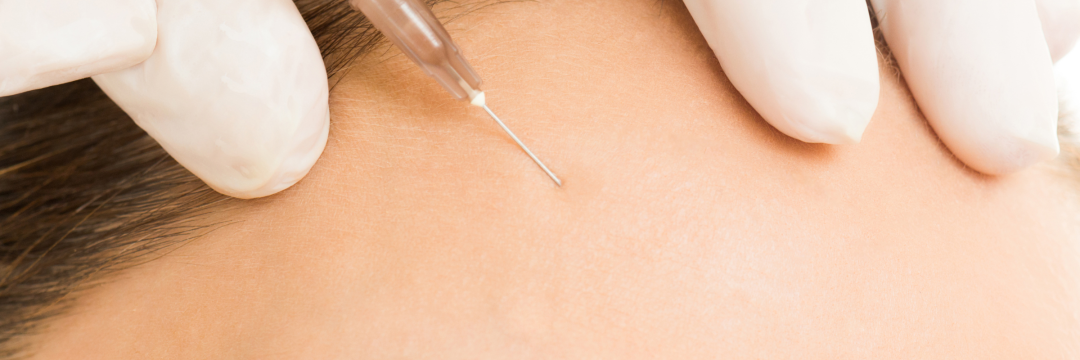
Four units at each of three sites per side, 12 units per side, 24 units total. Place the first injection roughly 1 cm lateral to the bony orbital rim, then one approximately 1 cm above and one below it. Stay superficial and lateral; drifting medially or too low risks zygomaticus involvement and an asymmetric smile.
Forehead (frontalis)
A total of 10 to 20 units, spread across the frontalis. This is the area where restraint pays off. The frontalis is the only brow elevator, so over-treating it, or injecting too low, produces brow heaviness or a frank brow ptosis that patients hate. Assess frontalis height and how much the patient recruits it to hold the brow before you commit to the upper end of the range, and never treat the forehead in isolation without addressing the depressors.
Off-label areas
Bunny lines, the lip flip, DAO, mentalis, masseter and platysmal bands are all treated with incobotulinumtoxinA in routine practice, but they fall outside the UK licence. Off-label use is lawful and common, and it sits squarely with the prescribing clinician’s discretion and accountability, not the supplier’s. Document the rationale.
What before-and-afters realistically show
Honest bocouture before and after expectations protect both you and the patient. Movement keeps softening past the first few days, so the photo that matters is taken at the two-week review, not on day three when a worried patient texts to say nothing’s happening. Standardise your photography: same lighting, same distance, images at rest and at maximum contraction, because dynamic-line products are judged on movement, not the static face. Set the expectation of a possible top-up at review and book it in advance. Patients who are told the timeline rarely feel let down by it.
Contraindications, cautions and the mistakes that recur
Bocouture is contraindicated in known hypersensitivity to incobotulinumtoxinA, in generalised disorders of muscle activity such as myasthenia gravis and Lambert-Eaton syndrome, and where there is infection or inflammation at the proposed injection site. Use caution with aminoglycoside antibiotics and other agents that interfere with neuromuscular transmission, since they can potentiate the effect. It is not recommended in pregnancy or breastfeeding.
The mistakes that come up most often are predictable. Treating the forehead too heavily or too low and producing brow droop. Assuming a like-for-like unit swap from another brand. Under- or over-diluting and then losing track of concentration. Skipping the two-week review, which is where you learn your own dosing and catch the occasional asymmetry while it’s still fixable.
What Bocouture costs in 2026
Bocouture pricing in the UK varies by presentation and supplier. A single 50-unit vial ranges from £63.99 to £90, while a dual 50-unit pack runs between £124.49 and £175. For the 100-unit vial, expect to pay from £126 to £154.99 for a single, and between £248.99 and £290 for a dual pack.
Buying Bocouture legally and safely
Sourcing is part of getting results, because a counterfeit or mishandled vial undoes good technique before you’ve drawn it up. To buy bocouture online in the UK you must purchase as a registered professional through a legitimate aesthetic pharmacy that verifies your credentials and works against a patient-specific prescription. Bocouture is one of botulinum toxin brands licensed for cosmetic use in the UK, alongside Azzalure, Botox, Alluzience, and Letybo. Anything outside that list has no place in a clinic.
The rules tightened sharply in 2025. Remote prescribing of injectable cosmetics was banned from 1 June 2025, when the NMC updated its position to match the GMC, GDC and GPhC, and the JCCP confirmed the embargo applies across all four regulators. A prescriber must now physically examine the patient before issuing the prescription.
The stakes are not abstract. A UKHSA investigation linked dozens of iatrogenic botulism cases in summer 2025 to unlicensed product, one batch of which tested at nearly double its labelled potency. The MHRA’s enforcement crackdown has since seized more than 4,700 vials and carries penalties of up to two years in prison for supplying unlicensed toxin. Treating under-18s for cosmetic purposes has been unlawful since the Botulinum Toxin and Cosmetic Fillers (Children) Act 2021. If you suspect a product is counterfeit, report it to the MHRA. For a practical checklist on spotting fakes, the Faces guide on how to spot counterfeit anti-wrinkle brands is a useful companion.
The direction of travel is towards tighter oversight, not less. Following its crackdown on unsafe cosmetic procedures, the Department of Health and Social Care is progressing a licensing scheme for non-surgical cosmetic procedures in England. It is not yet in force, but practitioners who already buy licensed product through verified channels and prescribe face-to-face will have little to change when it lands.
Through Faces Consent you can connect with a registered prescriber, order Bocouture from verified pharmacies, and keep your consent records in the same place. For the business side of stocking it, the companion piece on Bocouture dosing, pricing and practitioner insights goes deeper on margins.
Start sourcing Bocouture the safe way
If Bocouture is going into your treatment menu, set the supply chain up properly first. Connect with a registered prescriber through Faces Consent, order verified Bocouture and diluents from the toxins range, and run your consent and aftercare from the same platform so your record-keeping keeps pace with the 2025 prescribing rules. Register now and get started.
FAQs
How many units of Bocouture for the three upper-face areas?
As a standard reference: 20 units for the glabella, 24 units across both sides for crow’s feet, and 10 to 20 units for the forehead, giving roughly 44 to 64 units depending on forehead dose. A single 50-unit vial covers a conservative three-area treatment; heavier protocols need a second vial.
Is Bocouture stronger than Botox?
No, and treating it that way causes problems. Studies show comparable efficacy at around 1:1 with onabotulinumtoxinA, but the SPC stresses the units are not officially interchangeable. Dose to the muscle and to your own results, not to a conversion table.
How long does Bocouture take to work and how long does it last?
Onset is usually day 2 to 4, with peak effect around day 30 and duration up to four months. Crow’s feet can be a touch slower to show, often within the first six days.
Why might a patient stop responding to Bocouture?
True secondary non-response is uncommon and is linked to neutralising antibodies. Far more often the cause is under-dosing, over-dilution, or judging the result too early. Rule those out before concluding the patient has become resistant.