
A client applies for finance on a Thursday evening for a two-area anti-wrinkle and lip plan, and the lender approves her within a couple of minutes. On Saturday the face-to-face assessment finds an active cold sore at the vermilion border. The lip treatment cannot go ahead that day, the plan has to change, and the credit she was approved for no longer matches the treatment she is about to receive.
Nothing went wrong at the lender. The approval was accurate. What went wrong was the order. Finance arrived before the clinic had confirmed that the treatment, the client and the booking were ready for it.
Most of what has been written about finance for treatments covers whether to offer it and how to raise it. This guide covers the step in between: what a clinic should check on each individual treatment before a client is sent a finance link. Clinics already offering finance options will recognise most of these checks. The value is in running them in a fixed order, every time.

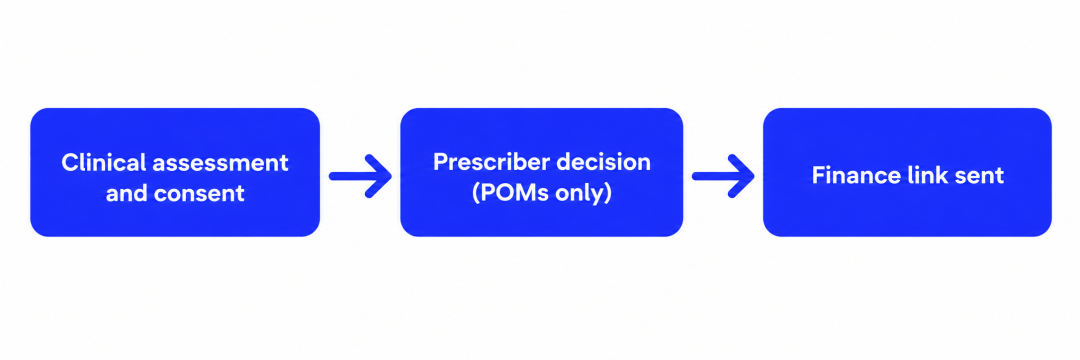
Why Finance Should Come Last
A lender assesses one question: whether the client can afford to repay. Since 15 July 2026, lenders offering Deferred Payment Credit have had to check affordability and give clients key information before an agreement is made, including the amount borrowed, when repayments fall due and what a missed payment costs.
That assessment says nothing about whether the treatment is indicated, whether a prescriber will prescribe, or whether the booking is correct. Those remain the clinic’s responsibility. When finance comes first, every later change becomes an amendment to a credit agreement instead of an edit to a booking.
The finance application process itself is short. The client applies directly with the lender, usually on her phone, and most decisions come back in real time. That speed is exactly why it tends to drift earlier in the client journey than it should. A link sent with the booking confirmation feels efficient, but it asks the client to commit to credit before anyone has examined her.
Check the Clinic’s Own Position
These checks happen once, then again whenever something changes: a new lender, a new product, reissued guidelines.
Confirm the lender is authorised. The FCA Firm Checker shows whether a firm holds permission to lend, and the Financial Services Register shows its full permissions. Payl8r, the lender behind Faces Finance, is listed under firm reference number 675283.
Confirm which product the clinic is introducing clients to. Interest-free credit repayable in 12 or fewer instalments within 12 months is Deferred Payment Credit. The FCA’s firm guidance states that broking DPC agreements is exempt from regulation. Interest-bearing plans, and anything longer than 12 months, are ordinary regulated credit, and introducing a client to them needs cover, usually as an Introducer Appointed Representative of the lender. The detail is set out in 5 Common Myths About Offering Finance in Aesthetic Clinics.
Confirm the promotional guidelines are current. Lenders issue approved wording at onboarding, and the FCA’s consultation on consumer credit promotions (CP26/15) means that wording is likely to be reissued. Practical finance for clinics depends on staff using the current version, not the one they remember.
Comparing finance options for aesthetic clinics belongs at this stage too, before any client is involved. The setup route is covered in What It Takes to Offer Finance in Your Clinic.
Check Treatment Eligibility
Treatment eligibility has two halves. The clinical half asks whether this client should have this treatment. The commercial half asks whether this treatment can be financed under the clinic’s agreement. The clinical half always comes first.
Clinical suitability before any finance link
The GMC’s guidance on cosmetic interventions, written for doctors but widely used as a benchmark across the sector, requires the practitioner to ask why the patient wants the intervention and assess whether it is appropriate before going ahead, and not to provide it if it is unlikely to benefit them. Medical history, contraindications, medications and expectations all sit in that assessment.
Age sits there as well. Under the Botulinum Toxin and Cosmetic Fillers (Children) Act 2021 it is an offence in England to provide or arrange toxin or filler treatment for anyone under 18, outside a narrow medical exception. Lenders also require applicants to be 18 or over. One photo ID check at consultation answers both questions.
Prescription-only treatments need the prescriber first
Where the treatment involves a prescription-only medicine, it is not confirmed until a prescriber has assessed the client and issued a prescription for her by name. For nurse and midwife prescribers, the NMC has required a face-to-face consultation since 1 June 2025. If the prescriber declines, the treatment does not happen, whatever the lender has approved.
The finance link therefore belongs after the prescribing decision, not before. Clinics without an in-house prescriber can use the Faces prescriber directory to find one locally. The prescribing requirements are covered in Independent Prescriber Near You.
Does the treatment fit the lender’s product
Lenders set minimum and maximum order values, term lengths and sometimes rules about which services they will fund. The figures in the clinic’s own agreement are the only ones that count, so check the treatment price against the agreement and the live details in Finance Hub before the client applies. A plan priced above the lender’s maximum is better restructured at the planning stage than discovered when the application fails.
Courses and multi-session plans
A course financed as a single total means the client repays for sessions that have not yet been delivered. If she stops after the first session, or the practitioner stops treatment on clinical grounds, someone has to decide what happens to the balance. That decision should be written down before she applies.
The GMC guidance expects clinicians to be clear about what a quoted price includes, including possible charges for revision or follow-up. For aesthetic clinic payment plans covering several sessions, that means stating the full course price, what a review appointment costs, and the refund position on unused sessions. Pricing a course with finance in mind is covered in How to Price Your Aesthetic Treatments When Offering Finance.
Keep Consent and Credit Separate
Agreeing to treatment and agreeing to credit are two separate decisions, and each needs to stand on its own.
Consent for a cosmetic intervention should be sought by the practitioner who will carry it out. The GMC guidance also says clients must be given time to reflect and told they can change their mind at any point. A client who has already been approved for credit can feel committed to a treatment she has not yet fully considered. The practitioner should say plainly that approval does not oblige her to go ahead.
The order of the paperwork helps. On Faces, client finance options can be reached through three routes: the consent form, the booking link, or a direct finance link. The consent form route puts the finance link after the medical history, so the client meets the credit option once the clinical questions have been answered. The practitioner still reviews the form before treatment. Finance being available is never part of the clinical decision.
Record the payment discussion in the consultation notes. One line is enough: payment options were described in the standard way, and the client was given time to decide.
Check the Customer Information and Appointment Details
Most problems that reach a lender start as small admin errors.
The customer information on the application should match the clinic’s record and the client’s ID: full legal name, date of birth, current address, email and mobile number. The lender sends the agreement, payment reminders and any missed-payment contact to those details, so an old email address is more than an inconvenience. The application should also be made by the person who will repay. If someone else is paying, check the lender’s rules before any link is sent.
The appointment details should match what the client is applying for: the treatment, the practitioner, the date and the full price. If the plan changes after approval, as it did in the cold sore example, the agreement should be amended or cancelled before the treatment is confirmed with the lender, not after. Earlier Faces guidance notes that agreements typically start when treatment is completed and confirmed; check the exact sequence with the lender.
Quote the full price of the treatment, never monthly payments. Under CONC 3.5, a promotion stating an amount relating to the cost of credit must carry a representative example. The client receives accurate figures from the lender during her application.
Treatment Affordability Is Still Clinical
The lender decides whether the client can afford the credit. The practitioner still decides whether the plan is right for her, and treatment affordability feeds into that in ways a lender cannot see. A client who says the plan is a stretch, or needs the result before a specific event, is giving information about pressure and motivation. A smaller first stage or a later start may suit her better than credit.
If the lender declines an application, the response should be brief and neutral. A clinically sound smaller plan, paid another way, is a reasonable alternative. Helping the client find a route around the decision is not. The wording side of the finance conversation with clients is covered in Talking About Finance Without Sounding Like a Pitch.
Plan for Treatment That Does Not Go to Plan
Credit changes what happens when something goes wrong.
The FCA confirms that Section 75 of the Consumer Credit Act is available on DPC agreements. For items with a cash price between £100 and £30,000, the lender can be jointly liable with the clinic for breach of contract or misrepresentation. A dispute about a financed treatment can reach the lender, and from there the Financial Ombudsman Service. The clinic’s records then become the evidence: the consent form, before photographs, the treatment record and the aftercare form the client received.
Before payment plans for aesthetic treatments go live, three things should already be in writing: the cancellation policy, the refund position on unused course sessions, and how the clinic handles a complication review. Professional indemnity should cover the specific treatment being financed. If a complication occurs, the client’s repayments continue. A clear complications pathway protects both the client and the clinic’s position with the lender.
Everyone who sends finance links needs the same rules. Briefing reception on how to offer payment plans means giving them this checklist as well as the approved wording.

A Pre-Finance Checklist for Each Treatment
Before the finance link is sent:
☐ Medical history reviewed and treatment indicated
☐ Client is 18 or over (photo ID seen)
☐ Prescriber has assessed and prescribed (POM treatments only)
☐ Consent discussion completed by the treating practitioner
☐ Full price quoted, including reviews and expected top-ups
☐ Price falls within the clinic’s lender agreement
☐ Course refund and cancellation terms given in writing
☐ Name, contact details and appointment details match the record
☐ Payment discussion noted in the consultation record
If any box is empty, the link waits.
Set the Order Up in Faces
Clinics on Faces can register for Faces Finance from Finance Hub in the dashboard. Once approved, add the finance link to the clinic’s consent form so it reaches the client after her medical history, not with the booking confirmation. For prescription-only treatments, book the prescriber through the Faces prescriber directory before any finance link is sent.
FAQs
Should a client apply for finance before or after the consultation?
After. The lender only assesses whether she can afford the credit. Clinical suitability, consent and, for prescription-only treatments, the prescribing decision should all be settled first, so the agreement matches the treatment that actually happens.
Can a client under 18 use finance for aesthetic treatment?
No. Lenders require applicants to be 18 or over, and in England it is an offence to provide or arrange toxin or filler treatment for under-18s outside a narrow medical exception. A photo ID check at consultation covers both.
What happens if the treatment plan changes after the client is approved?
Contact the lender before the treatment is confirmed. Approval and the start of the agreement are usually separate steps, which leaves room to amend or cancel. Confirm the exact process with the lender rather than treating the original approval as fixed.
Can a practitioner recommend which of the financing options for aesthetic treatments suits a client?
No. Clinics introducing financing options for aesthetic treatments can say finance is available and explain how it works in general terms, using the lender’s approved wording. Recommending a term or product, estimating repayments or predicting approval falls outside the introducer role.
Does Section 75 apply to treatments paid for with finance?
For DPC agreements made from 15 July 2026, the FCA confirms Section 75 is available, for items with a cash price between £100 and £30,000. The lender can be jointly liable with the clinic if something goes wrong, which makes consent, treatment and aftercare records part of the clinic’s finance risk.