
It is 2pm on a Tuesday. The treatment room is ready: fresh couch roll on the bed, gloves out, the consent record open on the tablet and an hour blocked in the diary. Then the hour passes and nobody arrives. No message, no call. By the time you have chased the client, the slot is gone and so is the chance to offer it to someone on your waiting list.
Every clinic has afternoons like that. Appointment reminders for aesthetic clinics will not stop every missed visit, and no honest software company should promise they will. What they can do is give clients a timely, easy way to confirm, prepare, rebook or cancel, so that more of the gaps in your diary become gaps you know about in advance. This guide covers what a good reminder does, what to put in it, how to time it around consultations and treatments, and how the Faces booking system connects reminders to deposits, consent and the stock you prepare for each visit.
Why a missed visit costs an aesthetic clinic more than an empty hour
In a hairdresser, a no-show usually means lost time. In an aesthetic clinic it tends to cost more, because so much happens before the client walks in:
- Clinical time. Consultations, medical history review and treatment planning are often done before the treatment day.
- Prepared rooms and consumables. Couch roll, gloves, wipes, dressings and aftercare packs are laid out for a specific person.
- Team rota. A practitioner, and sometimes an assistant, has been scheduled around the booking.
- Other clients. Someone else might have taken the slot if they had known it was free.
We are not going to quote an industry no-show rate here, because published figures vary widely and rarely match one clinic’s reality. The number that matters is your own. Track your missed and late-cancelled appointments for a few weeks before and after you change your reminders, as part of the wider set of aesthetics clinic KPIs worth tracking.
What a good appointment reminder actually does
A reminder is a service message, not an advert. The best ones are short, specific and make the next step obvious. A useful reminder should:
- confirm the date, time, location and practitioner;
- give the client a clear way to confirm, rebook or cancel, so they are not tempted to simply stay away;
- repeat any preparation the practitioner has asked for (for example, arriving a few minutes early or completing forms before the visit);
- restate your deposit and cancellation policy in plain words, without sounding like a threat;
- link to any outstanding paperwork, such as a consent or medical history form.
Keep clinical advice in the consultation and in your written aftercare, not in a text message. A reminder can say “please follow the preparation advice your practitioner gave you”, but it should not try to replace that conversation. Our post on online booking for aesthetic clinics explains why leaving room for a client to think, ask questions and change their mind is part of responsible booking design.
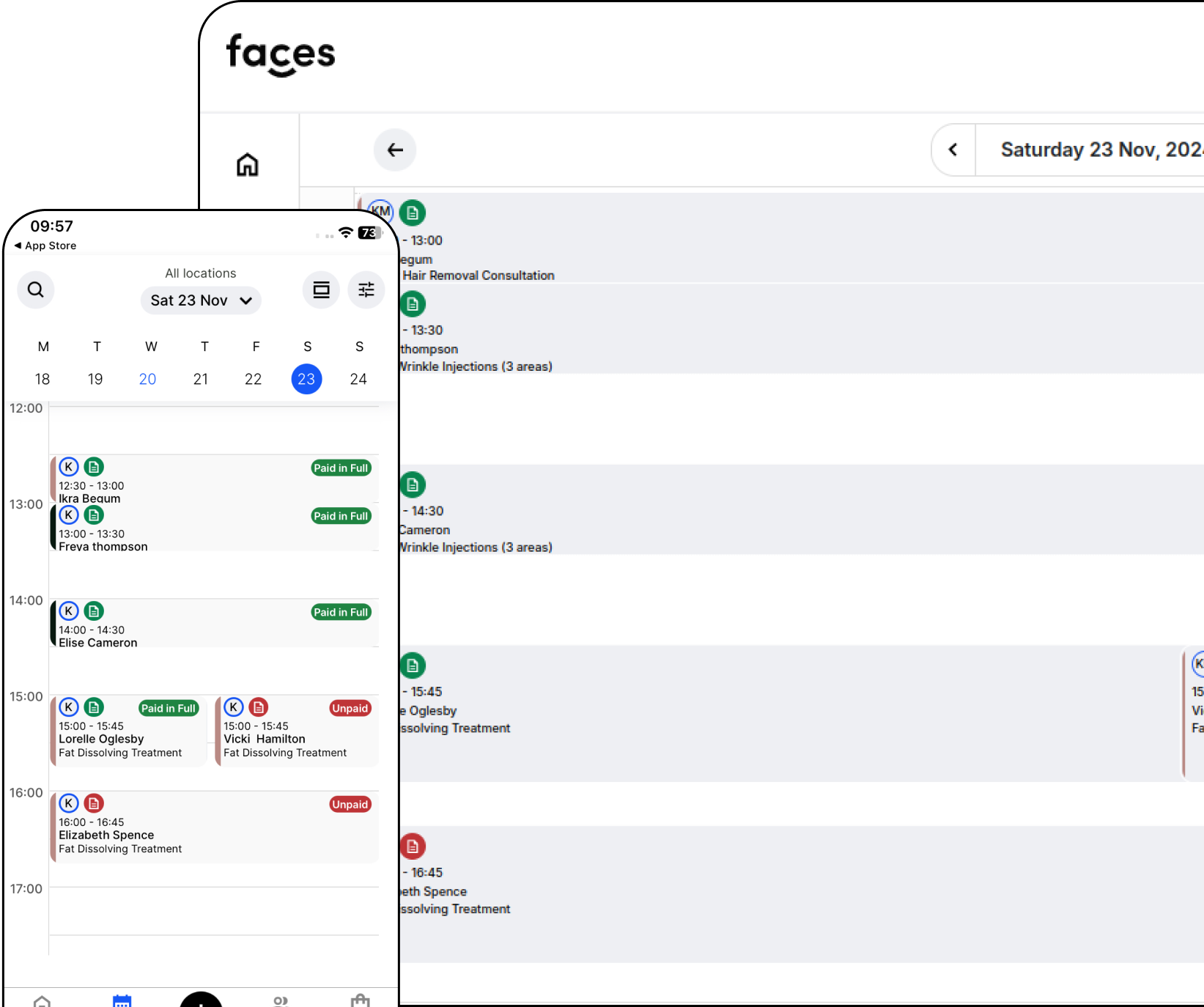
Timing reminders around consultations and treatments
There is no single perfect schedule, and your clinic policy should lead. Many clinics use a simple pattern:
At the moment of booking
A confirmation that repeats the details, the cancellation policy and any forms to complete. This is where expectations are set, so make the policy easy to find.
A day or two before
The main reminder. It gives the client enough notice to rebook if their plans have changed, and gives you enough notice to offer the slot to someone else. A common approach is one reminder around 48 hours ahead and a shorter one the day before; test what suits your clients.
After the visit
Not strictly a reminder, but part of the same journey: aftercare and a prompt to book any review appointment the practitioner recommends. Faces can send aftercare forms as part of the treatment workflow, and our guide to aftercare forms for aesthetic clinics goes into more detail.
For treatments where a consultation and treatment are separate visits, think about each appointment on its own terms. A consultation reminder might focus on bringing information about medicines and medical history. A treatment reminder might focus on timing and any preparation your practitioner has agreed with the client.
Reminders, deposits and a clear cancellation policy
Reminders work best alongside a fair, visible policy. On the Faces homepage, the booking system is described simply: clients can book, pay and consent. That matters for attendance, because a client who has paid a deposit and completed their forms has already made a commitment, and the reminder becomes a prompt rather than a first contact.
A few principles help keep it fair:
- State the deposit and cancellation terms at the point of booking, not only in the reminder.
- Make it as easy to cancel as it was to book. A client who can cancel in two taps is more likely to tell you than one who has to phone during working hours.
- Apply the policy consistently, and allow discretion for genuine emergencies.
- Never use a reminder to pressure someone into treatment they are unsure about.
Service reminders about an appointment someone has booked are different from marketing messages. If you also send offers or newsletters by text or email, check the ICO guidance on direct marketing and electronic communications and keep marketing consent separate from appointment messages.
Why Faces: booking, reminders, consent and stock on one platform
Faces is clinic software built for aesthetics. The Faces booking-system guide describes online reservations, appointment reminders and team-wide appointment management, and the same platform handles digital consent forms, records and aftercare. Clinics should check which reminder options are switched on for their own account when they set up.
What makes Faces different in day-to-day use is what sits next to the diary. Faces is a booking system with a built-in pharmacy and marketplace. It includes Faces Pharmacy and a multi-seller marketplace, so clinics can buy products without leaving the system. In practice, that means you can book appointments, take consent and order clinic stock from the same Faces platform. We explain the idea in more depth in why clinics choose a booking system with a built-in pharmacy, and in aesthetics clinic booking software as a connected workflow.
Ash walks through the Faces booking system in this short video:
Stock for the diary you actually have
Once reminders give you a clearer picture of who is really coming in, ordering gets easier. Instead of over-stocking for a diary full of maybes, you can plan around confirmed appointments. The everyday consumables that get laid out for each client are all in the Faces shop:
- Bed / couch roll (blue and white), or browse every option in couch rolls.
- Black nitrile gloves, powder free (medium), plus pink and blue options in PPE gloves.
- Clinell Universal Sanitising Wipes (40 pack) for surfaces and equipment between clients.
- Treatment aftercare cards to hand over at the end of each visit, alongside your digital aftercare.
- The wider clinic consumables aisle for everything else on the trolley.

Stock and prices change, so check each product page before you order.
Set up appointment reminders with Faces
If missed appointments are costing your clinic time and prepared stock, start with the basics: a clear confirmation, a well-timed reminder, an easy way to rebook and a fair deposit policy. Then measure your own attendance for a month and adjust. Registering for Faces is free and does not need a card.
FAQs
Do appointment reminders stop no-shows completely?
No. Reminders can make it easier for clients to attend, rebook or cancel in good time, but some missed visits will still happen. Measure your own rate before and after any change rather than relying on published averages.
How far in advance should an aesthetic clinic send a reminder?
Many clinics send a confirmation at booking and a reminder a day or two before, sometimes with a second short reminder the day before. Choose timing that gives the client time to rebook and gives you time to refill the slot.
Does Faces include appointment reminders?
The Faces booking-system guide describes online reservations, appointment reminders and team appointment management. When you register, check which reminder options are available and enabled for your account.
Should reminders include treatment advice?
Keep reminders to practical details: time, place, preparation your practitioner has already explained, forms to complete and how to rebook. Clinical advice belongs in the consultation and written aftercare.
Can I order clinic stock from the same system?
Yes. Faces includes Faces Pharmacy and a multi-seller marketplace, so clinics can buy products such as couch rolls and gloves without leaving the system.
Follow Faces
For more booking tips, product guides and behind-the-scenes updates, follow @facesconsentapp on Instagram, watch Ash from Faces and Faces Pharmacy on YouTube, and find us on TikTok, Facebook, LinkedIn and X.
Ashley James Simpson-Davies INP MSc RN