
It is a Tuesday evening and a client has messaged a photo two days after treatment. It is probably nothing, but you want a second pair of eyes on your thinking, and the colleague you would normally ring is on holiday. Most practitioners know that feeling. The hard part is rarely the clinical knowledge itself. It is that complications tend to get discussed late, at the moment you are already worried, instead of being planned for on a calm day.
This guide looks at when a clinic might want an aesthetics complications consultant, what the Faces complications consultant page offers as of 27 November 2026, and, just as importantly, what it is not. It is extra support for trained practitioners. It never replaces emergency care, your own clinical judgement, your clinic’s escalation plan or your professional indemnity cover.
Why an aesthetics complications consultant helps before anything goes wrong
Good complication management starts long before the appointment. It sits in the consultation, the consent conversation, the aftercare you send home and the plan you already have for who you will call and when. A complications consultant, whether that is an experienced colleague, a mentor or a structured support service, is most useful as part of that plan rather than as a number you search for at ten at night.
In practice, clinics tend to look for this kind of support when:
- they are adding a new treatment and want to write or review the protocol around it;
- a practitioner works alone and has nobody nearby to sense-check a decision;
- a client reports something unexpected after treatment and the practitioner wants structured guidance alongside their own assessment;
- the clinic wants its governance paperwork, such as escalation plans and incident notes, to be clearer and more consistent;
- a team is growing and newer staff need a shared reference for what “good” looks like.
None of this is about fear. Most treatments go smoothly. It is simply that the clinics who handle the rare difficult day well are usually the ones who rehearsed it, which is the same point we made in our earlier guides on addressing complications during aesthetic treatments and mid-treatment complications and the lessons they teach.
What the Faces complications consultant page offers
The aesthetic complications consultant page on Faces describes “expert aesthetic complications support for medical and non-medical practitioners”. The service behind it is Complications Guru, which the page describes as an AI-powered educational and professional support platform built for UK aesthetic practitioners. Based on the live page, it covers:
- Complications education. Structured, educational information on complication scenarios, presented around UK professional frameworks.
- Clinic-specific protocol writing. Help drafting protocols tailored to the way your clinic operates, rather than generic templates.
- Governance documentation. Support with the paperwork that sits behind safe practice, including escalation planning.
- Wider practice support. The page says it also covers documentation, marketing and wellbeing support in one platform.
- Availability. The page lists it as available on demand, 24/7, with a 7-day free trial.
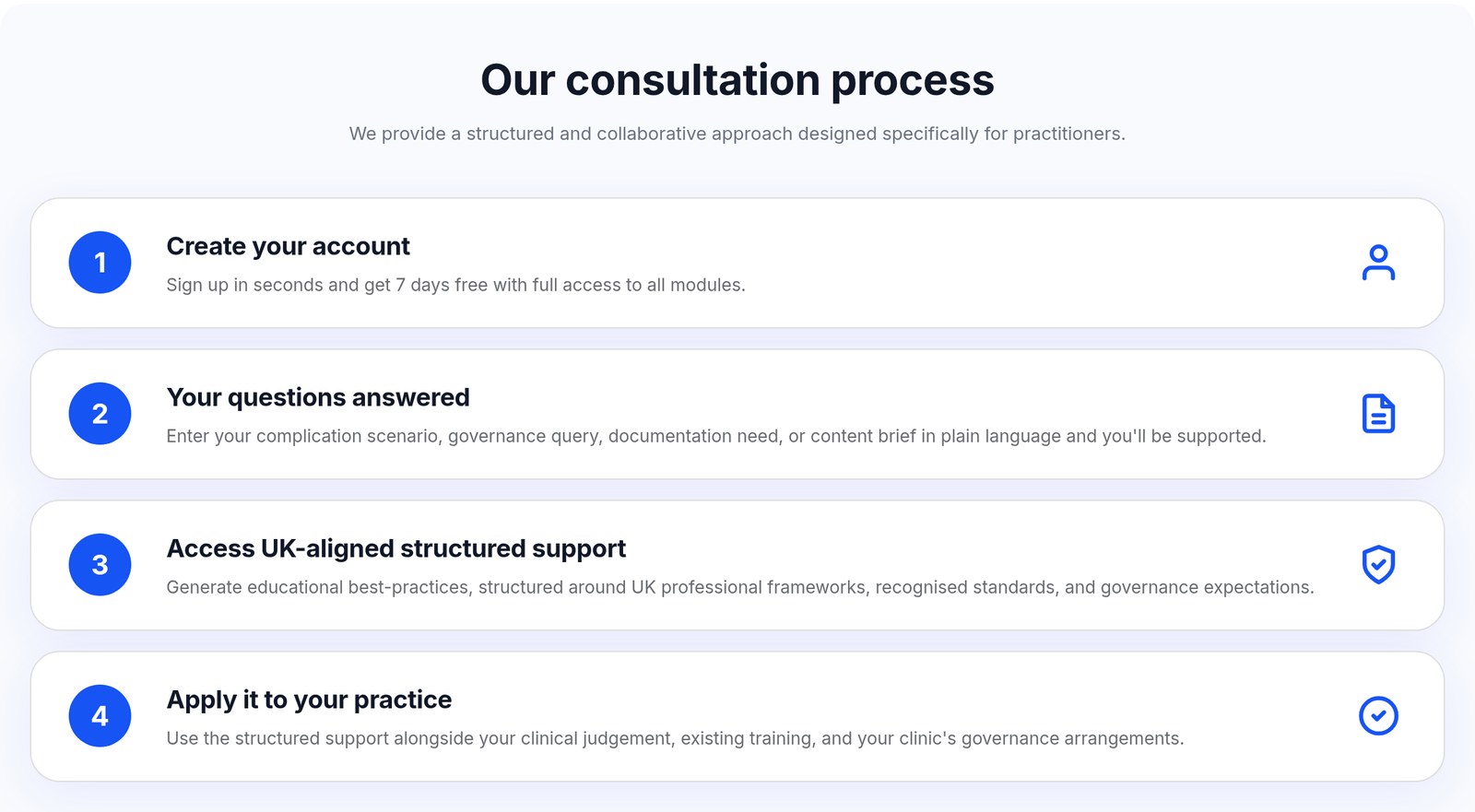
It is open to doctors, dentists, nurses and prescribing professionals, and to non-medical practitioners such as aesthetic therapists, skin specialists and training academy professionals. The page sets out a four-step process: create an account, describe your scenario or query in plain language, receive structured UK-aligned support, then apply it alongside your clinical judgement, existing training and your clinic’s governance arrangements.
What it is not: emergency care, diagnosis or indemnity
This is the part to read twice. The page’s own disclaimer says the service is an educational and governance support platform. It “is not a diagnostic tool and does not provide medical advice, clinical decision-making, prescribing, or treatment instructions for untrained users”, and it does not replace accredited training, manufacturer guidance, clinical supervision or independent professional judgement. All assessment, consent, treatment decisions and escalation stay with the treating clinician.
So, in plain terms:
- In an emergency, follow your local emergency pathway. If someone is seriously unwell, call 999. The NHS sets out when to call 999, and NHS 111 is there for urgent advice that is not life-threatening.
- Keep your emergency training current. The Resuscitation Council UK publishes guidance on the emergency treatment of anaphylactic reactions for healthcare providers. Know it, and practise it with your team.
- Keep your indemnity in place. A support service is not insurance. Check what your own policy covers and what it expects you to do if something goes wrong.
- Report what needs reporting. Suspected side effects from medicines and incidents involving medical devices can be reported to the Medicines and Healthcare products Regulatory Agency (MHRA) through the Yellow Card scheme.
- Work within your scope. Nurses remain accountable under the NMC Code, and the Joint Council for Cosmetic Practitioners (JCCP) publishes education and practice standards that many practitioners use as a reference.
If you need a prescriber relationship for your clinic, the Faces find a prescriber page is a separate route, and clinics reviewing their cover can start at the Faces aesthetics insurance page.
Consent and aftercare: where complications planning really starts
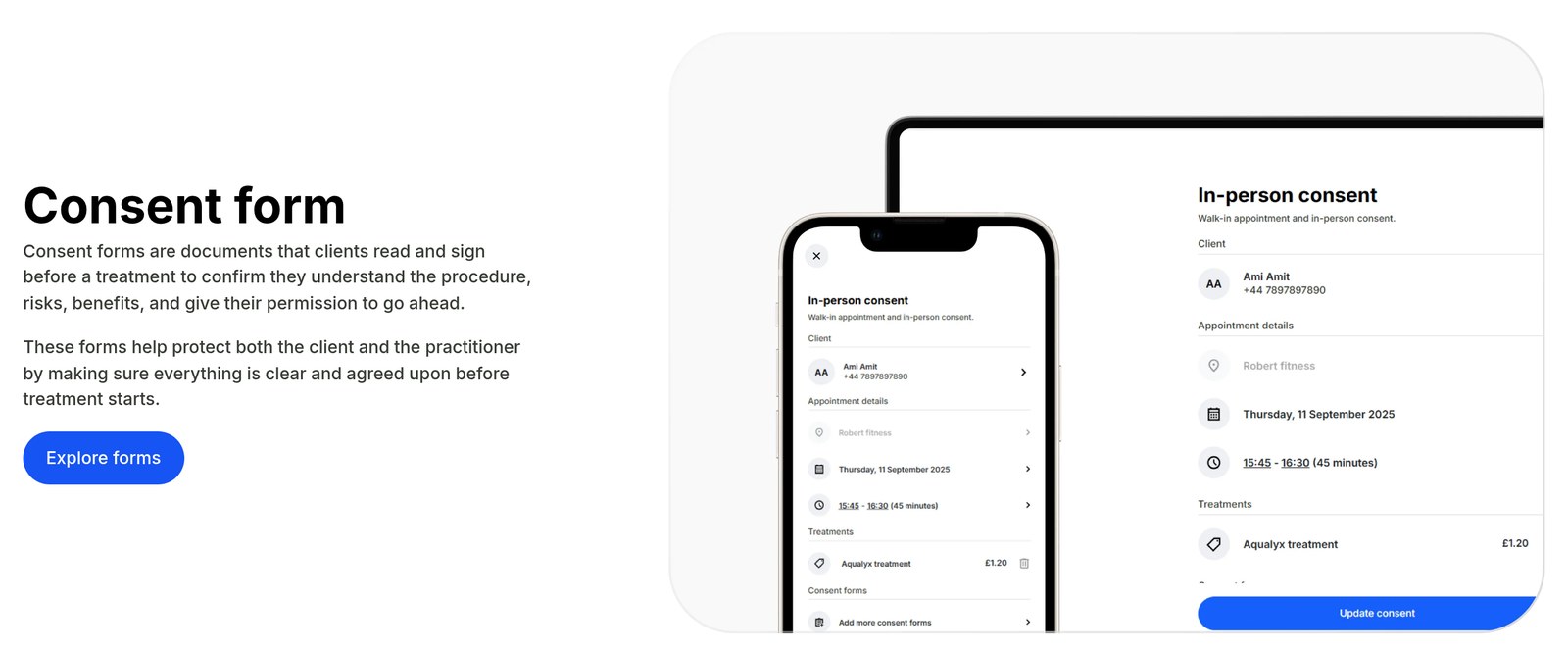
A consultant can help you think, but the client’s understanding of risk is set much earlier. The Faces consent forms library lets clients read and sign treatment-specific forms before they arrive, so the risks, benefits and alternatives are explained and recorded before the appointment. That gives you a clear record of what was discussed if a concern comes up later.
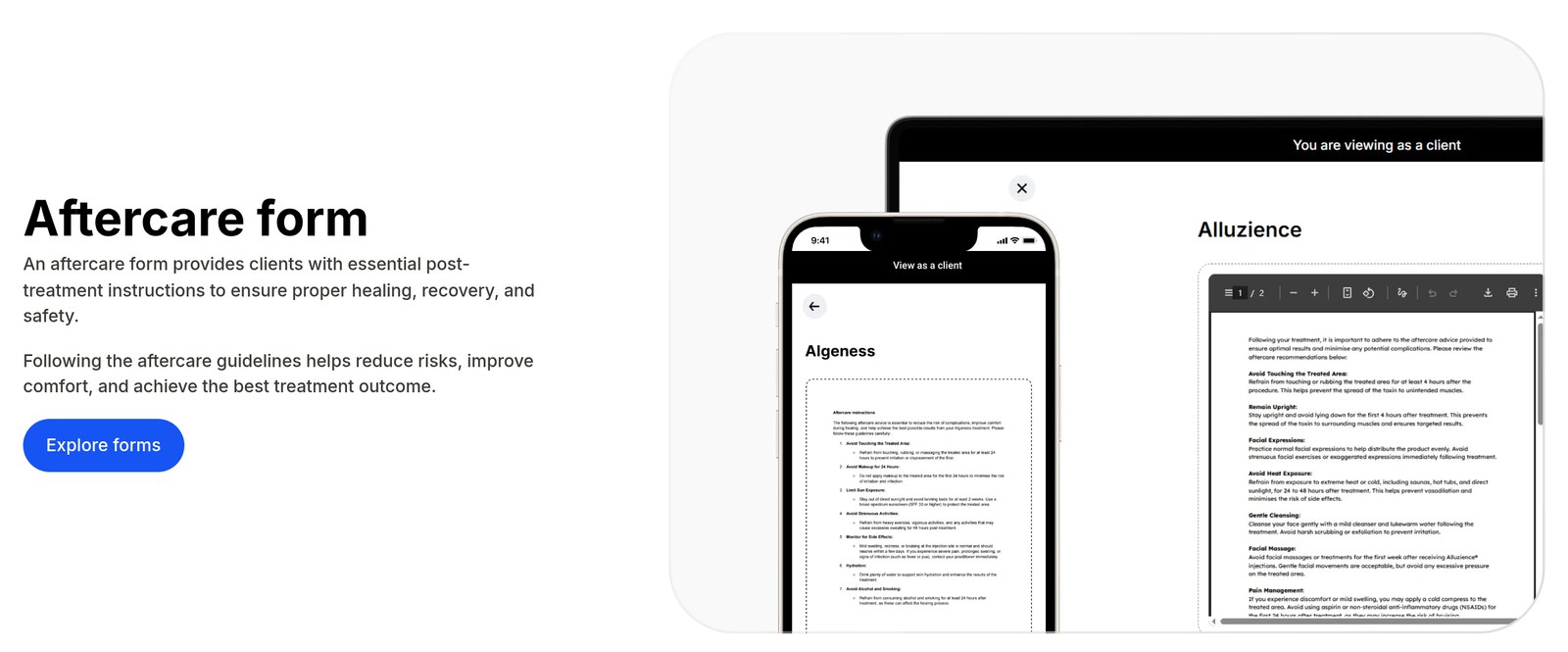
Aftercare matters just as much. The Faces aftercare forms give clients written post-treatment instructions they can keep, including what is normal, what is not, and when to get in touch. Clear aftercare means clients are more likely to contact you early, which is exactly when a second opinion is most useful. We covered why the signature is only the start in digital consent forms: beyond the signature, and how booking flows can support safe choices in responsible online booking for aesthetic clinics.
A simple complications-readiness checklist for your clinic
Use this on a quiet afternoon, not on the day you need it. Everything linked below is non-prescription and was live in the Faces shop on 27 November 2026.
- Written escalation plan. Who you call, in what order, and when you stop and follow the emergency pathway. A consultant service can help you draft it; you still own it.
- Emergency training in date. Online options include Anaphylaxis for Healthcare Professionals Online Training and Online CPD Basic First Aid Training, with more in the complications courses and first aid courses categories. Online learning does not replace hands-on practice.
- A stocked first aid kit. For example the First Aid Kit – 20 Person, or browse the first aid kit category. Check contents and expiry dates on a schedule.
- Clean, ready consumables. Keep 10 x 10cm 8-ply gauze swabs and surface wipes such as Clinell Universal Sanitising Wipes (225 bucket) to hand (Clinell is made by GAMA Healthcare), with more in sanitisers and wipes.
- Safe sharps disposal. A correctly sized container from the sharps bins category in every treatment room.
- Consent and aftercare for every treatment you offer. Treatment-specific, signed and stored before the appointment.
- A debrief habit. After any unexpected reaction, write down what happened, what you did and what you would change, then update your protocol.
Emergency medicines are prescription-only and are outside the scope of this post. Speak to your prescriber about what your clinic should hold.
For a refresher on treatment-specific risks, our guide to dermal filler complications and risks is a useful starting point for team discussions.
Why Faces
Faces is clinic software for aesthetics and beauty: online booking, digital consent, aftercare, client records and team tools, with services like the complications consultant page listed alongside them. It is a booking system with a built-in pharmacy and marketplace. Through Faces Pharmacy and the multi-seller Faces shop, clinics can book appointments, take consent and order clinic stock, from first aid kits to sharps bins, from the same Faces platform, without juggling separate logins.
That matters for complications readiness. When your consent records, aftercare, training and consumables live in one place, it is easier to see the gaps and close them before a difficult day, rather than hunting across email, paper files and supplier accounts.
Watch: getting prescriber support for your clinic
Complications planning often goes hand in hand with having the right prescriber relationship. In this short video from Faces Pharmacy on YouTube, we explain how Faces can help a clinic that needs a prescriber.
For more practical clips, follow Ash on YouTube, Faces on Instagram, Faces Pharmacy on TikTok and Faces on LinkedIn.
Get complications support on Faces
If you would like a structured second opinion and help with protocols and governance paperwork, take a look at the complications consultant page and its free trial. New to Faces? Create your Faces account to bring booking, consent, aftercare and clinic stock together.
FAQs
What does an aesthetics complications consultant do?
It gives practitioners a structured second opinion and support with complication scenarios, treatment planning and governance. The service on the Faces page is educational and does not diagnose, prescribe or make clinical decisions for you.
Can I use it in an emergency instead of calling 999?
No. In an emergency, follow your local emergency pathway and call 999 if someone is seriously unwell. See the NHS guidance on when to call 999. A support service is extra help, never a substitute for emergency care.
Does it replace my professional indemnity insurance?
No. It is not insurance and does not change your responsibilities. Keep your indemnity in place and check what your policy expects if something goes wrong.
Do I need to be a prescriber to use it?
The page says it supports both medical practitioners, including nurses, doctors and dentists, and non-medical practitioners such as aesthetic therapists. All assessment and escalation stays with the treating clinician.
How does it fit with consent and aftercare forms?
They work together. Clear consent forms set expectations before treatment, aftercare forms tell clients when to get in touch, and the consultant page helps you plan and document your response.
Is there a free trial?
Yes. On 27 November 2026 the page listed a 7-day free trial with full access to all modules. Check the live page for current terms.
This article is general information for trained practitioners and is not clinical advice. Always follow your training, manufacturer guidance and local emergency pathways.
Ashley James Simpson-Davies INP MSc RN