
Fine lines that linger after a good night’s sleep, rough patches that make foundation cling and pores that seem to look bigger every year: these are the skincare concerns that send most people to an aesthetic practitioner looking for vitamin A. Moisturisers can soften how skin feels, but they can’t speed up how it renews.
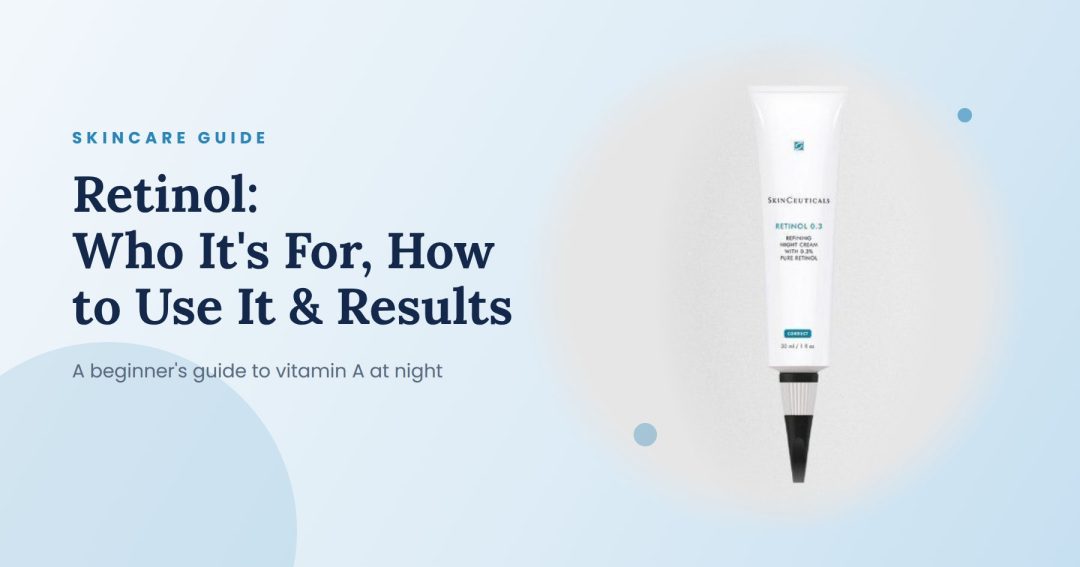
Retinol is the most researched vitamin A ingredient you can buy without a prescription, and also the easiest to get wrong. SkinCeuticals Retinol 0.3% 30ml is a gentle-strength night treatment designed to deliver visible change without the irritation that makes many people give up.
This guide covers what’s in the tube, what makes it different, who it suits (and who should wait), a step-by-step routine, the products to pair it with, and a realistic week-by-week timeline.
Product Snapshot
| Detail | SkinCeuticals Retinol 0.3% 30ml |
|---|---|
| Best For | Fine lines, rough texture, dullness, enlarged-looking pores and mild congestion; first-time or step-up vitamin A users |
| Key Ingredients | 0.3% pure retinol, bisabolol, moisturising agents, antioxidants |
| Texture | Lightweight, non-greasy night cream |
| Size | 30ml |
| Price | £ 68.90 |
What Makes It Special
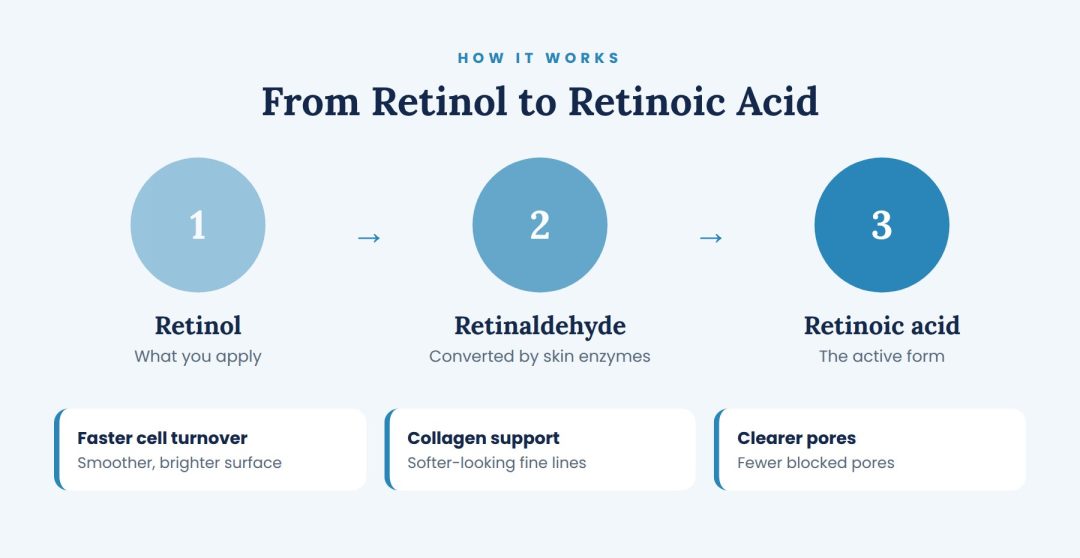
The technology. Your skin can’t use vitamin A directly. Enzymes convert it first to retinaldehyde, then to retinoic acid, the active form that tells skin cells to renew faster and make more collagen. That two-step conversion is why it works gradually and gently, compared with prescription retinoids such as tretinoin, which deliver retinoic acid directly.
The hero ingredient. At 0.3%, this formula sits at the gentle end of the strength range: enough to produce visible change over time while keeping irritation manageable for most new users. SkinCeuticals also makes 0.5% and 1.0% versions, but those are for skin that has already adapted, not a place to begin.
The brand. SkinCeuticals is a science-led skincare brand built on the antioxidant research of dermatologist Dr Sheldon Pinnell, best known for its vitamin C serums, and now part of L’Oréal. On Faces it’s sold by Faces Pharmacy, the Stafford-based pharmacy behind a platform that operates as an MHRA licensed broker.
Is It the Best Retinol for Beginners?
The ideal first vitamin A product is a low-to-moderate strength your skin can tolerate on alternate nights within about a month. For most adults that means 0.25% to 0.3%. Starting at 1% rarely brings faster results, because irritation usually forces a break that resets progress.
Format matters too. A lightweight retinol serum layers easily and suits oily skin, while a richer retinol cream cushions the drying effect for normal to dry skin. SkinCeuticals Retinol 0.3% sits comfortably in between, with a light, non-greasy texture and soothing support, which is why it’s often suggested as a first step.
Key Ingredients
| Ingredient | What it does |
|---|---|
| Retinol 0.3% | The active. Speeds up cell turnover and supports collagen for smoother texture and softer-looking lines. |
| Bisabolol | A soothing compound originally found in chamomile that helps calm the skin while it adjusts. |
| Moisturising agents | Help balance hydration and reduce dryness during the adjustment phase. |
| Antioxidant boosters | Support overall skin comfort and help defend against everyday environmental stress. |
| Water-based formula | Spreads easily across the face and layers well under moisturiser. |
Main Retinol Benefits
- ✓ Smoother texture. Faster cell turnover sheds rough, dull cells so skin reflects light better.
- ✓ Softer-looking fine lines. Supports collagen over months, not weeks, for a firmer look.
- ✓ More even tone. Helps fade sun spots and post-blemish marks, as long as you wear SPF daily.
- ✓ Clearer-looking pores. Stops dead cells from clumping inside pores, so fewer blockages form.
- ✓ Brighter complexion. Make-up sits more smoothly as the surface becomes more even.
- ✓ Gentle strength. 0.3% balances visible results with day-to-day comfort.
Who Should Use It
Great for:
- Adults new to vitamin A or stepping up from a weaker product
- Fine lines and early loss of firmness
- Rough, dull texture
- Enlarged-looking pores and blackheads
- Sun spots and post-blemish marks
- Anyone happy to wear SPF every day
Be careful if:
- Pregnant, trying to conceive or breastfeeding: don’t use retinoids.
- Rosacea or active eczema: get advice first.
- Broken, sunburnt or freshly treated skin: pause use.
- Booked for waxing, peels, laser or microneedling: stop 5–7 days before, unless your practitioner advises otherwise.
- Using tretinoin, adapalene or isotretinoin: don’t add it on top.
Retinol for Acne and Congested Skin
Spots start when dead cells stick together inside a pore and form a tiny plug. Vitamin A normalises that shedding, so fewer plugs form and existing blackheads loosen. For occasional blackheads, mild congestion and post-spot marks, a 0.3% strength is a sensible choice.
It has limits. Cosmetic vitamin A is weaker than the prescription retinoids used for acne in the UK. Painful, inflamed or scarring acne needs assessment by a GP, dermatologist or UK independent prescriber. A few extra spots in the first weeks (often called purging) can happen; breakouts in new areas that last beyond six to eight weeks suggest the product doesn’t suit you.
Retinol for Sensitive Skin
Reactive skin can still use vitamin A, with a slower plan. Try buffering (moisturiser, then the treatment, then moisturiser again) to slow absorption and reduce stinging, or short-contact use: leave it on for 30 to 60 minutes, wash it off, and extend the time over several weeks.
How to Use Retinol: Your AM and PM Routine
How much: one pea-sized amount for the whole face.
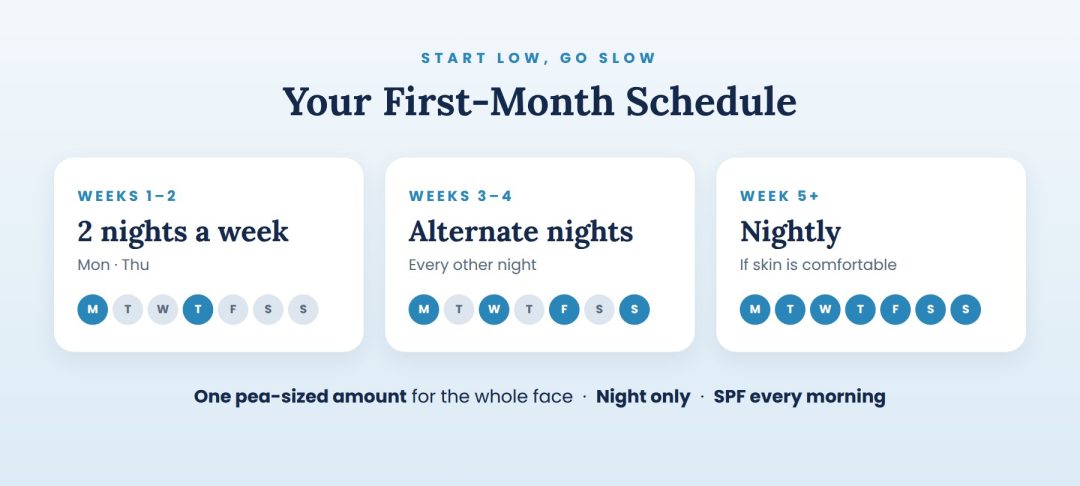
How often: build up slowly: two nights a week for weeks 1–2, alternate nights for weeks 3–4, then nightly from week 5 if your skin is comfortable.
When: evening only, because vitamin A breaks down in sunlight and makes skin burn more easily.
Morning
- Gentle cleanse
- Vitamin C serum (optional)
- Moisturiser
- Broad-spectrum SPF50
Evening
- Gentle cleanse, then wait until skin is fully dry (10–15 minutes)
- Pea-sized amount of SkinCeuticals Retinol 0.3%: dot on forehead, cheeks and chin, then spread
- Avoid eye corners, nostril creases and mouth corners
- Plain, fragrance-free moisturiser
If your skin stings or flakes: don’t stop altogether. Drop back one step for a week (for example, from alternate nights to two nights a week), add an extra layer of moisturiser, and build up again once your skin feels comfortable.
What to Pair It With: Building Your Retinol Skincare Routine
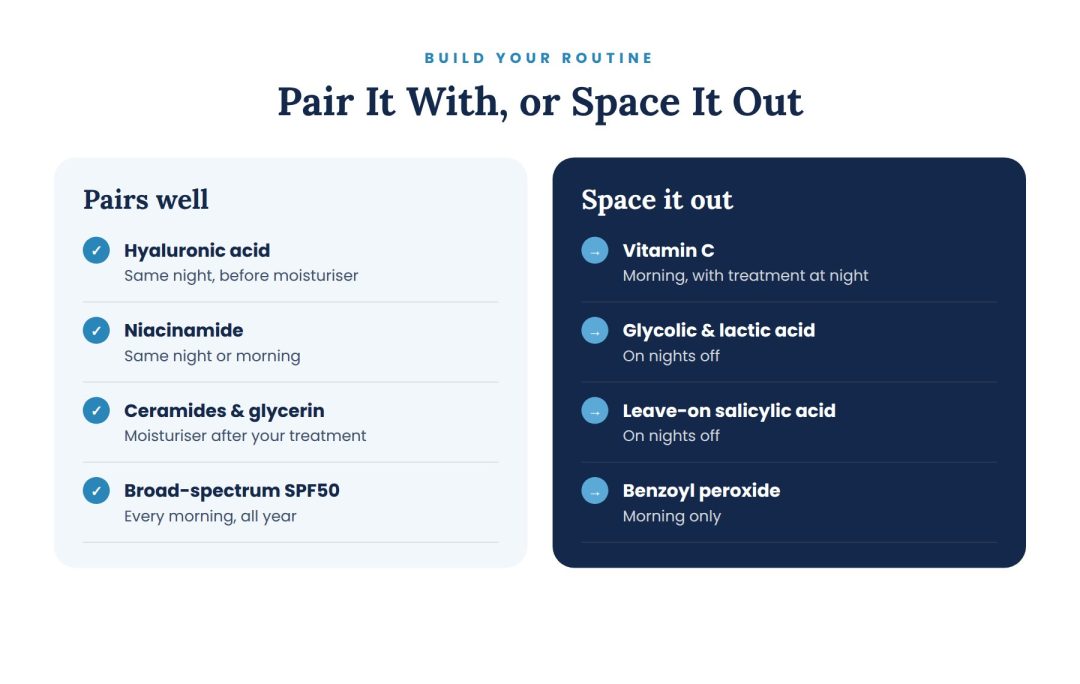
Hydrating ingredients such as hyaluronic acid, niacinamide and ceramides work well alongside it. Stronger actives need spacing out, and daily sunscreen is non-negotiable: UV is the main cause of the lines and pigmentation you’re treating.
These picks from the Faces shop complete your morning routine:
- Vichy Minéral 89 Daily UV Fluid SPF 50: a lightweight, hydrating SPF 50 that suits normal to dry skin adjusting to vitamin A.
- La Roche-Posay UVMUNE 400 Oil Control Fluid: high protection with a shine-free finish for combination or oily skin.
- CeraVe Facial Moisturising Lotion SPF30: moisturiser and SPF in one, with ceramides for the skin barrier. Add SPF50 for long days outdoors.
Results to Expect: Retinol Before and After
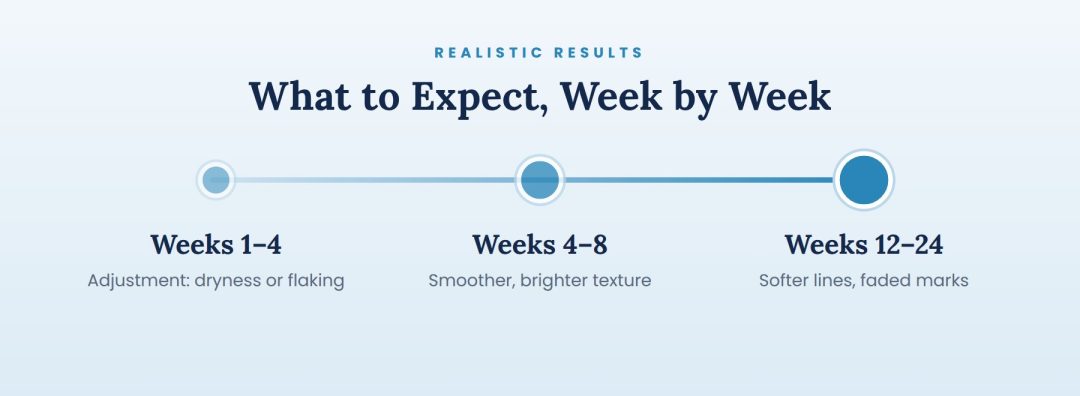
Vitamin A works on your skin’s natural renewal cycle, so results build over months. Here’s what a realistic timeline looks like with consistent use:
| When | What you may notice |
|---|---|
| Weeks 1–4 | Adjustment phase. Dryness, mild flaking and tightness, especially around the nose and mouth. This settles as skin adapts. |
| Weeks 4–8 | Skin feels smoother and looks brighter; make-up sits more evenly. |
| Weeks 12–24 | Fine lines soften and pigmentation fades noticeably. |
| Ongoing | Results last only as long as you keep using it. It’s a long-term habit, not a course. |
Tip: take photos in the same light at week 0 and week 12. Gradual change is hard to see in the mirror day to day.
FAQs
What is retinol?
It’s a form of vitamin A used in skincare to speed up cell turnover and support collagen, available without a prescription. The skin converts it into retinoic acid, the form prescription products such as tretinoin deliver directly. That conversion makes it slower acting but gentler.
What does retinol do?
It tells skin cells to renew faster and encourages new collagen. Faster renewal brightens dull skin and stops dead cells clogging pores; over several months, the collagen effect softens fine lines and improves firmness.
What does retinol do for your skin?
For most people, skin feels smoother within four to eight weeks, with softer lines and lighter dark spots within three to six months. Pores can look smaller and blackheads become less frequent. Temporary dryness and flaking are common in the first few weeks.
Can I use a salicylic acid cleanser with retinol?
Yes, for most people, because a wash-off cleanser stays on the skin only briefly. In the first month, use it in the morning and a gentle cleanser at night. If skin stings or peels, switch to a non-exfoliating cleanser until it settles, and keep leave-on salicylic products for nights off.
What is retinol good for?
Fine lines, rough texture, dullness, uneven tone, sun spots, enlarged-looking pores and mild congestion such as blackheads. It’s less suitable for inflamed or scarring acne, which usually needs prescription treatment, and shouldn’t be used during pregnancy or breastfeeding.
Conclusion: Is SkinCeuticals Retinol 0.3% Right for You?
If you want smoother texture, softer-looking lines and clearer pores without diving in at full strength, SkinCeuticals Retinol 0.3% 30ml is a well-judged place to start. Use a pea-sized amount two nights a week, moisturise after, wear SPF every morning, and give it at least 12 weeks. If irritation lasts beyond six weeks, a consultation at one of the aesthetic clinics listed on Faces can help you adjust strength or frequency.
Shop SkinCeuticals Retinol 0.3% now with next working day UK delivery from Faces Pharmacy.
This article is for general information and isn’t medical advice. Patch test new skincare, and speak to a healthcare professional if you have a skin condition or are pregnant or breastfeeding.