
A trained injector has a full Saturday clinic in the diary. Consent forms are ready to send, the treatment room is stocked and the aftercare cards are printed. Then a message arrives: the prescriber they have worked with for two years is moving away and will no longer be able to see their clients. Without a prescriber, a large part of that Saturday cannot go ahead.
If you are a non-prescribing aesthetics practitioner, finding the right prescriber is one of the most important professional relationships you will build. This guide explains when you need one, what UK regulators expect, what to check before you agree to work together, and how Faces can help you search, book and run the appointments around that relationship.
When does an aesthetics clinic need a prescriber?
Some of the most common treatments in aesthetics involve prescription-only medicines. Anti-wrinkle injections use botulinum toxin, which is a prescription-only medicine in the UK, and some medicines that clinics keep for managing complications are also prescription-only. A prescription-only medicine has to be prescribed by an appropriately qualified prescriber, such as a doctor, dentist, independent nurse prescriber or pharmacist independent prescriber, working within their competence.
If you do not hold a prescribing qualification yourself, you need a prescriber who will assess each client and take responsibility for the prescribing decision. That is a clinical relationship, not an admin task, which is why it is worth taking time over. We have not covered injectable product pages here on purpose: prescription-only medicines cannot be advertised to the public, and this guide is about the professional process rather than any product.
What UK regulators expect from aesthetic prescribing
Regulators and professional bodies have tightened their position on remote prescribing for non-surgical cosmetic procedures. The key points for clinics are below, with links to the original guidance so you can read it in full.
- Nurse and midwife prescribers. The Nursing and Midwifery Council says that from 1 June 2025 independent nurse and midwife prescribers must consult face to face and document a clinical assessment before prescribing for elective non-surgical cosmetic procedures. Remote methods such as phone, email, online, video or a third party are not appropriate, for the first consultation or follow-ups. See the NMC update on remote prescribing.
- Pharmacist prescribers. The General Pharmaceutical Council’s guidance for pharmacist prescribers says non-surgical cosmetic products should only be prescribed after a physical examination of the person, so a remote consultation is not appropriate. It also lists safeguards such as indemnity cover, consent, capacity and being competent to manage emergencies and complications.
- Industry standards. The Joint Council for Cosmetic Practitioners has also set out its position against remote prescribing of injectable medicines for non-surgical cosmetic use. Its statement on the NMC update explains when it expects follow-up face-to-face reviews.
- Doctors and dentists are covered by their own regulators’ guidance. Ask any prescriber which professional guidance they follow and how they apply it.
The common thread is simple: the prescriber needs to see and assess your client in person, and the prescriber remains responsible for that prescribing decision, including when someone else administers the treatment. Build your diary, your consent process and your working agreement around that, rather than trying to work around it.
How to find an aesthetics prescriber in the UK
Most practitioners find a prescriber in one of four ways:
- Your training provider or peers. Many prescribers are connected to academies, local networks and CPD events.
- A clinic you already work with. Some prescribing clinicians run their own clinic and offer in-person consultations for other practitioners’ clients.
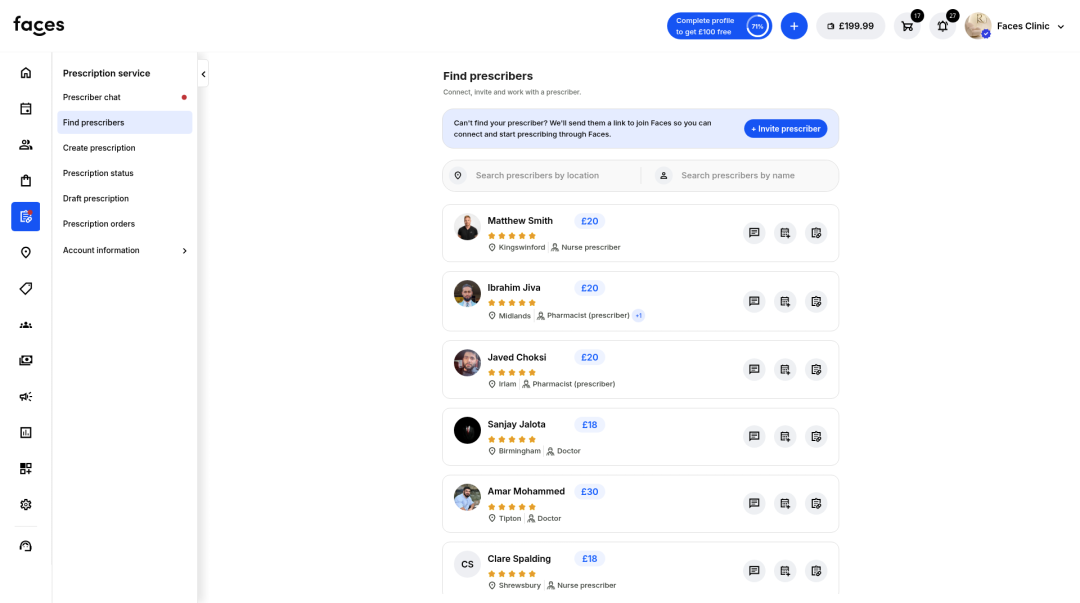
- A searchable directory. Faces has a public find a prescriber near me page where practitioners and members of the public can search for prescribers and clinics on the platform.
- Professional associations. Membership bodies and complications networks can often point you towards prescribers in your area.
Faces Pharmacy has also recorded a short explainer, “Need a prescriber for your clinic? Here’s how Faces can help”, which walks through the support available on the platform.
What to check before you work with a prescriber
Whichever route you use, do your own checks before you agree anything. A good prescriber will expect these questions and should be happy to answer them.
1. Registration and prescribing status
Check that the person is on the right professional register and holds a prescribing qualification. Nurses and midwives can be checked on the NMC register, and pharmacists on the GPhC registers. Doctors and dentists have their own public registers too.
2. In-person availability
Because face-to-face assessment is expected, location and availability matter more than ever. Agree where consultations will happen, how far ahead clients need to book, and what happens when a client needs a review before their treatment.
3. Competence, training and scope
Ask about their experience in aesthetic prescribing and in the specific treatments you offer. A prescriber should only prescribe within their own competence and scope of practice.
4. Indemnity and complications
Confirm that the prescriber has appropriate indemnity for this work, and agree in writing how complications and adverse events will be handled, who the client contacts out of hours, and how incidents are reported.
5. Records, consent and follow-up
Agree how assessment notes, consent and aftercare will be recorded and shared, and how follow-up reviews will be booked. If records are scattered across paper forms and messaging apps, this is where problems tend to appear. Our guide to digital consent forms that go beyond a signature covers what a good consent record should include.
Running prescriber appointments smoothly with Faces
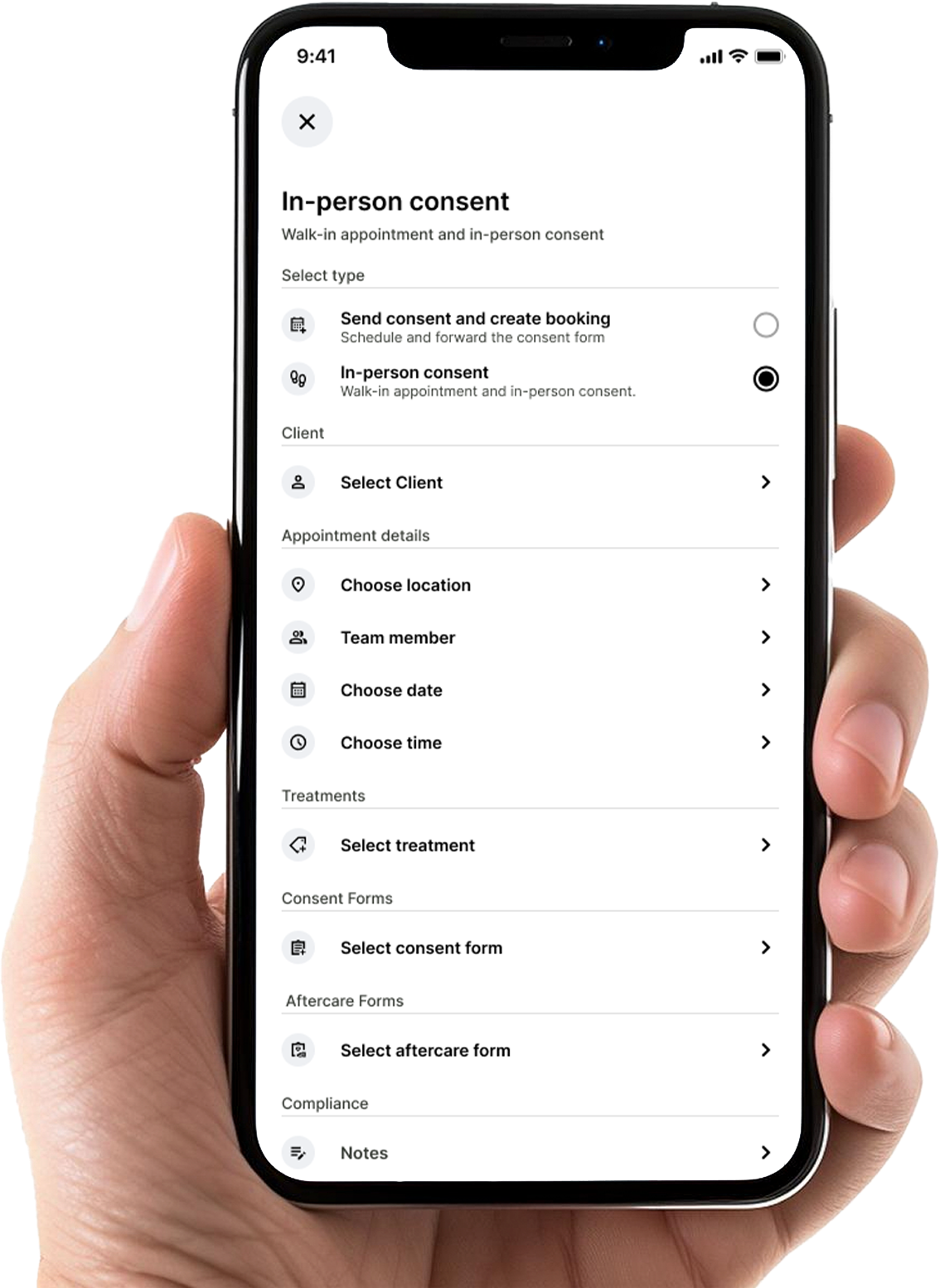
Once you have a prescriber, the day-to-day work is mostly organisation: booking the in-person consultation, collecting medical history and consent before the appointment, recording the outcome, and sending the right aftercare. That is the work Faces is built for.
- Online booking. Clients can book consultations and treatments online, and your team can manage the diary in one place. Create a free Faces account to set up your services.
- Digital consent forms. Send consent forms before the appointment so the prescriber has the information ready when they see the client in person.
- Aftercare forms. Send aftercare forms after treatment so instructions are consistent and recorded.
- Find a prescriber. The find a prescriber directory helps practitioners and clients find prescribers and clinics using Faces.
For a wider view of how these tools fit together, read our guide to aesthetics practice management software.
Stock the treatment room from the same platform
A prescriber relationship only works if the clinic around it is well run, and that includes the everyday consumables. Faces includes Faces Pharmacy and a multi-seller marketplace, so clinics can buy products without leaving the system. A few clinic staples listed on the day we checked:
- Alcohol swabs (box of 100) for routine skin preparation.
- Blue/white couch roll to keep the treatment couch clean between clients.
- Sharps disposal box for safe disposal of needles and sharps.
- Anti-wrinkle aftercare treatment cards (pack of 25) to give clients written aftercare to take home.
- The full consumables aisle and PPE aisle for gloves, aprons and other essentials.

Prices and stock change, so check each listing before you order. Our smarter stock plan for aesthetics clinic consumables explains how to avoid running out of the basics.
Why clinics choose Faces
Faces is a booking system with a built-in pharmacy and marketplace. You can book appointments, take consent and order clinic stock from the same Faces platform, rather than juggling a diary app, paper forms and several supplier accounts. Prescribers on Faces can also create prescriptions within the platform, and practitioners can search for prescribers through the directory. You can read more about that joined-up approach in our post on the booking system with a built-in pharmacy, and browse Faces Pharmacy and the Faces marketplace.
Faces supports safer admin and better records. It does not replace professional judgement, and it does not make any prescribing arrangement compliant on its own: that responsibility stays with the prescriber and the clinic.
For walkthroughs and clinic tips, subscribe to Ash from Faces on YouTube and the Faces Pharmacy YouTube channel, and follow Faces on Instagram, TikTok and LinkedIn.
Find a prescriber for your clinic
Start with the directory, do your own checks, put the arrangement in writing, and build your booking and consent process around in-person assessment. That protects your clients, your prescriber and your business.
FAQs
Can a non-prescriber offer anti-wrinkle treatments?
A non-prescribing practitioner cannot prescribe botulinum toxin, which is a prescription-only medicine. Treatment depends on an appropriately qualified prescriber assessing the client and making the prescribing decision, in line with their regulator’s guidance.
Can a prescriber assess my client by video call?
Current NMC and GPhC guidance says nurse, midwife and pharmacist prescribers should not prescribe for non-surgical cosmetic procedures remotely. They expect a face-to-face assessment. Check the guidance that applies to your prescriber’s profession.
How do I check that someone is a prescriber?
Check the relevant public register, such as the NMC register for nurses and midwives or the GPhC registers for pharmacists, and ask to see evidence of their prescribing qualification and indemnity cover.
Does Faces employ the prescribers in its directory?
The find a prescriber page is a directory for finding prescribers and clinics using Faces. Each prescriber is responsible for their own clinical decisions, registration and indemnity, so carry out your own checks before working together.
What should a clinic and prescriber agree in writing?
Cover where and how consultations happen, follow-up reviews, how records and consent are shared, how complications and adverse events are handled, and indemnity. Take professional or legal advice if you are unsure.
This article is general information for aesthetics professionals and is not legal, regulatory or medical advice. Always follow the current guidance from your own regulator and professional body.
Ashley James Simpson-Davies INP MSc RN