
A client books a course of three skin treatments, spreads the cost with Faces Finance, then emails two days before the first session to say they have changed their mind. The aesthetic clinic has usually already received the funds from the lender, the client has a live credit agreement, and the receptionist’s first instinct is to send the money back by bank transfer. That instinct causes most of the problems that follow. For aesthetic practitioners, the correct way to cancel treatment paid with finance runs through the lender, and this practitioner guide to finance cancellations explains why. Client Cancelled a Financed Treatment? Do This First
Two Agreements Sit Behind Every Financed Treatment
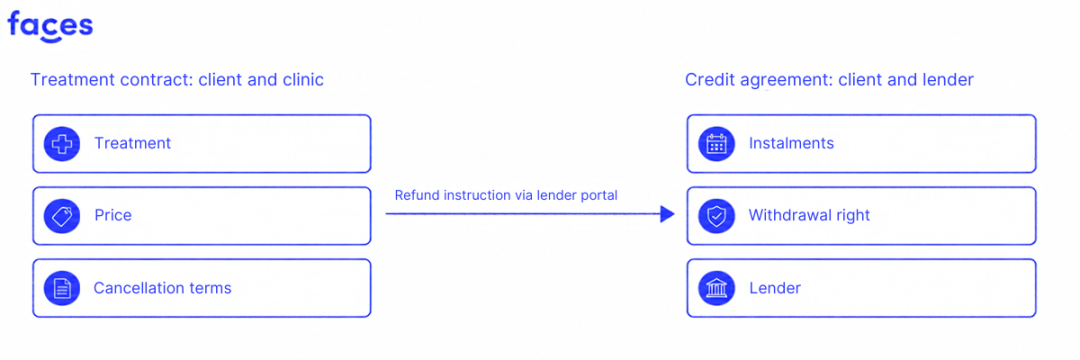
When a client pays through Faces Finance, two separate contracts are created. The first is the treatment contract between the client and the clinic: what will be done, when, at what price and under which cancellation terms. The second is the credit agreement between the client and the lender, Payl8r, which pays the clinic and then collects instalments from the client. Payl8r’s terms and conditions state that the credit agreement is separate from the purchase contract, and that services must be cancelled under the merchant’s own terms.
Cancelling one agreement does not cancel the other. A client who tells the clinic they no longer want treatment has told the lender nothing. A client who withdraws from the credit agreement has not cancelled their appointment.
The regulatory position has also tightened. The FCA began regulating deferred payment credit on 15 July 2026, joining interest-bearing credit, which was already regulated. Whichever product a client uses, they hold statutory rights against the lender as well as the clinic.
What Happens to Finance When Treatment Is Cancelled
The answer depends on two things: how far the treatment has progressed, and which agreement the client is trying to leave.
Client Cancelled a Financed Treatment? Do This First
The clinic applies its own cancellation terms, works out the refund due and issues it through the lender’s retailer portal rather than to the client directly. According to Payl8r’s customer FAQs, once the retailer authorises a refund and returns the funds, the loan agreement is cancelled and the client has nothing more to pay.
If the clinic’s terms allow it to keep a deposit, for example against stock ordered specifically for that client, the refund becomes a partial one. The client then still owes the lender the amount the clinic retained. That retained amount, and the reason for it, should be explained in writing at the point of cancellation.
Cancellation part-way through a course
When some sessions have been delivered, the refund covers the undelivered part. The difficulty lies in how that part is valued. A client who bought a three-session package at a discounted price and attended one session will expect roughly two thirds back. A clinic that recalculates the session already given at its full single-session price will refund less. Either can be defensible if the terms said so before the client signed. Published Financial Ombudsman decisions on treatment paid by credit show the Ombudsman looking closely at what the supplier’s terms actually promised and whether a pro-rata offer was fair in the circumstances.
When the client withdraws from the credit but keeps the treatment
Under section 66A of the Consumer Credit Act 1974, a client can withdraw from a regulated credit agreement without giving a reason within 14 days. The 14 days are counted from the day after the agreement is made, or from a later trigger date such as receiving a copy of the agreement. The client must then repay the credit, plus any interest accrued, no later than 30 days after giving notice. The treatment contract is untouched. The clinic has been paid, the client now owes the lender directly, and the appointment goes ahead as booked.
Online bookings and the statutory 14-day cancellation period
Treatments booked at a distance, through an online booking link for example, are covered by the Consumer Contracts Regulations 2013. The client normally has 14 days to cancel. If they ask for treatment to begin within that period and then cancel, regulation 36 means they pay only a proportionate amount for what has been supplied. The cancellation right ends once the service is fully performed, provided the client acknowledged in advance that this would happen. Regulation 38 adds that ancillary contracts end automatically on cancellation and that the trader must inform the other trader involved, which is a strong reason to tell the lender promptly. Contracts agreed face to face in the clinic carry no statutory cooling-off period.
Changing a Treatment Paid by Finance
A consultation may reveal a contraindication, or the client may prefer another option. The financial handling depends on the direction of the price change.
If the new treatment costs less, the clinic processes a partial refund for the difference through the portal, and the client’s agreement reduces accordingly. If it costs more, the clinic should not try to amend the original agreement informally. The difference is either paid separately or covered by a new finance application. The lender assessed affordability for the original amount, and the FCA’s creditworthiness rules now apply to every deferred payment credit transaction, so extra credit needs its own assessment.
A Faces Finance change of treatment should also be recorded clinically. The Faces consent form for the new treatment, the treatment notes and the portal record should all describe the same treatment at the same price. Where the change was made for a clinical reason, that reasoning belongs in the notes, because it explains the refund if the client later disputes it.
How Lenders Process Treatment Refunds
The clinic submits a full or partial refund instruction. The lender recovers that amount from the clinic, amends or closes the credit agreement and returns any instalments the client has already paid.
The weak point is timing. Payl8r’s FAQs state that unless a retailer tells it a refund or return is in progress, automatic payments continue on their scheduled dates. A clinic that agrees a refund by phone on Monday but does not log it until the following week has left the client paying in the meantime. If the retailer never authorises the refund, the client remains liable to the lender and is pointed towards a complaint or a Section 75 claim instead.
Practitioners sometimes look for a single Faces Finance refund policy to quote to clients. In practice, the decision about whether a refund is due sits with the clinic’s own terms, and the lender acts on the instruction the clinic sends. That puts the quality of the clinic’s written terms at the centre of every Faces Finance treatment cancellation.
Practitioner Responsibilities for Client Finance Refunds
Refund through the lender, never directly. A bank transfer to the client leaves the credit agreement live, so the client keeps paying the lender while also holding the clinic’s money.
Confirm in writing what has happened. The client should receive the amount refunded, the date it was submitted and any balance still owed under the agreement.
Stay within the clinic’s role. Questions about instalments, withdrawal or arrears belong with the lender. Practitioners introduce finance; they are not the creditor and should not advise on the credit agreement itself.
Treat Section 75 as the backstop. Under section 75 of the Consumer Credit Act, a client who paid with credit for an item with a cash price between £100 and £30,000 can bring a claim against the lender for breach of contract or misrepresentation. Section 75(2) gives the lender a right to be indemnified by the supplier, so a refund the clinic resisted can come back as a debt. For services, the Consumer Rights Act 2015 sets out the remedies: repeat performance first, then a price reduction where that is not possible.

Refund Timelines for Financed Treatments
The clinic’s own clock should be the shortest. Submitting the portal refund on the day the decision is made removes most of the risk of a further instalment being taken.
For distance contracts, regulation 34 of the Consumer Contracts Regulations requires reimbursement without undue delay and no later than 14 days after the trader is informed of the cancellation.
For a credit withdrawal under section 66A, the client has 30 days from giving notice to repay the lender.
Lender processing is the remaining variable. Card refunds can take several working days to appear, so clients should be told to contact the lender if an instalment falls due first.
Writing the Process Down
Most clinics have never written down a client cancels treatment finance process, which is why each request gets handled differently depending on who answers the phone. A short internal procedure fixes that:
- Check whether the booking was financed before discussing any refund.
- Apply the clinic’s published cancellation terms and calculate the refund, including any retained deposit.
- Submit the refund in the lender portal the same day.
- Email the client with the amount, the submission date and any remaining balance.
- Record the outcome in the client’s treatment notes.
Clinics that coordinate treatment refunds with lender records in this way have a clear audit trail if a complaint reaches the Financial Ombudsman Service. The terms themselves should be visible before the client commits: in booking confirmations, in the consent form and in the clinic’s published policy. Faces has covered how to handle cancellations and deposit refunds and creating a clear cancellation policy in more depth, and both apply directly to a patient finance cancellation process. A pay monthly treatment cancellation is an ordinary cancellation with one extra step, and that step is the one most often missed.
Knowing how to manage treatment finance refunds well will matter more as FCA supervision of the newly regulated sector develops. Lenders must show good borrower outcomes under the Consumer Duty, and that depends on how quickly merchants report refunds. Finance refunds for cancelled treatments are a small share of most clinics’ financed bookings, but they are where avoidable complaints begin.
Practitioners already offering Faces Finance can add their cancellation and refund terms to their Faces consent forms, so every financed client sees them before signing. Clinics not yet set up can register for Faces Finance and give clients a regulated way to spread the cost of treatment, with refunds handled through a single lender portal.
FAQ
Can a client get a refund for treatment bought on finance after the treatment has been done?
Only if the clinic’s terms allow it, or if the treatment was not carried out with reasonable care and skill. Where the service fell short, the Consumer Rights Act remedies apply, and the client can also pursue the lender under Section 75 if the claim meets the conditions.
Does a pay monthly treatment refund stop the next instalment?
It does once the lender has processed it. Until the clinic submits the refund, the lender’s schedule continues, so a same-day submission is the best protection for the client.
Can a client cancel the finance but keep the treatment?
Yes. Withdrawing from the credit agreement within the 14-day period ends the credit only. The client repays the lender directly within 30 days, and the treatment booking stands.
Who refunds the client, the clinic or the lender?
The clinic decides the refund and instructs it through the lender portal. The lender then closes or reduces the agreement and returns any instalments already paid to the client.
Can a client make a Section 75 claim for an aesthetic treatment?
Yes, where the treatment was paid for with regulated credit and the cash price falls between £100 and £30,000. The claim is made against the lender, which can then seek to recover its loss from the clinic.