
Most people who book their first Botox treatment have the same three questions rattling around before they even sit down: will it hurt, will I still look like me, and how do I know the practitioner actually knows what they’re doing. None of those are silly questions. Botox is a prescription-only medicine, and having it administered means trusting someone else’s training and judgement, so it’s reasonable to want to understand the process before you agree to it. Faces has a directory that lets you search for treatments based on your location, which is a useful place to start once you know what you’re looking for.
This guide walks through what actually happens, from the science behind the Botox injection to the first fortnight afterwards, so the appointment feels less like a leap of faith and the second time round it barely.
What Is Botox and How Does It Actually Work?
That’s the question search engines answer least clearly, so here’s the short version. Botox is a brand name for a purified form of botulinum toxin type A, a protein that blocks the nerve signal telling a muscle to contract. Inject a tiny, calculated amount into a specific muscle and that muscle relaxes for a period of months. In the face, that relaxation softens the lines that form when muscles like the frontalis or corrugator repeatedly fold the skin — frown lines, forehead lines, crow’s feet.
It isn’t a dermal filler. It doesn’t add volume or plump anything. It simply quietens muscle movement in a targeted area, which is why overdone results tend to come from too much product in the wrong place rather than the treatment itself being unpredictable.
In the UK, botulinum toxin is a prescription-only medicine. That means a qualified prescriber — a doctor, dentist, or independent nurse or pharmacist prescriber — has to assess a patient and issue a prescription before treatment, and the person doing the injecting needs appropriate training and insurance. The MHRA has recently strengthened its safety warnings around botulinum toxin products after rare reports of the toxin spreading beyond the treated area, so patients are advised to seek medical attention promptly if they notice symptoms such as difficulty swallowing, slurred speech, breathing problems or unusual muscle weakness in the weeks after treatment. It’s rare, but worth knowing the warning signs rather than dismissing them as nothing.
Botox Near Me: What to Look For Before You Book
Searching brings up dozens of results, and price alone is a poor way to choose between them. A prescription-only medicine sold cheaply is often a sign that corners have been cut somewhere in the supply chain — the MHRA has warned that buying botulinum toxin outside a proper prescribing relationship significantly increases the risk of receiving a product that’s falsified or unlicensed. Before booking, it’s worth checking three things: that the clinic has a named, traceable prescriber; that products are UK-licensed (ask to see the box, not just the vial); and that the practitioner is on a recognised register for their profession, such as the NMC, GMC or GDC.
A directory of vetted UK clinics, such as the one maintained at Faces clinic directory, is a faster way to shortlist practitioners who already meet these standards, rather than relying on a search results page that ranks on marketing spend rather than qualifications.
Botox 50 Units, Botox 100 Units and Botox 200 Units: What the Vial Sizes Mean
Botox is supplied to clinics in single-use vials, and the number attached to each one refers to the units of toxin it contains, not a treatment plan in itself. Botox 50 Units is generally reconstituted and used for smaller treatment areas or patients needing a light touch. Botox 100 Units is the most commonly stocked vial size for standard facial treatments, since it covers the average combination of frown lines, forehead and crow’s feet with room to spare for a second area. Botox 200 Units is typically reserved for larger or combined treatment plans, including therapeutic uses like migraine prevention, where the total dose needed is considerably higher than a cosmetic-only appointment.
The vial size tells you how much product the clinic has on hand, not how much will go into your face. That number is decided individually, based on muscle strength, the areas being treated and the result you’re after.
Baby Botox: A Gentler Way to Start
For a first appointment, many practitioners suggest a reduced-dose approach using fewer units spread across the same areas, aiming for subtle softening rather than a fully frozen look. It won’t last as long as a standard dose, typically six to eight weeks rather than three to four months, but it gives a first-timer a low-risk way to see how their face responds before committing to a fuller treatment plan next time.
Common First-Time Treatment Areas
Botox Brow Lift
Botox Eyebrow Lift doesn’t involve any incision or surgery — it works by relaxing the small muscles around the outer eyebrow that pull the brow downward, allowing the muscles that lift it (mainly the frontalis) to have more relative effect. Done well, it opens the eye area and gives a subtle lift without changing brow shape dramatically. It’s a popular first treatment because the change is noticeable but rarely looks “done.”
Masseter Botox for a Softer Jawline
Masseter Botox targets the large chewing muscle at the back of the jaw, and is used both for jawline slimming and to ease teeth grinding or jaw tension. Dosing typically falls between 20 and 40 units per side, split across two to four injection points, and results build gradually over several weeks as the muscle reduces in bulk. It’s a slower-reveal treatment than upper-face Botox, which is worth knowing going in — patients expecting an instant change are often disappointed until week four or five.
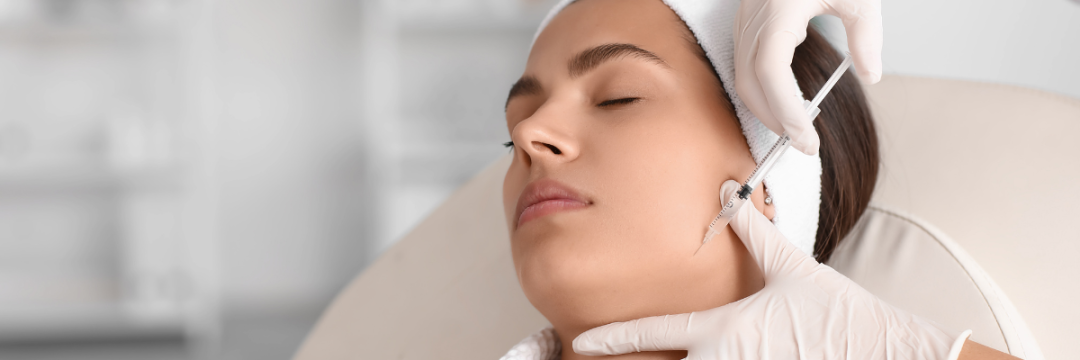
Botox Before and After: What Real Results Actually Look Like
Search results here skew toward the most dramatic transformations, which sets unrealistic expectations for a first treatment. A well-judged Botox result should still let your face move — you should be able to look surprised, concerned or amused. What disappears is the deep, static line that stays etched in when your face is at rest, not all expression.
Timeline-wise, most people see the earliest effects at three to five days, with the full result settling in by day fourteen. A useful comparison set is masseter botox before and after photos specifically, since jawline slimming follows a much slower and more gradual curve than forehead treatment — comparing week-two masseter photos to week-two forehead photos side by side gives a misleading impression of how fast either one actually works.
Botox for Migraines: When It’s More Than Cosmetic
Botox isn’t only cosmetic. This is a licensed, NICE-approved treatment for chronic migraine, defined clinically as 15 or more headache days a month, with at least eight meeting migraine criteria, for three months or longer. The standard approach is the PREEMPT protocol: a total dose of 155 units divided across 31 injection sites spanning seven head and neck muscle areas, repeated roughly every twelve weeks. It’s a markedly higher dose and a different injection pattern to cosmetic treatment, which is why the Botox 200 Units vial size is more commonly used for this indication than the smaller cosmetic vials. Patients considering this route should be assessed by a prescriber experienced in headache management, not booked in as a standard cosmetic appointment.
Botox Aftercare: The First 48 Hours
Good Botox aftercare is simple, and most of it is about not undoing the work in the first two days. Stay upright for four hours after treatment — lying down can encourage the product to migrate from the intended muscle. Skip strenuous exercise, saunas, and alcohol for 24 hours, since raised blood flow to the face can increase bruising and, in theory, spread. Avoid touching, rubbing or massaging the treated area, and hold off on facials, makeup application with pressure, or other injectables for at least two weeks.
Mild bruising, a little redness at the injection points, or a slight headache in the first day are all common and settle quickly. What isn’t normal — and should prompt a call to the clinic or, if severe, urgent medical attention — is drooping eyelids beyond a few days, difficulty swallowing, slurred speech or breathing difficulty, in line with current MHRA guidance on rare cases of toxin spread.
Booking Your First Appointment
The single biggest factor in how your first Botox treatment goes isn’t the brand of toxin or the vial size — it’s who’s holding the needle. Use Faces’ registered clinic finder to find a prescriber-led clinic near you, ask to see their qualifications and product licensing before you commit, and go in with realistic expectations about timeline and result. That combination does more for a good outcome than any product choice.
FAQs
How long does Botox last?
Most patients get three to four months from a standard cosmetic dose. Areas with stronger, more mobile muscles — like frown lines — tend to fade faster than gentler areas like crow’s feet, and results shorten slightly with a lighter, baby Botox dose.
How long does Botox take to work?
The earliest changes usually show at three to five days, with the full result settling in by around two weeks. Masseter (jawline) treatment is slower again, often taking three to four weeks before a visible difference appears, since it relies on gradual muscle shrinkage rather than immediate relaxation.
How much does Botox treatment cost?
Price varies by clinic, area treated, and the units used, and it isn’t something a prescription medicine should be discounted on. Kanvas Medical Group, one of the clinics listed on Faces Consent, offers Botox for areas including frown lines, brow lift and masseter slimming, alongside dermal filler treatments.
Is Botox safe?
When prescribed and administered correctly by a qualified, registered practitioner using licensed product, Botox has a long safety record and is one of the most widely used treatments in aesthetic medicine. The MHRA has recently strengthened its warnings around rare cases of the toxin spreading beyond the treated area, so patients should know the warning signs — difficulty swallowing, slurred speech, breathing difficulty or unusual muscle weakness — and seek prompt medical attention if they occur.
Is Botox bad for you?
Used within licensed, prescribed limits, Botox doesn’t cause long-term damage to the muscle or skin, and its effects are fully reversible as the toxin wears off. The real risks come from unlicensed products, incorrect dosing, or injection by someone without proper training — which is why checking a practitioner’s qualifications and product sourcing matters more than any concern about the medicine itself.