
A client sits through a consultation for a treatment plan priced at £900. She is happy with the plan, trusts the practitioner and wants to go ahead. Then she asks the question practitioners hear every week: “Can I pay this in parts?” If the answer is no, the most common outcome is not a refusal — it is a delay. The client says she will “think about it”, and a proportion of those clients never come back.
This is the gap that Faces finance was built to close. It gives clients a structured way to spread the cost of treatment while the practitioner is paid promptly, and it does so inside the same platform that already handles the consent form and the booking. This article explains what the feature actually is, how the lending mechanics work, what it costs, where the compliance boundaries sit, and why the timing matters more in 2026 than it ever has.

What is Buy Now Pay later (BNPL)?
Buy Now Pay Later is a form of consumer credit that lets a customer receive a product or service immediately and repay the cost in instalments. In regulatory language, the interest-free version repayable in 12 or fewer instalments is called deferred payment credit. The model became widespread through online retail Klarna and Clearpay built their businesses around quick checkout purchases but aesthetic treatments behave differently. A dermal filler package or a laser course involves consultation, medical screening and a price point far above a typical basket spend, which is why sector-specific beauty and aesthetics finance exists as a distinct category rather than a copy of the retail model.
The scale of the market explains the client expectation. According to the FCA, UK BNPL lending grew from around £0.06 billion in 2017 to over £13 billion in 2024, and roughly one in five UK adults used it in the year to May 2024. Clients are not asking whether instalments exist; they are asking whether your clinic offers them.
How does Buy Now Pay Later work? — the mechanics inside Faces
Faces partners with a specialist lender to provide finance for beauty treatments ranging from £50 to £2,000 in value, repayable over 3, 6, 9 or 12 months. The reasoning behind the term lengths matters: a £1,200 treatment plan split over three months still produces a £400 monthly commitment, which many clients find no easier than the lump sum. Six-to-twelve-month terms bring the monthly figure down to a level that fits a normal household budget, which is where the conversion actually happens.
The client journey has three routes, all of which sit inside tools most Faces users already run:
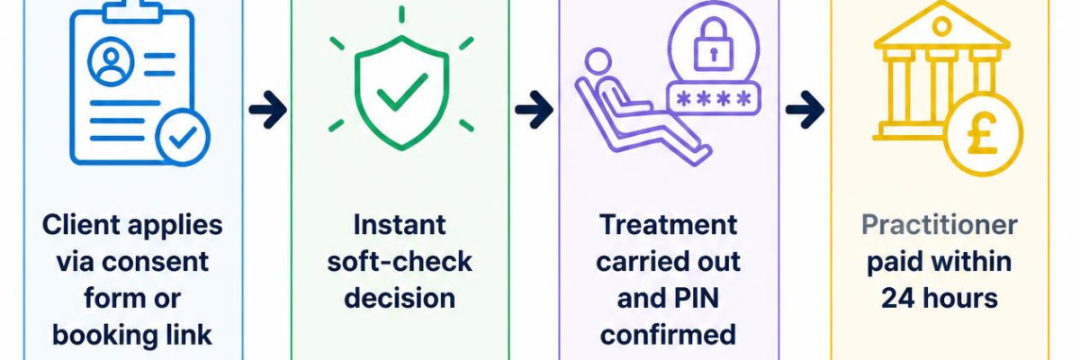
Through the consent form. When a practitioner forwards a consent form via the Faces platform, the client can apply for finance directly within it, before the appointment.
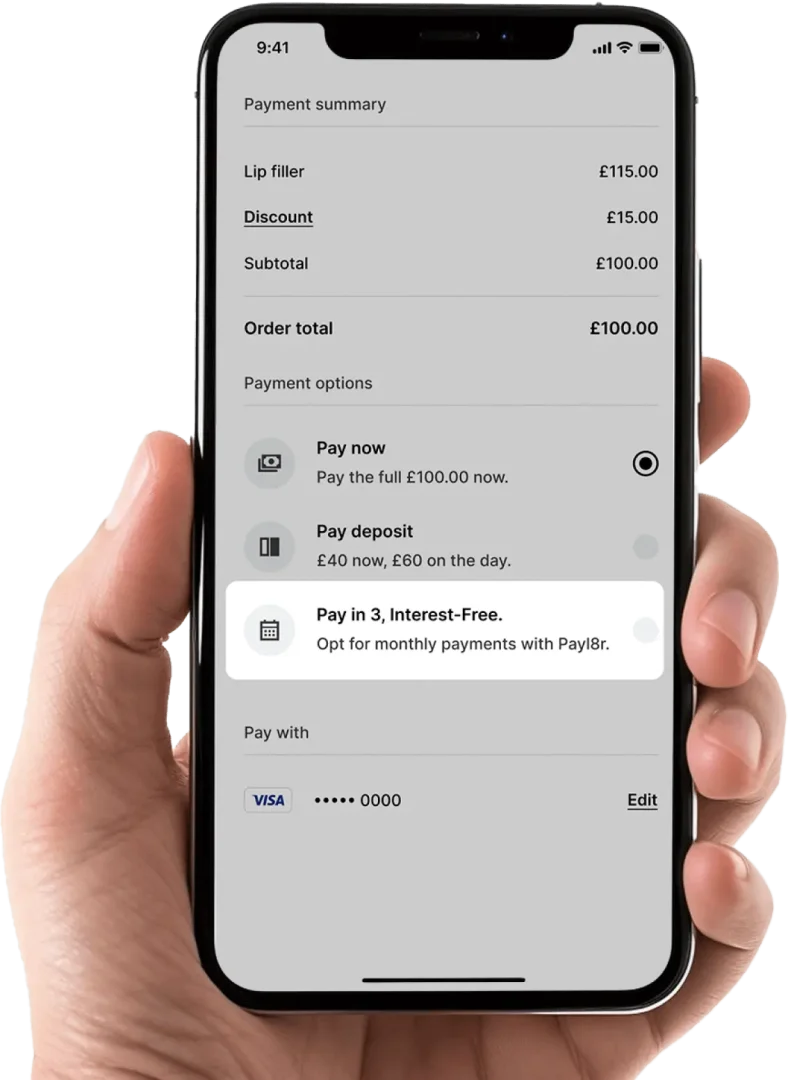
Through the booking link. Finance appears as a payment option when a client books through the practitioner’s Faces booking page, so the decision to spread the cost is made at the moment of booking rather than at an awkward point in the chair.
Through a direct finance link. The practitioner sends the application link manually, useful after a consultation where the client wants to go home and decide.
The application uses soft credit and affordability checks, so an unsuccessful application does not leave a hard search on the client’s credit file. Decisions are automated and returned within minutes, and because the system runs 24/7, a client browsing treatments at 10pm can apply and be approved without waiting for clinic hours. Practitioners will sometimes see lenders advertised with promises resembling Same Day Loan Approval – Cash Paid in 60 Minutes; the honest version of that claim in the Faces model is an instant lending decision for the client, with the practitioner paid the full treatment value within 24 hours of confirming the appointment with the client’s 4-digit code. The lender then manages repayments, which removes two familiar problems at once: chasing part-payments and carrying the default risk yourself.
Registration is done from the Faces dashboard under Finance Hub, and requires current insurance, a training certificate and photo ID. There is no set-up cost and no monthly fee, and approval typically takes 24–48 business hours. Practitioners already registered for the Faces pharmacy will find most documents are pre-loaded.
The benefits of finance for the clinic, with the reasoning behind each
Higher-value treatment plans get accepted
The clearest of the buy now pay later benefits is psychological rather than financial. A £1,200 plan judged as a single invoice competes with a holiday or a boiler repair. The same plan framed as a monthly instalment is judged against disposable income, and that comparison is far easier to win. This is why the effect concentrates at the top of the price list: Faces platform data shows practitioners registered for BNPL saw a 28% increase in bookings for their most expensive treatments, and reported sales increases of around 29% overall. Clients who might otherwise book a single session of a smaller treatment become able to commit to the full multi-session plan the practitioner actually recommended — which is better clinically as well as commercially, because staged plans completed properly produce better outcomes than one-off compromise treatments.
Cash flow becomes predictable
Traditional in-house payment plans where the clinic itself takes a deposit and collects the balance in stages put the clinic in the position of an unpaid credit controller. Money arrives late, some of it never arrives, and admin time is spent chasing it. With third-party finance options, the clinic receives the full amount up front while the lender carries the repayment relationship. For a solo practitioner buying toxin and filler stock ahead of a busy week, that difference is not cosmetic; it determines whether stock can be ordered at all. Faces users can also use BNPL on their own supply purchases through the pharmacy, receiving stock and paying within 14 days, so the same principle works on both sides of the business.
Client retention improves
Clients who complete a financed treatment plan have, by definition, made repeated financial commitments to one clinic over several months. That structural loyalty compounds the normal drivers of retention, and the earlier Faces analysis of BNPL trends in the sector found financed clients were more likely to book additional treatments. BNPL also skews young: uptake is strongest among clients aged roughly 19–29, precisely the demographic many clinics struggle to convert at full-price points.
Finance in Clinic vs retail lending — and the compliance line you must not cross
It is worth understanding why a sector-specific product exists when retail finance giants already dominate online checkouts. Retail BNPL is engineered for second-by-second purchase decisions; aesthetics involves consultation, cooling-off, medical suitability and consent. A lender embedded in the consent and booking workflow fits that journey; a checkout widget does not. The comparison piece Faces Buy Now Pay Later vs Klarna covers this distinction in more depth.
There is also a hard compliance point that catches practitioners out: advertising that you offer finance is not permitted under the programme’s rules. Financial promotions are a regulated activity, and an unauthorised clinic posting “0% finance available!” on Instagram is straying into territory reserved for authorised firms. Faces supplies an approved social media post to registered practitioners for exactly this reason, use that wording, not your own. The Faces BNPL FAQ sets out the practical do’s and don’ts.
The regulatory backdrop has just changed materially. From 15 July 2026, BNPL comes under full FCA regulation: lenders must be authorised, must run proportionate affordability checks on every agreement, must give clear pre-contract information, and clients gain access to the Financial Ombudsman Service and Section 75-style protections, as set out in the FCA’s announcement of the new rules. For practitioners this is good news, not a burden: it pushes unserious lenders out of the market and means clients using flexible payment options through a compliant provider are properly protected. Choosing a finance partner that is prepared for regulation is now a due-diligence question, one covered previously in Unregulated Buy Now Pay Later Is Not What You Think It Is. Note also the spelling point when writing your own client materials: UK English uses “instalment”, while instalment payments is the US form clients may still type into Google.
The benefits of faces finance for training courses
Finance is not only a client-facing tool. Practitioners upgrading their own skills, foundation and advanced injectables, laser, skin, face course fees that routinely run to four figures, and spreading that cost is often the difference between booking a course this quarter or postponing it for a year. Training academies listed on Faces can offer the same instalment structure on course fees that clinics offer on treatments, which helps academies fill cohorts and helps practitioners invest in qualifications without draining working capital. As part of a wider set of aesthetic clinic financial services, payments, bookings, pharmacy credit and consent in one system, it means the same platform supports the business whether you are the one delivering training or receiving it.
How to introduce finance well: three practical rules
First, present it early and neutrally. Mention instalment availability during the consultation when discussing the treatment plan and price, not as a rescue line after a client hesitates. Introduced early, it reads as standard practice; introduced late, it reads as a sales push.
Second, never pressure. Affordability checks exist because credit is not suitable for everyone, and a declined application must end the conversation about finance, not begin a workaround. Responsible use protects clients and protects your reputation.
Third, connect it to your booking flow. Finance converts best when it sits at the point of booking, which is why the integration with the Faces booking system matters more than the lending terms themselves. If your booking link, consent form and finance application are three separate systems, clients fall through the gaps between them. If you want to Boost Your Bookings with Faces Finance, the single most effective step is making sure your Faces booking page is the route every client uses
Where to start
The FCA’s regulation of buy now pay later on 15 July 2026 marks the point where instalment lending stops being a retail novelty and becomes a standard, protected part of how UK consumers pay including for aesthetics. Clinics that already have a compliant finance route embedded in their booking journey will simply carry on; clinics without one will increasingly be asked why not.
Register for Faces Finance from your Faces dashboard, open Finance Hub, click Register, and upload your insurance, training certificate and photo ID. Approval takes 24–48 business hours, and there is nothing to pay to switch it on. If you get stuck on any document, the Faces finance manager can walk you through it on WhatsApp.
FAQs
How much does it cost the practitioner to offer Faces Finance?
There is no registration cost and no monthly fee. The lender’s service fee is applied per transaction, so you only pay when finance is actually used — check the current rate in your Finance Hub before pricing treatment packages.
What treatment values can be financed?
Treatments from £50 up to £2,000, repayable over 3, 6, 9 or 12 months. Higher-value plans can be structured within that ceiling per agreement.
Does a client application affect their credit score?
Applications use soft checks to assess affordability, so an application in itself does not leave a hard search on the client’s file. Missed repayments on a live agreement are a different matter, which is why affordability checks exist.
When is the practitioner paid?
The full treatment amount is paid to the practitioner after 24 hours of entering the client’s 4-digit confirmation PIN after the appointment. Repayments are then handled entirely by the lender.
Can clients take out a second finance agreement?
Generally not until the existing agreement is in good standing — typically at least two successful repayments with no arrears — after which a new application can be made.