
A bowl of pasta at lunch, a sandwich on the go, a quick bowl of cereal: an hour later the stomach is rumbling again and the snack cupboard starts calling. It is one of the most common frustrations people bring to pharmacists and nurses, and it usually comes with a side of guilt. In the second episode of the Faces Pharmacy podcast, The Real Reason You Never Feel Full After Meals, nurse prescriber Lauren explains why that guilt is misplaced. Hunger that returns soon after a meal usually comes down to how the body’s fullness signals are working, and those signals are shaped by what was on the plate, how fast it was eaten, and how well the body has slept and recovered.
Feeling Hungry All the Time? How the Gut and Brain Talk
Hunger and fullness are controlled by a constant conversation between the digestive system and the brain. Two hormones get most of the attention. Ghrelin is released mainly by the stomach and rises before meals, pushing appetite up. Leptin is released by fat tissue and works over a longer timescale, telling the brain how much energy the body has in reserve.
Short-term fullness depends on a second group of hormones released by the gut as food moves through it. Cholecystokinin (CCK), glucagon-like peptide-1 (GLP-1) and peptide YY (PYY) are the main ones. A 2024 review in Nutrients names these three as the main satiety hormones, released when nutrients reach specialised cells in the gut lining. These are the signals that tell the brain a meal has been eaten and it is time to stop.
When a meal does not trigger those signals strongly, or the signals arrive after the eating has already finished, the result is a meal that technically provided enough energy but never registered as satisfying.
Satiation and satiety are not the same thing
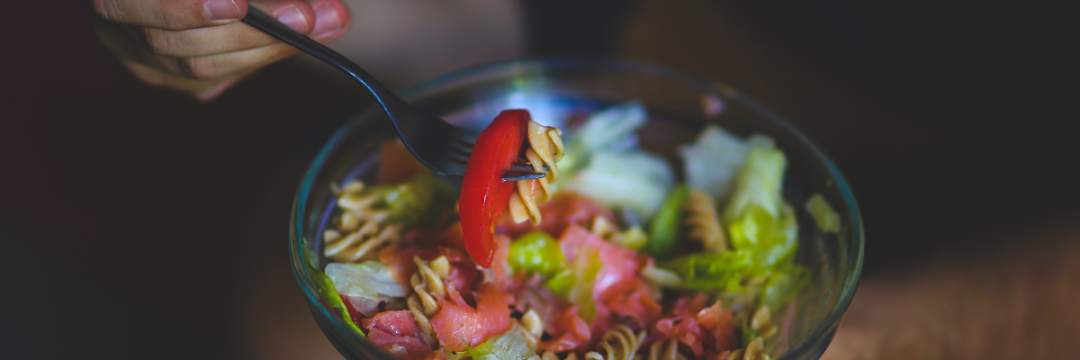
Two terms help explain the gap. Satiation is the feeling that ends a meal. Satiety is how long the feeling of fullness lasts before the next one. A meal can produce satiation (a full plate, eaten to the end) with very little satiety, which is exactly the “hungry an hour later” pattern.
Feeling Hungry After Eating? Five Common Triggers
Most cases of quick-returning hunger come down to a handful of everyday causes. Several often overlap.
1. The meal was low in protein
Protein has the strongest effect on fullness of the three macronutrients. A meta-analysis of randomised controlled trials found that eating protein suppresses appetite, lowers ghrelin and raises CCK and GLP-1, with the hormone changes clearest at doses of 35g or more. A breakfast of toast and jam or a lunch of plain pasta contains very little, which is why both tend to wear off quickly.
2. There was not enough fibre
Fibre adds bulk, slows digestion and keeps food in the stomach for longer. Most people in the UK fall well short. Adults are advised to eat 30g a day, yet a June 2026 British Nutrition Foundation report found that only around 4% of adults meet that target. Swapping white bread, rice and pasta for wholegrain versions, and adding beans, lentils, vegetables or fruit to meals, is the simplest way to close the gap.
3. The meal was eaten too quickly
Fullness hormones take time to reach the brain, so a meal eaten in a few minutes can be finished before the body has caught up. A systematic review and meta-analysis from the University of Oxford and partners found that eating more slowly led to lower food intake. Interestingly, the same review found no clear link between eating speed and hunger up to 3.5 hours later, so slowing down helps most with how much is eaten at the meal itself.
4. Much of the meal was ultra-processed
Highly processed foods are typically soft, quick to eat and easy to overeat. In a tightly controlled inpatient trial published in Cell Metabolism, adults ate around 500 more calories a day on an ultra-processed diet than on an unprocessed one, even though both diets offered the same calories, sugar, fat, fibre and protein. The study was small, with 20 participants, but it is one of the clearest pieces of evidence that the form food comes in affects how much of it gets eaten.
5. Sleep was short
Poor sleep shifts the hunger hormones in the wrong direction. In a 2023 laboratory study published in Obesity, one night without sleep lowered fasting leptin and raised fasting ghrelin in adults of both healthy weight and with obesity. Anyone who has noticed stronger cravings after a bad night has experienced this first-hand.

Emotional Hunger vs Physical Hunger
Not every urge to eat comes from the stomach. Boredom, stress, tiredness and routine can all produce a strong pull towards food when the body has had enough fuel. Lauren raises this in the episode as one of the most common reasons people feel they are “always” hungry.
The two tend to feel different:
- Physical hunger builds gradually, can be satisfied by most foods, and fades after eating.
- Emotional hunger often arrives suddenly, craves something specific (usually sweet, salty or crunchy) and can continue after a full meal.
A useful check before reaching for a snack is to pause and ask when the last proper meal was, and whether a plain option such as an apple or a handful of nuts would satisfy the urge. If only a specific treat will do, the trigger is more likely to be stress, boredom or tiredness than an empty stomach. Recognising the pattern is more helpful than fighting it with willpower.
Foods That Keep You Full for Longer
Strict rules and smaller portions rarely last. Building meals that send stronger fullness signals tends to work better. A few principles go a long way:
- Include a source of protein at every meal: eggs, Greek yoghurt, fish, chicken, tofu, beans or lentils.
- Add fibre through wholegrains, vegetables, fruit, nuts, seeds and pulses.
- Include some healthy fat, such as olive oil, avocado or nuts, which slows how quickly the stomach empties.
- Choose foods that need chewing: whole fruit over juice, wholegrain bread over white, a jacket potato over crisps.
- Favour minimally processed options where possible, cooked from simple ingredients.
In practice, this might mean adding eggs to toast, beans to a jacket potato, or a portion of chicken and extra vegetables to a pasta dish. None of these changes require cutting anything out.
How to Curb Hunger Between Meals
Small changes to how meals are eaten often make as much difference as what is on the plate.
- Eat at regular times. Long gaps between meals push ghrelin higher and make overeating at the next meal more likely.
- Slow down. Putting the fork down between mouthfuls and avoiding eating in front of a screen gives fullness signals time to arrive.
- Protect sleep. Aiming for a consistent bedtime is one of the most underrated ways to keep appetite steady.
- Plan snacks rather than grazing. A planned snack with protein and fibre, such as yoghurt with fruit, is more filling than picking at whatever is nearby.
- Notice the trigger. If the urge to eat arrives during a stressful afternoon or a long evening in front of the television, a short walk, a call to a friend or a glass of water may meet the real need.
Is Feeling Hungry After Eating a Sign of Diabetes?
On its own, usually not. Hunger after a meal is far more often down to the triggers above. Diabetes can increase hunger, because when insulin is not working properly, glucose stays in the blood instead of reaching the cells that need it for energy. But hunger is rarely the only sign. The NHS lists the most common symptoms of diabetes as feeling thirsty all the time, peeing more than usual, feeling very tired and losing weight without trying.
Hunger that comes alongside any of those symptoms should be checked by a GP, who can arrange a simple blood test. The same applies to constant hunger with unexplained weight loss, which can also point to an overactive thyroid. Anyone whose appetite changes are affecting daily life, or whose relationship with food feels difficult, should speak to a GP, pharmacist or another qualified healthcare professional.
The practical starting point is the next meal. Adding a source of protein and some fibre, eating it a little more slowly, and paying attention to how long the fullness lasts will show more than any rule could.
Get Expert Advice on Hunger and Appetite
Watch Episode 2 of Let’s Face It, The Real Reason You Never Feel Full After Meals, to hear Lauren explain how hunger and fullness signals work, then subscribe to the Faces Pharmacy channel for the next episode. To talk through appetite, weight or wellbeing with a qualified professional in person, find a clinic near you on Faces and book a consultation with a vetted practitioner.
FAQs
Why do I get hungry an hour after eating?
The most common reasons are a meal low in protein and fibre, eating too quickly, or a meal made up mostly of ultra-processed food. These meals trigger weaker fullness signals, so hunger returns sooner. Short sleep and stress can make the effect stronger.
What is the hunger hormone?
Ghrelin is often called the hunger hormone. It is released mainly by the stomach and rises before meals to increase appetite. Leptin, released by fat tissue, works in the opposite direction over a longer timescale.
Does drinking water stop you feeling hungry?
Water can help some people feel fuller for a short time, particularly when drunk before a meal, but it does not replace the fullness signals that protein and fibre provide. Boredom can also feel like hunger, so pausing for a drink before reaching for a snack is a reasonable first check.
Is it normal to feel hungry all the time?
Feeling hungry between meals is normal, but constant hunger that does not settle after eating is worth looking at. Diet, sleep and stress are the usual causes. If it comes with weight loss, extreme thirst or tiredness, speak to a GP.
How long does it take to feel full after eating?
Fullness signals take time to travel from the gut to the brain, which is why eating slowly helps. There is no single fixed time, as it depends on the size and type of meal, but meals eaten in a few minutes are often finished before fullness has registered.