
Most people who look into weight loss medicines have the same two questions: does it actually work, and what are the side effects people keep mentioning? Orlistat is the only weight loss medicine available from UK pharmacies without a prescription, and it is best known under the brand name alli 60 mg hard capsules. It works in a completely different way from the weight loss injections that dominate the headlines. That difference explains both its results and its reputation for side effects. This guide covers how orlistat works, who it suits, how it is taken and what the trial data shows.
Alli Weight Loss Explained: How alli 60 mg Hard Capsules Work
Orlistat does not suppress appetite or act on the brain. It works entirely inside the gut. According to the alli 60 mg hard capsules Summary of Product Characteristics, orlistat is a potent, specific and long-acting inhibitor of gastrointestinal lipases, the enzymes that break down fat from food so it can be absorbed.
With those enzymes blocked, part of the fat in each meal passes through the gut undigested instead of being absorbed. At the alli dose of 60 mg three times a day, the SmPC states that around 25% of dietary fat is not absorbed. Very little of the medicine itself is absorbed into the bloodstream, so older adults and people with liver or kidney impairment don’t need a different dose. People with kidney disease should still speak to a doctor first (see below).
This mechanism has two practical consequences. First, orlistat only works on fat, so it has no effect on calories from sugar, starch or alcohol. Second, the fat that is not absorbed has to go somewhere, which is where the well-known side effects come from.
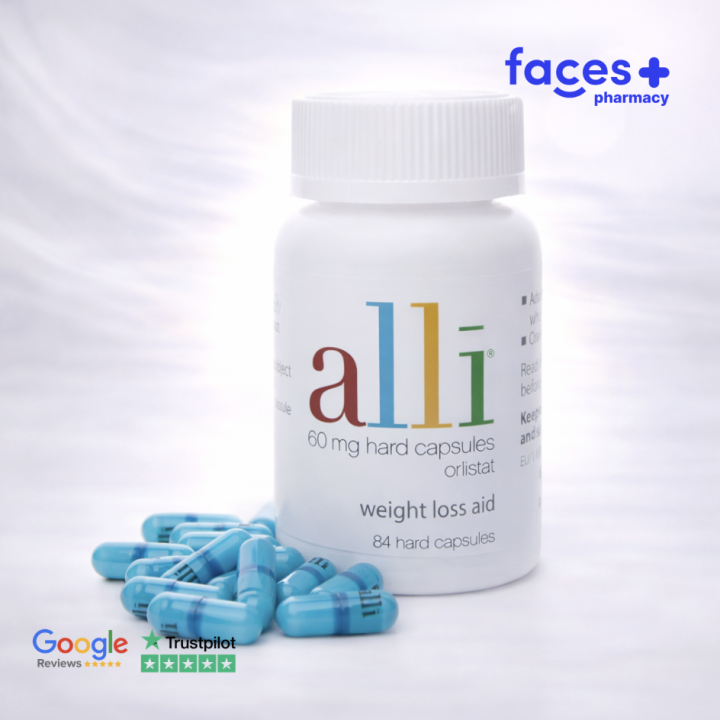
alli 60 mg Hard Capsules: Who They Are For
alli is licensed for weight loss in adults aged 18 and over who are overweight with a body mass index (BMI) of 28 or above. It must be taken alongside a mildly reduced-calorie, lower-fat diet. It is not a stand-alone treatment, and the SmPC recommends starting the diet and exercise programme before beginning treatment.
Orlistat UK Availability: Pharmacy Medicine or Prescription?
In the UK, orlistat comes in two strengths. The 60 mg strength is a pharmacy medicine, so it can be supplied without a prescription after a pharmacist has checked it is suitable. The higher 120 mg strength is a prescription-only medicine. Anyone getting orlistat from a pharmacy can expect to answer questions about weight, height, other medicines and health conditions first. Those questions are there for safety, so honest answers matter.
Orlistat 120 mg vs alli 60 mg Hard Capsules: The Differences
Both strengths contain the same active ingredient and work in the same way. The differences are the dose, how they are supplied and how treatment is reviewed.
- alli 60 mg hard capsules: pharmacy medicine, for adults with a BMI of 28 or above, taken for no longer than 6 months.
- Orlistat 120 mg: prescription only, prescribed by a doctor or other qualified prescriber as part of a wider weight management plan.
UK clinical guidance sets out when the prescription strength is used. NICE guideline NG246 on overweight and obesity management lists orlistat as an option for adults with a BMI of 30 or more, or 28 or more with associated risk factors. It says treatment should stop after 12 weeks if at least 5% of initial body weight has not been lost. Which strength is right depends on the individual, and that decision belongs with a pharmacist or prescriber.
How alli 60 mg Hard Capsules Are Taken
Although many people search for orlistat tablets, alli comes as capsules. The SmPC gives clear directions:
- One 60 mg capsule is taken with water three times a day, immediately before, during or up to one hour after each main meal.
- No more than three capsules should be taken in 24 hours.
- If a meal is missed or contains no fat, that dose is skipped.
- The diet should get about 30% of its calories from fat. On a 2,000 kcal diet, that means under 67g of fat a day, spread across three main meals.
- A multivitamin should be taken at bedtime, because orlistat can reduce absorption of vitamins A, D, E and K.
- Treatment should not last longer than 6 months. If no weight has been lost after 12 weeks, a doctor or pharmacist should review whether to stop.
The diet advice matters more than it might seem. Spreading fat evenly across meals, and avoiding a single very fatty meal, is the main way to keep side effects under control. The diet and exercise habits should continue after treatment stops, or the weight is likely to return.

Orlistat Side Effects and Who Should Avoid alli 60 mg Hard Capsules
Most side effects are digestive and come directly from unabsorbed fat. The SmPC lists:
- oily spotting
- wind with an oily discharge
- urgent or more frequent bowel movements
- fatty or oily stools
- soft stools
- stomach pain
- less often, difficulty controlling bowel movements
These effects are generally mild and short-lived, and most often happen in the first 3 months. They are more likely after a high-fat meal, which is why the low-fat diet is part of the treatment rather than an extra.
Less common but more serious effects have been reported, including allergic reactions, liver problems, gallstones, pancreatitis, kidney problems linked to oxalate, and rectal bleeding. Anyone who notices rectal bleeding, yellowing of the skin or eyes, or severe stomach pain should stop taking orlistat and speak to a doctor.
When orlistat is not suitable
Orlistat must not be taken by anyone who:
- is pregnant or breastfeeding
- takes ciclosporin, or warfarin or other blood-thinning medicines taken by mouth
- has chronic malabsorption syndrome or cholestasis (a condition where bile flow from the liver is blocked)
Anyone taking the following medicines needs a doctor’s advice before starting orlistat:
- medicines for diabetes, high blood pressure or cholesterol
- levothyroxine for an underactive thyroid
- amiodarone
- epilepsy medicines
- HIV medicines
- medicines for depression or other mental health conditions
People with kidney disease should also check with a doctor first. Severe diarrhoea can make the contraceptive pill less effective, so an extra method of contraception is advised if it happens.
Do alli 60 mg Hard Capsules Work? What Orlistat Reviews and Trials Show
Online reviews of orlistat vary widely, often depending on how closely the person followed the diet. Clinical trials give a more reliable picture. In the two placebo-controlled studies summarised in the SmPC, adults with a BMI of 28 or above took alli or a placebo alongside a reduced-calorie diet. Most of the weight loss happened in the first 6 months:
- Average weight loss at 6 months was 4.40kg with alli, compared with 2.09kg with placebo.
- 46.7% of people taking alli lost at least 5% of their body weight, compared with 26.4% on placebo.
- 16.2% lost at least 10% of their body weight, compared with 6.5% on placebo.
In plain terms, anyone researching alli weight loss pills should expect a modest boost on top of diet and exercise, not a dramatic change on their own. The best results tend to come from people who already have a reduced-calorie, lower-fat diet in place, because the capsules work alongside that diet rather than replacing it.
alli 60 mg hard capsules are best understood as a short, structured addition to a diet that is already in place, not a replacement for one. The pattern that gives the best chance of results is to set up the eating plan first, take orlistat only with meals that contain fat, and review progress honestly at 12 weeks with a pharmacist or doctor.
Speak to a Healthcare Professional About Weight Loss Options
Weight loss medicine works best with the right advice behind it. Find a healthcare professional near you on Faces to talk through your weight loss goals, check whether orlistat suits your health and medicines, and put a plan in place before starting treatment.
FAQs
What is orlistat?
Orlistat is a weight loss medicine that blocks some of the fat in food from being absorbed. In the UK it is available as a 60 mg pharmacy medicine, sold as alli, and as a 120 mg prescription-only medicine.
Does orlistat work?
Yes, modestly, when combined with a reduced-calorie, lower-fat diet. In trials, adults taking alli lost an average of 4.40kg over 6 months, compared with 2.09kg on placebo, and nearly half lost at least 5% of their body weight.
How does orlistat work?
Orlistat blocks lipases, the gut enzymes that break down dietary fat. At the 60 mg dose, about 25% of the fat in a meal passes through the body without being absorbed, which reduces the calories taken in from fat.
How much weight can you lose with orlistat?
Results vary, but in the trials behind alli the average loss was 4.40kg over 6 months. Around 1 in 6 people lost 10% or more of their body weight.
Do you need a prescription for orlistat?
Not for the 60 mg strength, which is a pharmacy medicine supplied after a pharmacist confirms it is suitable. The 120 mg strength needs a prescription.