
In the rapidly evolving world of aesthetic medicine, digital tools are no longer optional—they’re essential.
From streamlining appointments and payments to securely storing clinical data, the right technology can transform your clinic.
But when it comes to choosing systems, many medics find themselves asking:
What’s the difference between a practice management system and an electronic medical record systems? Do I need both?
This practical guide breaks down these technologies, practice management software and electronic medical record software, so aesthetic medics like you can make informed decisions that improve workflow, compliance, and patient outcomes.

What Is a Practice Management System?
A practice management system is software that helps clinics manage the administrative and operational side of patient care. Unlike clinical charting tools, a practice management system focuses on what happens before and after medical treatment. Things like booking appointments, managing calendars, processing payments, and sending reminders.
For aesthetic practitioners, modern practice management software can:
- Automate bookings and reduce no‑shows
- Manage deposits, payments, and billing in one place
- Centralise patient communication (SMS, email)
- Track clinic performance and revenue
- Support secure digital consent and intake forms
By handling these routine administrative tasks, a practice management system frees you and your team to focus more on patient care—and less on paperwork.
What Is an EMR System?
An electronic medical record system (EMR system) refers to digital software used primarily for managing clinical data. When your clinic moves away from paper charts, these systems allow you to:
- Record detailed treatment notes
- Track patient medical histories
- Access charts instantly during consultations
- Document outcomes and clinical decisions
The term ‘electronic medical record’ refers to the patient’s digital chart. Everything from previous treatments and allergies to clinical notes and follow‑up instructions. Electronic medical record systems ensure this data is stored securely and accessible only to authorised personnel.
In contrast to a purely administrative tool, an EMR system is designed for clinical documentation and supports continuity of care, which is especially critical for more complex or regulated aesthetic procedures.
Why This Matters for Aesthetic Medics
If your clinic performs aesthetic treatments that require ongoing clinical oversight (such as injectables, laser therapies, or advanced medical skin treatments), having access to a rich clinical history is vital. That’s where electronic medical record software comes into play.
On the other hand, if your focus is streamlining operational tasks like scheduling, reminders, or payments, then a robust practice management system may be all you need — especially when it integrates seamlessly with other tools.
Many modern providers now offer hybrid solutions that combine elements of both administrative and clinical functions, helping medics balance efficiency and safety.
Practice Management System vs Electronic Medical Record System (Comparison Table)
| Aspect | Practice Management System | Electronic Medical Record Systems (EMR System) |
|---|---|---|
| Primary Function | Manages admin and operational workflow | Focuses on clinical documentation and patient history |
| Use Cases | Booking, billing, reminders, reports | Clinical notes, treatments, progress tracking |
| Primary Users | Front‑desk staff, clinic managers | Doctors, nurses, medical practitioners |
| Patient Records | Basic intake & contact info | Full medical and treatment records |
| Compliance Focus | Supports GDPR / HIPAA admin workflows | Supports secure clinical recordkeeping |
| Best For | Operational efficiency | Clinical care and medical decision support |
| Example Benefit | Automates reminders, reduces no‑shows | Tracks treatment outcomes over time |
Faces Consent (Practice‑Oriented Option)
If your primary goal is to streamline bookings, consent forms, workflow, payments, and patient communication, and you don’t yet require full clinical charting, solutions like Faces Consent offer practice management software tailored to aesthetic medics.
It combines appointment management with secure patient profiles, digital consent, and workflow automation in one system, helping you run your clinic more professionally and efficiently without the overhead of a full EMR system.
Faces offers a Prescriber Directory and a Pharmacy Marketplace for users looking to centralise their whole clinic operations. Work with a prescriber near you and source prescription products in one app!
When to Use Practice Management Software
Choosing when to implement a practice management system depends on your clinic’s structure, workload, and operational needs. Here’s how it breaks down for solo and team-based practices:
Solo Aesthetic Practitioner
For solo medics who manage all aspects of their clinic themselves, practice management software is often the first and most essential tool to implement. It allows you to:
- Automate appointment scheduling and reminders
- Collect deposits and payments easily
- Maintain digital consent and patient forms
- Reduce administrative workload without needing staff
It’s ideal for staying organised, professional, and compliant without the complexity or cost of additional clinical systems.
Multi‑Provider Clinics
In growing or established clinics with multiple providers or staff, a practice management system becomes critical for coordinating daily operations. It helps you:
- Manage bookings and calendars across multiple practitioners
- Assign roles and manage team access
- Standardise patient communications and reminders
- Maintain consistent workflows and performance reporting
As your clinic scales, PMS tools create structure and operational clarity, ensuring smooth patient flow and a better patient experience.
Benefits of Practice Management Software for Aesthetic Medics
- Streamlined Scheduling: Automated online booking and calendar syncing reduce admin time and human error.
- Better Patient Communication: Automated SMS and email reminders improve attendance and engagement.
- Integrated Payments: Accept deposits and payments, track billing, and simplify financial reporting.
- Insights & Reporting: Access revenue reports and operational insights directly from your system.
- Digital Intake & Consent: Modern tools allow patients to complete forms and consent digitally — improving compliance and saving paper.
Advantages of Electronic Medical Record Systems
- Detailed Patient History: Access complete treatment records and clinical notes instantly.
- Better Informed Decisions: Review past outcomes and medical notes to inform future treatments.
- Secure Clinical Data: Clinically focused EMRs offer enhanced safeguards for sensitive health data.
- Legal Compliance: Comprehensive audit trails and clinical documentation support best practices and defensibility.
Final Checklist: How to Choose the Right System
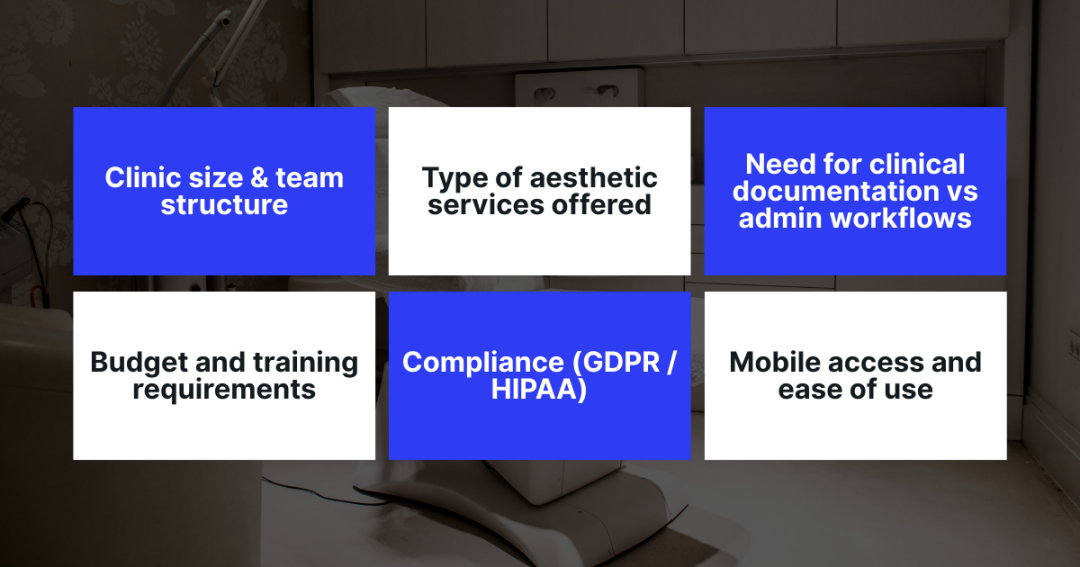
Depending on your needs and wants, here’s a basic checklist to think about before choosing between a PMS and an EMR system for your business.
✔ Clinic size & team structure
✔ Type of aesthetic services offered
✔ Need for clinical documentation vs admin workflows
✔ Budget and training requirements
✔ Compliance (GDPR / HIPAA)
✔ Mobile access and ease of use
Conclusion
Both practice management software and electronic medical record systems play valuable roles in modern aesthetic clinics. A thoughtful choice can lead to:
- Better patient experiences
- Less admin overhead
- Improved compliance
- Efficient, scalable workflows
Whether you decide on a dedicated EMR system, a practice management platform, or a hybrid solution, the goal is the same: to support quality care and run your clinic smoothly.
With the right tools in place, you can focus on what matters most — delivering exceptional results for your patients!
FAQs
1. What is an electronic medical record system used for?
An electronic medical record system is used to digitally store, track, and manage patient medical histories, treatment notes, and clinical data for safer and more efficient care.
2. What’s the difference between a practice management system and electronic medical record software?
A practice management system handles admin tasks like bookings and payments, while electronic medical record software manages clinical documentation and patient history.
3. Do aesthetic clinics need EMR systems?
It depends. Clinics offering medically regulated treatments often benefit from EMR systems to track outcomes and support clinical care, while others may only need practice management software like Faces for operational tasks.
4. Can I use both an EMR system and practice management software?
Yes. Many clinics use a hybrid approach or choose platforms that integrate both practice management and electronic medical record software.
5. Is practice management software secure for patient data?
Yes, modern practice management software is designed with encryption, access control, and GDPR/HIPAA compliance features to protect patient data.
6. What should I look for in electronic medical record systems?
Look for features like treatment history tracking, secure documentation, easy charting, audit trails, and compatibility with your clinic’s workflow.