

If you’re a doctor or dentist responsible for ordering prescription medicines for your clinic, there’s a good chance you’ve come across the term WDA.
Perhaps it arose during a conversation with your supplier, or maybe you noticed it mentioned on an invoice.
But what exactly is a WDA, and why should you care?
In this guide, we’ll explain what WDA means in pharma, why it matters, and how choosing a WDA-licensed supplier like Phoenix Healthcare, Alliance Healthcare Direct, or Faces Pharmacy protects both your practice and your patients.
What Does WDA Mean in Pharma?
WDA stands for Wholesale Distribution Authorisation. It’s a licence issued by the UK’s Medicines and Healthcare products Regulatory Agency (MHRA), and it’s legally required for any company that wants to distribute or store prescription-only medicines (POMs).
In simple terms: if a business sells or delivers medicines to healthcare professionals, it must have a WDA. No exceptions.
Find verified WDA suppliers through MHRA’s CMS.
WDA holders are also required to comply with Good Distribution Practice (GDP)—a set of strict standards designed to ensure that medicines are handled, stored, and transported safely. These rules protect product quality and patient safety.
If you’re ordering stock from a supplier, it’s essential that they hold a valid WDA. If they don’t, your practice could be at risk — even if you had no idea the supplier wasn’t compliant.
Do You Need a WDA to Order Medicines?
This is a common question among GPs, private clinics, and dental practices—and the answer is reassuring: no, you don’t need your own WDA as long as you’re buying stock for use within your own practice.
You’re allowed to order and store medicines for administration to your own patients. The key point is that you’re not distributing them to other practices or selling them wholesale—that’s when a WDA would be required.
As long as the medicines are for your own use, the legal responsibility for licensing and compliance sits with the supplier — not with you. That’s why it’s so important to choose a supplier that holds a WDA.
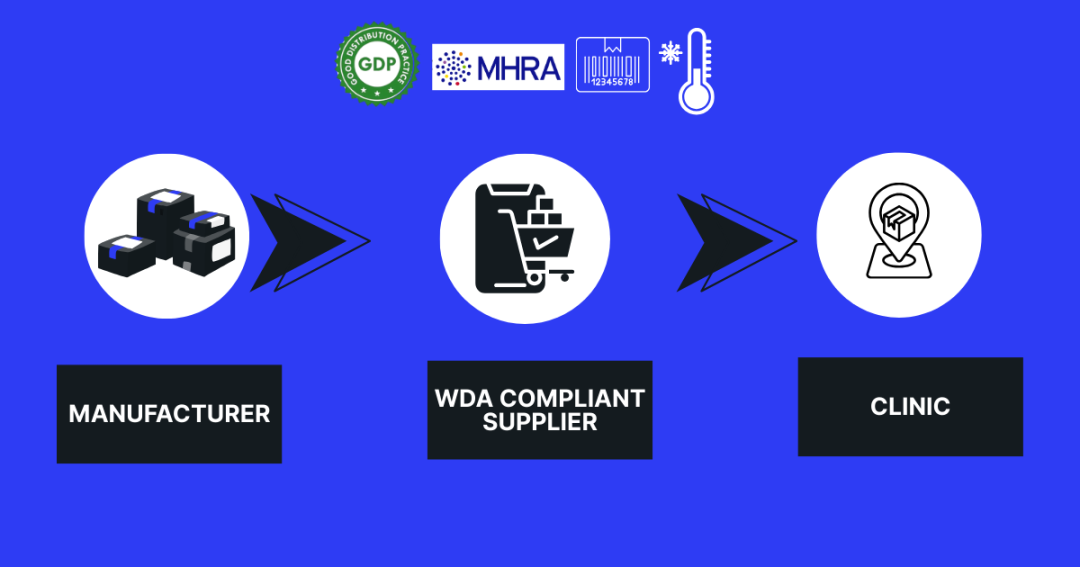
Why It Matters That Your Supplier Is WDA-Licensed
Ordering from a non-WDA supplier can create serious issues, even if they seem reputable on the surface.
Without a WDA, there’s no guarantee that the medicines you receive have been stored correctly, transported safely, or sourced legally. That opens the door to potential problems like temperature-damaged stock, counterfeit products, or even legal penalties.
WDA-licensed suppliers are regularly inspected by the MHRA. They must keep detailed batch records, follow GDP protocols, and ensure full traceability from the manufacturer to your door. That means your deliveries come with peace of mind — and documentation to prove it if you’re ever audited by the CQC, GDC, or MHRA.
In short, a WDA-certified supplier helps protect your patients and your practice.
The Real-World Benefits of Using a WDA Distributor
Beyond compliance, there are some very practical reasons to work with a WDA-licensed supplier.
Your medicines will be stored in controlled conditions, especially if you’re ordering temperature-sensitive items.
You’ll get full batch numbers and traceability with every delivery, so you’re always audit-ready. And when something goes wrong, like a recall or a delivery issue, you have a clear line of responsibility and documentation to rely on.
For many practices, it’s also about time. Ordering from a professional, WDA-certified distributor often means a smoother, more efficient process — no chasing stock, no confusion over paperwork, no regulatory grey areas.
Trusted WDA Suppliers: Phoenix Healthcare, Alliance Healthcare, and Faces Pharmacy
If you’re looking for a WDA-licensed supplier, three trusted names stand out: Phoenix Healthcare, Alliance Healthcare Direct, and the newly approved Faces Pharmacy.
All three hold active WDA licences from the MHRA. That means they’re legally authorised to distribute prescription medicines, and they meet all the regulatory standards for safe storage, transport, and traceability.
Phoenix Healthcare is well known for its work with clinics and private practices. They offer tailored support and understand the specific needs of healthcare professionals who don’t have time to manage stock complications.
Alliance Healthcare Direct gives you access to an online ordering system and wide national coverage, with support teams who can help with GDP documentation and batch records.
Faces Pharmacy, newly WDA-certified in 2025, offers a streamlined service aimed at smaller practices and start-ups. If you’re looking for a modern, responsive distributor that’s easy to work with, they’re a strong option to consider.
Access Faces Pharmacy through Faces today. Sign up and register for our Pharmacy Marketplace to order your stock.
All three ensure your stock arrives safely, on time, and with the traceability you need for compliance.
What Happens If You Order from a Non-WDA Supplier?
If your supplier doesn’t have a WDA, they’re not legally allowed to distribute prescription medicines — and your practice may be exposed.
This can lead to:
- Compliance issues during inspections
- Patient safety risks, especially with cold chain products
- Lack of documentation in case of recalls or audits
- Liability concerns, since the products technically came from an unlicensed source
Even if you didn’t know the supplier was non-compliant, responsibility could still fall on your practice. That’s why it’s not worth the risk.
Frequently Asked Questions
Do I need my own WDA to order prescription stock for my clinic?
No. If the medicines are for use within your practice, you can legally order them from a WDA-certified supplier.
Can I check if my supplier has a WDA licence?
Yes. You can search the MHRA’s public database of WDA licence holders online.
What’s the difference between GDP and WDA?
WDA is the licence. GDP (Good Distribution Practice) is the set of standards that WDA holders must follow.
Can I get documentation with my order for traceability?
Absolutely. Reputable WDA suppliers provide full batch numbers, invoices, and GDP-compliant records.
How to Start Ordering Safely
Getting started with a WDA distributor is usually straightforward.
Most will ask you to register your practice, verify your professional details, and set up a business account. After that, you can order stock by phone, online portal, or through a dedicated account manager.
From your side, there’s no need to apply for a licence or take on any compliance tasks. That’s all handled by the distributor.
The result? Safer, legal, and more efficient ordering — without the admin headaches.
Final Thoughts: WDA-Licensed Suppliers Keep Your Practice Protected
You don’t need to be an expert in distribution law to run a safe, compliant clinic. You just need to work with the right supplier.
Choosing a WDA-licensed distributor like Phoenix Healthcare, Alliance Healthcare Direct, or Faces Pharmacy gives you full access to prescription medicines — without the legal risk, and without the operational stress.
The medicines arrive on time, properly stored, and with the documentation you need. That means fewer compliance worries, safer outcomes for patients, and more time for care.
If you’re not already using a WDA-certified supplier, now’s the time to switch.
Frequently Asked Questions
Do I need my own WDA to order prescription medicines for my clinic?
No. As long as you’re ordering for use within your own practice, you don’t need a WDA. The legal responsibility lies with your supplier — if they’re WDA-licensed.
What does WDA mean in pharma?
WDA stands for Wholesale Distribution Authorisation. It’s a licence issued by the MHRA that allows businesses to store and distribute prescription-only medicines legally and safely.
Is it illegal to buy from a supplier without a WDA licence?
Yes. It’s unlawful for a supplier to distribute POMs without a valid WDA. If your supplier isn’t licensed, your practice could face compliance and safety risks.
How can I check if a supplier has a WDA?
You can check the MHRA’s public WDA database online. Every authorised distributor will have a unique licence number and listed business address.
What’s the difference between WDA and GDP?
A WDA is the licence. GDP (Good Distribution Practice) is the set of quality standards that WDA holders must follow for the safe storage and delivery of medicines.