
Why Side Effects Education Matters in Aesthetic Weight Loss
Mounjaro (tirzepatide) is increasingly discussed within aesthetic medicine as part of structured, clinician-led weight management services. While efficacy on how Mounjaro helps patients lose weight often drives interest, side effect education determines patient trust, adherence, and long-term outcomes.
As an aesthetic practitioner, your role is not to alarm patients but to contextualise expected reactions, explain why they occur, and clearly differentiate normal adaptation from non-negotiable escalation.
This guide focuses on:
TL;DR for Practitioners: Mounjaro Side Effects at a Glance
- Most Mounjaro side effects are gastrointestinal
- Symptoms are dose-related and most common during initiation or titration
- The majority are transient and improve as the body adapts
- Serious adverse events are rare, but must be recognised early
- Clear pretreatment counselling significantly reduces discontinuation
This section alone equips you for a confident patient conversation.
What Side Effects Should Patients Expect When Starting Mounjaro?
The most frequently reported Mounjaro side effects are gastrointestinal, reflecting its mechanism of action.
Commonly reported Mounjaro side effects include:
- Nausea
- Diarrhoea
- Vomiting
- Constipation
- Reduced appetite
- Burping or bloating
- Mild fatigue
Clinical context:
These effects are expected, particularly during the first few weeks or after dose escalation. They do not indicate intolerance in isolation.
What to tell patients:
“Your body is adjusting to how Mounjaro slows digestion and regulates appetite hormones. Mild digestive symptoms are common early on and usually settle.”
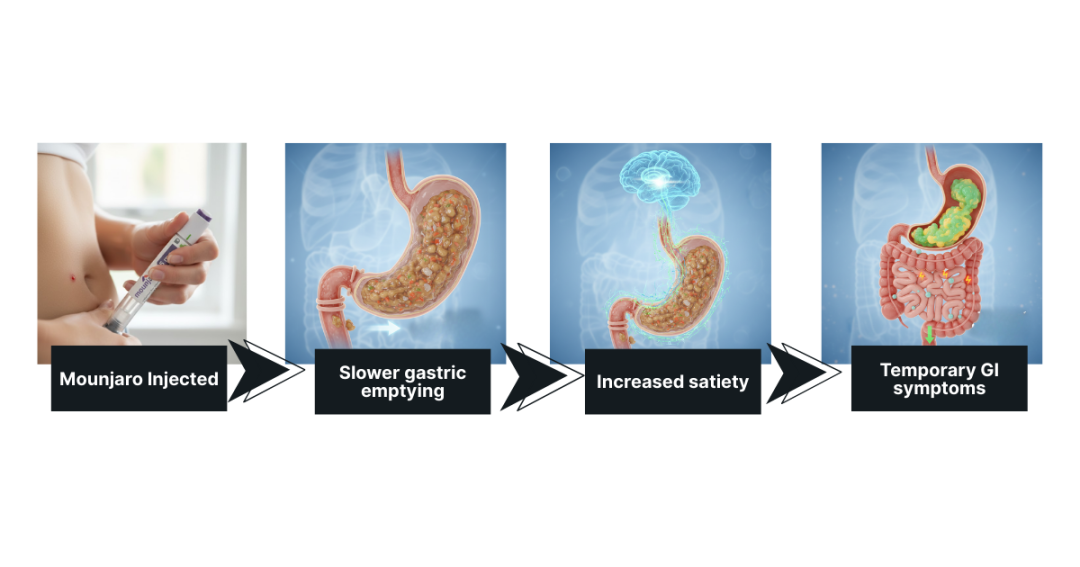
Why Does Mounjaro Cause Gastrointestinal Side Effects?
Understanding the mechanism helps practitioners explain symptoms without minimising them.
Mounjaro acts as a dual GLP-1 and GIP receptor agonist, which leads to:
- Delayed gastric emptying
- Reduced appetite signalling
- Altered gut motility
These effects improve satiety and metabolic control—but they also explain why patients may experience nausea, diarrhoea, or bloating.
Key practitioner framing:
- Symptoms are mechanism-driven, not random
- The gut is adapting to slower digestion
- This adaptation phase is temporary for most patients
This explanation reduces fear and improves compliance.
How Long Do Mounjaro Side Effects Usually Last?
This is one of the most important expectation-setting points.
Typical timeline:
- First 1–3 weeks: highest likelihood of symptoms
- Post-dose increase: temporary symptom recurrence possible
- Ongoing treatment: symptoms often reduce significantly or resolve
Most patients report improvement as:
- Eating patterns adjust
- The gut adapts to slower emptying
- Dose stabilisation occurs
What to tell patients:
“Side effects usually peak early and improve as your body adjusts. We monitor how you respond at each stage.”
| Side Effect | Severity Level | How Common | What This Usually Means | Recommended Practitioner Action |
|---|---|---|---|---|
| Nausea | Mild–Moderate | Very common | Gut adapting to delayed gastric emptying | Reassure, advise smaller meals, monitor |
| Diarrhoea | Mild–Moderate | Common | Temporary change in gut motility | Hydration advice, dietary adjustment |
| Vomiting (occasional) | Moderate | Less common | Dose-related intolerance | Monitor closely; escalate if persistent |
| Constipation | Mild–Moderate | Common | Reduced gut movement | Advise fluids, fibre, movement |
| Reduced appetite | Expected effect | Very common | Therapeutic response | Reassure and reinforce nutrition quality |
| Burping / bloating | Mild | Common | Slower digestion and gas retention | Monitor and assess nutrition intake |
| Fatigue | Mild | Common | Caloric intake reduction | Monitor, assess nutrition intake |
| Persistent vomiting | Severe | Rare | Poor tolerance or complication | Escalate to prescriber / GP immediately |
| Severe abdominal pain | Severe | Rare | Possible pancreatitis or gallbladder issue | Urgent referral required |
| Pancreatitis symptoms | Severe | Very rare | Inflammatory response | Immediate medical escalation |
| Inability to tolerate fluids | Severe | Rare | Dehydration risk | Same-day escalation |
Expected vs Concerning Mounjaro Side Effects: A Practitioner Framework
Expected and Monitor
- Mild to moderate nausea
- Loose stools without dehydration
- Reduced appetite
- Mild fatigue
These typically require supportive advice, not cessation.
Requires Escalation or Referral
- Persistent vomiting
- Severe abdominal pain
- Signs of pancreatitis
- Inability to tolerate fluids
- Symptoms are worsening rather than improving
Best Practice:
Aesthetic practitioners should escalate promptly to the prescribing clinician or GP when red flags appear.
Who Is More Likely to Experience Side Effects?
Certain patients may be more susceptible to Mounjaro side effects:
- First-time GLP-1 users
- Patients starting at higher doses
- Rapid dose escalation
- Pre-existing gastrointestinal conditions
This is why individualised dosing strategies and clear counselling are essential.
How Practitioners Can Help Reduce Side Effects
Side effects are often mitigated through behavioural guidance, not medication changes.
Practical advice to share with patients:
- Eat smaller, slower meals
- Avoid high-fat foods initially
- Stay well hydrated
- Stop eating at early satiety
- Maintain consistent injection timing
This positions you as a proactive, supportive clinician and not just a provider.
To help your clients better, send them this informational video below on practical tips to support them on their journey.
How to Explain Mounjaro Side Effects to Patients (Consult-Ready Language)
Use calm, normalising language:
- “This is a common adjustment response.”
- “Most people find this improves after the first few weeks.”
- “We expect some digestive changes while your body adapts.”
- “We’ll monitor this closely and adjust if needed.”
Avoid:
- Dismissive phrasing
- Over-reassurance without boundaries
- Medical jargon without explanation

Scope, Safety, and Referral: UK Practitioner Considerations
Aesthetic practitioners play a key role in education, monitoring, and early identification of concerns.
However, diagnosis of serious adverse events, management of pancreatitis or gallbladder disease, and/or medication cessation decisions should always involve the prescribing clinician or GP. A clear scope protects both the patient and the practitioner.
Conclusion: Side Effects Education Builds Better Outcomes
Mounjaro side effects are predictable, explainable, and manageable when addressed correctly. Practitioners who educate confidently, pre-frame expectations, and maintain clear escalation pathways see:
- Better patient adherence
- Fewer early dropouts
- Stronger therapeutic relationships
Side effects do not undermine treatment—poor communication does.
Frequently Asked Questions
How long do Mounjaro side effects last?
Most side effects appear early and improve within weeks as the body adapts, especially once doses stabilise.
Why does Mounjaro cause diarrhoea?
It slows digestion and alters gut motility, which can temporarily affect bowel habits.
Is nausea normal on Mounjaro?
Yes. Nausea is one of the most common early side effects and usually settles over time.
Does everyone experience side effects?
No. Some patients experience minimal or no symptoms, while others notice short-term effects.
Is Mounjaro safe long-term?
Current data support safety when appropriately prescribed and monitored. Ongoing review is essential.
When should side effects be escalated?
Persistent vomiting, severe abdominal pain, or worsening symptoms require prompt referral.