
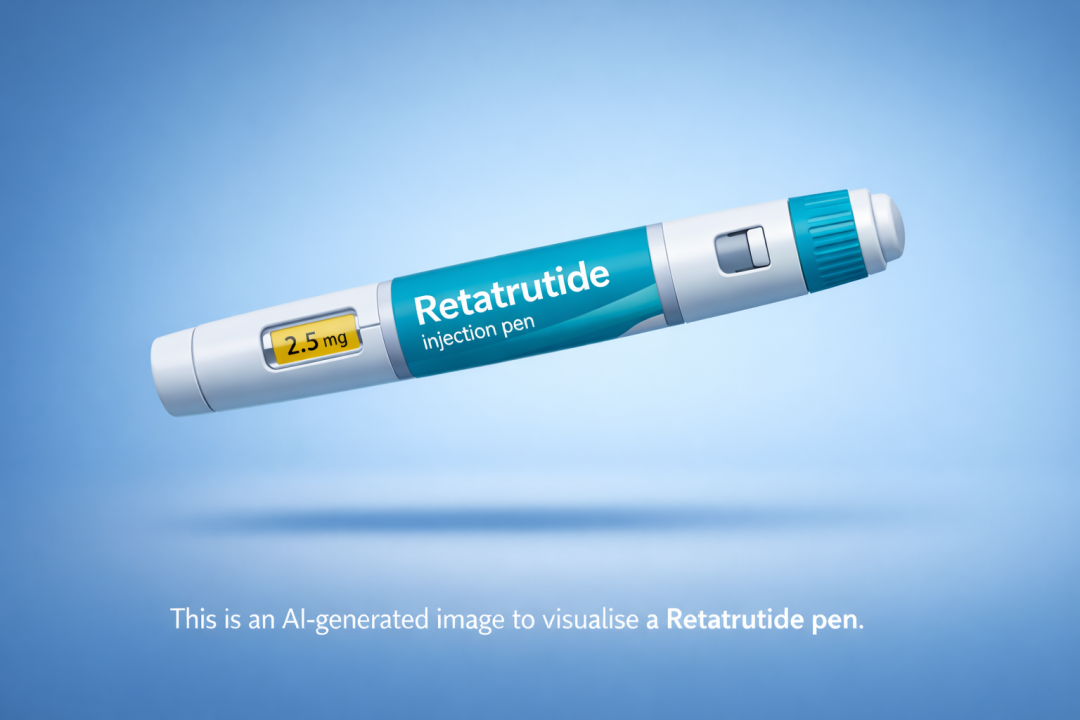
What is Retatrutide?
Retatrutide is a novel weight loss medication currently undergoing clinical trials. It represents a next-generation approach to managing obesity and weight-related health conditions.
Unlike many existing treatments that target a single metabolic pathway, Retatrutide works by activating three distinct hormones: GLP‑1, GIP, and glucagon. This triple-agonist mechanism makes Retatrutide a powerful contender for those seeking more effective weight management solutions.
The mechanism of action in Retatrutide is what sets it apart. By targeting three key hormone receptors, it supports appetite regulation, blood sugar control, and fat burning. This multifaceted approach is anticipated to lead to more sustainable and impactful weight loss, particularly for individuals who have struggled with other weight-loss treatments in the past.
However, Retatrutide UK availability remains limited. The medication is still in Phase 3 clinical trials and has not yet been approved for public use. While early clinical data are promising, further research and regulatory approval are necessary before Retatrutide can be made available for prescription in the UK.
How Does Retatrutide Work?
The action of Retatrutide involves the targeted activation of three important hormone receptors in the body, each with a critical role in metabolism:
- GLP‑1 (Glucagon-Like Peptide-1): This hormone is involved in regulating satiety, reducing hunger, and promoting insulin release. Activation of GLP‑1 receptors helps individuals feel fuller for longer, which can lead to reduced calorie consumption.
- GIP (Gastric Inhibitory Polypeptide): GIP influences insulin secretion and plays a role in regulating fat storage. By activating the GIP receptor, Retatrutide enhances insulin sensitivity and promotes metabolic balance, making it particularly beneficial for those with type 2 diabetes.
- Glucagon: Glucagon is a hormone that promotes fat burning and energy expenditure. Activation of glucagon receptors stimulates the body to use fat as fuel, helping to reduce stored body fat.
Together, these three hormones form a comprehensive approach to weight management. By reducing hunger, improving insulin sensitivity, and boosting metabolism, Retatrutide supports sustainable weight loss. This tripartite mechanism also helps prevent fat accumulation, making it a promising solution for individuals struggling with obesity or metabolic syndrome.
Administered once a week via a subcutaneous injection using a pen device, Retatrutide provides a convenient way for users to manage their treatment and track their progress. Though Retatrutide UK is not yet available, the growing body of evidence around its efficacy suggests that it may become an essential part of the weight loss toolkit in the future.
Retatrutide Dosage
Since Retatrutide is still undergoing clinical trials, the Retatrutide dosage has not yet been confirmed by regulatory bodies like the MHRA or EMA. However, data from ongoing studies indicate that the dosage protocol involves gradual titration. This means that the starting dose is typically low and is progressively increased over time. The goal of this approach is to minimise side effects while allowing the body to adjust to the medication.
In clinical trials, participants have been administered weekly subcutaneous injections. The Retatrutide dosage is expected to be tailored to individual needs once the medication is approved, with healthcare providers adjusting the dose based on patient response.
While the exact dosage for the general population is yet to be determined, the weekly injection format allows for consistent and manageable treatment, which could be easier for patients compared to daily medications. Once Retatrutide receives approval, official dosing guidelines will be provided by medical authorities to ensure safe and effective use.
Possible Side Effects of Retatrutide
As with any medication, Retatrutide side effects should be considered before starting treatment. In the clinical trials conducted thus far, the most commonly reported side effects have been gastrointestinal in nature. These include:
- Nausea
- Vomiting
- Diarrhoea
- Constipation
These effects are generally mild to moderate and tend to diminish as the body adapts to the medication. This is a common occurrence with GLP‑1 receptor agonists, which also share similar side effects, such as semaglutide (Ozempic) and liraglutide (Saxenda). While these side effects may cause discomfort initially, they are not typically long-lasting, and many users report that the symptoms subside after the first few weeks of treatment.
However, it is essential to monitor for any rare or severe side effects, as clinical trials are still ongoing. Retatrutide has not yet been approved by regulatory bodies, and comprehensive safety data is still being collected. Once the medication becomes more widely available, healthcare providers will be able to offer more detailed information about potential long-term safety and side-effect profiles.
As with any new medication, individuals should consult with their healthcare provider to ensure Retatrutide is an appropriate treatment option and to discuss any concerns about potential side effects.
Retatrutide vs Tirzepatide
A common question among individuals considering Retatrutide is how it compares to other treatments, such as Tirzepatide. While both medications are designed to support weight loss by targeting metabolic pathways, they differ in several key ways:
| Feature | Retatrutide | Tirzepatide |
|---|---|---|
| Hormonal Targets | GLP‑1, GIP, Glucagon (Triple) | GLP‑1, GIP (Dual) |
| Clinical Status | In Trials | FDA-Approved (Mounjaro) |
| Weight Loss Potential | Higher in early research | Proven effectiveness |
| Availability | Not yet available in UK | Available with prescription |
Tirzepatide (sold as Mounjaro and Zepbound) has been FDA-approved and is available for prescription use. It activates both GLP‑1 and GIP receptors, which has led to significant weight loss results. However, Retatrutide aims to be even more effective by targeting an additional receptor—glucagon—which is involved in fat burning and energy expenditure.
Early research suggests that Retatrutide may provide greater weight loss benefits than Tirzepatide, as the additional glucagon receptor may enhance the body’s ability to burn fat. However, Tirzepatide is currently the only available treatment in this class, with a well-established safety profile and a proven track record of effectiveness.
Once approved, Retatrutide could potentially surpass Tirzepatide in its ability to support long-term weight loss and improve metabolic health.

When Will Retatrutide Be Available in the UK?
Retatrutide UK availability is not expected until the drug completes its final stages of clinical testing. Currently, Retatrutide is in Phase 3 clinical trials, with approval from regulatory agencies like the MHRA and EMA likely to occur in the coming years. UK consumers should anticipate potential availability by 2026, but until then, the medication is not available for prescription.
Because Retatrutide is still investigational, official pricing is not yet available. As with all new treatments, it is important to be cautious of any unregulated versions of Retatrutide sold online. These products may be counterfeit or improperly dosed, posing significant health risks. Regulatory agencies like the MHRA warn against purchasing medications outside of licensed pharmacies and healthcare providers.
Once Retatrutide is approved, it will likely be available through prescription only, making it accessible to individuals who qualify for the treatment. The Retatrutide price will be announced upon regulatory approval, and it is expected to be in line with similar injectable weight-loss treatments.
Conclusion
Retatrutide is a promising weight-loss medication that could significantly impact the way we approach weight management. With its triple-agonist mechanism, Retatrutide targets three metabolic pathways, offering a more comprehensive approach to weight loss than other treatments.
While Retatrutide UK availability is not expected for several more years, the research conducted thus far suggests that it has the potential to offer greater weight loss benefits than existing treatments like Tirzepatide. As clinical trials continue and safety data are gathered, Retatrutide may become a valuable tool in the battle against obesity and metabolic disease.
For now, individuals interested in Retatrutide should monitor ongoing clinical studies and consult with their healthcare providers for updates. Once Retatrutide receives regulatory approval, it could provide a much-needed solution for those struggling to achieve and maintain weight loss.
Frequently Asked Questions (FAQs) About Retatrutide
1. What is Retatrutide used for?
Retatrutide is an investigational weight-loss medication designed to target three hormonal pathways involved in appetite control, blood sugar regulation, and fat burning. It has shown promising results in clinical trials for individuals seeking to manage obesity and metabolic conditions.
2. How does Retatrutide help with weight loss?
Retatrutide works by activating three key hormone receptors: GLP‑1, GIP, and glucagon. These receptors help regulate hunger, improve insulin sensitivity, and boost fat burning, leading to a reduction in body weight and more efficient metabolism. Its triple-agonist action sets it apart from other weight-loss medications.
3. When will Retatrutide be available in the UK?
Currently, Retatrutide UK availability is not possible as the drug is still undergoing Phase 3 clinical trials. Regulatory approval is expected around 2026. Once approved, it will be available through prescription from licensed healthcare providers.
4. What is the typical Retatrutide dosage?
Since Retatrutide is still in clinical trials, official dosing guidelines are yet to be confirmed. In trials, Retatrutide dosage starts with a low dose that gradually increases over time. This allows the body to adjust to the medication and minimise side effects. The final dosage will depend on individual needs once approved.
5. What are the possible side effects of Retatrutide?
Retatrutide side effects commonly reported in clinical trials include:
- Nausea
- Vomiting
- Diarrhoea
- Constipation
These side effects are typically mild and temporary. As Retatrutide is still in the investigational phase, comprehensive safety data is still being collected, and rare or severe side effects have not yet been fully established.
6. How does Retatrutide compare to Tirzepatide?
Retatrutide targets three hormonal pathways (GLP‑1, GIP, and glucagon), while Tirzepatide targets only two (GLP‑1 and GIP). Early research suggests Retatrutide may lead to greater weight loss due to its broader action. However, Tirzepatide is already approved and available by prescription, with established safety data.
7. What is the expected price of Retatrutide once it is available?
The Retatrutide price has not yet been set as the medication is still in clinical trials. Once it receives regulatory approval, pricing will be announced. It is expected that Retatrutide will be priced similarly to other injectable weight loss treatments such as semaglutide and tirzepatide.
8. Is Retatrutide safe to use?
Retatrutide has shown promising results in clinical trials, but as it is still in the investigational phase, long-term safety is still being studied. The side effects observed so far are typically mild and temporary, and further research will provide a better understanding of its safety profile once it becomes publicly available.
9. Can Retatrutide be used for diabetes?
While Retatrutide targets similar mechanisms to some diabetes treatments (like GLP‑1 agonists), it is primarily being tested as a weight-loss medication. Retatrutide may benefit individuals with type 2 diabetes due to its effects on insulin sensitivity, but it is not currently approved for use in diabetes management.
10. Can Retatrutide be used alongside other medications?
Since Retatrutide is still under investigation, it is crucial to consult with a healthcare provider before combining it with other medications. This ensures that any potential interactions or side effects are monitored closely. Always follow your healthcare provider’s guidance on combining weight-loss medications.