
You’ve probably heard the buzz: Mounjaro, the new weight loss medication, is making waves. But what’s the hype really about?
Does it actually work?
If you’ve been wondering how this injectable wonder can help shed those extra pounds, you’re not alone. Whether you’re a curious bystander or someone actively considering Mounjaro as a weight loss solution for appetite, poor eating habits, control difficulties, or poor diet, we’re here to break it down for you.
In this post, we’re taking two routes: the quick and easy explanation that even your pet goldfish could understand (no judgment here), and a more scientific deep dive for those who want the real details behind this product.
Ready to uncover the secret behind Mounjaro’s weight loss powers? Let’s dive in!
TL;DR – How Mounjaro Helps You Lose Weight (The Simplified Version)
Here’s how Mounjaro helps you lose weight in the simplest way possible:
- It makes you feel full for longer by slowing down your digestion. This helps you eat less without constantly feeling hungry.
- It boosts insulin to help your body process sugar better, which can lead to weight loss.
- On top of that, it speeds up fat burning, helping you shed those extra pounds more easily.
Boom! That’s it. No complicated science here, just how Mounjaro works in a nutshell.
Now, if you’re into the science behind it, stick around for a few more minutes.
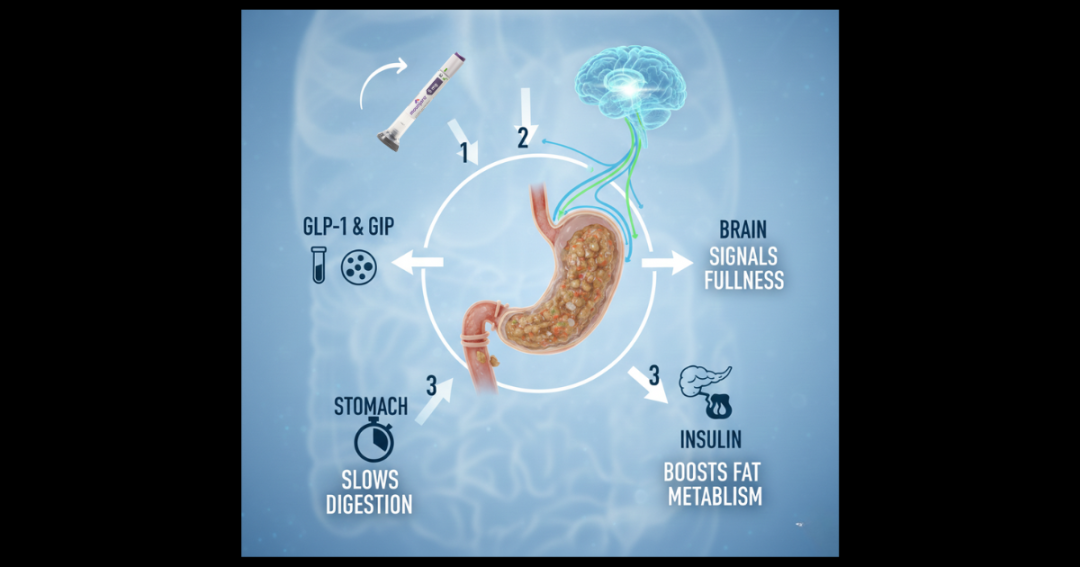
The Science Behind Mounjaro’s Weight Loss Effects (The Detailed Version)
Now let’s get into the science of how Mounjaro works to promote weight loss.
Mounjaro is a GLP-1 and GIP receptor agonist, which means, it activates two key gut hormones in your body that play a significant role in regulating your appetite and metabolism. This is a big difference from other weight loss brands, as most of them only target 1 gut hormone.
GLP-1: Appetite Regulation and Satiety
Mounjaro primarily works by activating GLP-1, a hormone that helps regulate blood sugar and appetite. Here’s how it contributes to weight loss:
- Slows down digestion: When GLP-1 is activated, it delays gastric emptying, meaning your stomach empties more slowly. This creates a feeling of fullness or satiety, helping you eat less without feeling hungry.
- Reduces appetite: GLP-1 signals to your brain that you’ve eaten enough, curbing cravings and decreasing the desire to overeat. This can significantly reduce your daily calorie intake without requiring drastic changes to your diet.
GIP: Fat Metabolism and Insulin Secretion
Alongside GLP-1, Mounjaro also activates GIP (Gastric Inhibitory Polypeptide). This hormone works to enhance insulin secretion, which helps your body process and store sugar more efficiently.
- Fat burning: GIP plays a role in fat metabolism, helping your body burn fat as energy, rather than storing it. This improves the body’s overall energy balance, encouraging weight loss.
Together, GLP-1 and GIP help optimise the body’s metabolic processes, leading to effective weight loss over time.
Want to hear more from an expert? Here’s a pharmacist from Faces Pharmacy explaining how Mounjaro works for weight loss.
The Impact of Mounjaro on Weight Loss
So, how much weight can you actually expect to lose on Mounjaro? Clinical studies and real-world results have shown impressive weight loss outcomes:
- Average weight loss: In clinical trials, participants who took Mounjaro lost an average of 15-20% of their body weight over a period of 3-6 months.
- Speed of results: Most users begin to see noticeable results within 4-8 weeks of starting treatment, though some individuals may experience weight loss at a faster or slower pace.
Factors Influencing Weight Loss Results
While Mounjaro can be a powerful tool for weight loss, individual results can vary.
Factors such as diet, exercise, and genetics play a crucial role in how much weight you’ll lose. It’s important to remember that Mounjaro works best when combined with healthy lifestyle changes, including a balanced diet and regular physical activity.
Why Does Mounjaro Work for Some but Not for Others?
Mounjaro is a powerful weight loss tool, but its effectiveness can vary from person to person. Several factors contribute to this variability:
1. Metabolism
Your body’s metabolism plays a huge role in how well Mounjaro works. Those with a faster metabolism may see quicker weight loss, while those with a slower metabolism may see more gradual results. Mounjaro helps improve fat burning, but individual metabolic rates can impact the overall speed of weight loss.
2. Lifestyle Factors
Mounjaro works best when combined with a healthy diet and regular exercise. Without these lifestyle changes, you may not see optimal results. Healthy eating and staying active are key to maximising Mounjaro’s effectiveness.
3. Genetics
Genetics influence how your body responds to Mounjaro. Some people may experience a stronger effect, while others may see more modest results based on how their bodies process the medication and regulate hormones.
If you find that Mounjaro is less effective for you, discussing genetic testing with your doctor could help identify whether there are specific genetic factors that influence your response to the medication.
4. Hormonal Imbalances
Conditions like hypothyroidism, PCOS, and insulin resistance can affect weight loss. If your hormones are out of balance, it could make Mounjaro less effective or require a longer time to see results.
5. Psychological Factors
Mental factors, like emotional eating, control difficulties, or lack of motivation, can hinder weight loss efforts. Mounjaro helps control appetite, but if emotional eating is a factor, the medication alone may not be enough.
Mounjaro works best when you are actively engaged in making healthier choices!
6. Medical History
Certain medical conditions or medications can interact with Mounjaro, affecting its effectiveness. Conditions like type 2 diabetes may benefit from Mounjaro, but it’s important to manage other health issues in conjunction with treatment.
Is Mounjaro Right for You?
Mounjaro can be an excellent option for those struggling with weight loss or obesity, especially if traditional methods like diet and exercise haven’t been effective.
It’s approved for people with type 2 diabetes and can be used by individuals without the condition who want to manage obesity.
Important Considerations
Before starting Mounjaro, it’s essential to CONSULT WITH A GP OR LICENSED WEIGHTLOSS PRESCRIBER
Mounjaro is generally safe for most people, but there are potential side effects (such as nausea or diarrhoea) and individual considerations that need to be addressed.

Conclusion
Whether you’re just looking for an easy-to-understand breakdown or you’re curious about the scientific mechanism, Mounjaro works by suppressing appetite, boosting metabolism, and helping your body process sugar more effectively.
While individual results may vary, many people experience significant weight loss with this medication, especially when paired with healthy lifestyle changes.
Before starting any weight loss medication, it’s always best to talk with your healthcare provider to see if Mounjaro is the right choice for you.
If you want supplemental information on how Mounjaro works, check the video below.
FAQ Section:
1. How quickly can you expect to lose weight on Mounjaro?
Answer:
The speed of weight loss with Mounjaro varies, but many users begin to see noticeable results within 4-8 weeks. On average, people lose about 5-10% of their body weight within 3-6 months.
2. How does Mounjaro help reduce hunger?
Answer:
Mounjaro helps reduce hunger by slowing down digestion and making you feel fuller for longer. It works by activating the GLP-1 receptor, which signals to the brain that you’re full, reducing the urge to eat.
3. Can I use Mounjaro for weight loss if I don’t have type 2 diabetes?
Answer:
Yes. Mounjaro is approved for weight loss in people without type 2 diabetes, especially those who are obese or overweight. It works effectively for weight management, even if you don’t have diabetes.
4. Are there any long-term side effects of Mounjaro?
Answer:
Mounjaro is generally well-tolerated, but common side effects can include nausea, diarrhoea, and stomach discomfort. Long-term side effects are still being studied, so it’s important to consult with your healthcare provider regularly.
5. How do I inject Mounjaro correctly?
Answer:
Mounjaro is injected once a week into the thigh or abdomen. Make sure to rotate the injection sites to avoid irritation. Your doctor or nurse can show you the correct technique before you start.
6. Can Mounjaro be used long-term for weight management?
Answer:
Yes, Mounjaro can be used long-term for weight management, but it should be part of a comprehensive weight loss plan, including diet and exercise. Always consult your doctor about how long you should use Mounjaro.
7. How much weight can you lose on Mounjaro in 3 months?
Answer:
Many people experience a significant weight loss of about 5-10% of their body weight within 3 months of using Mounjaro. Individual results vary depending on factors like diet and exercise.